Clear Sky Science · en
Therapeutic targets established in adult ulcerative colitis exhibit correlations with disease severity and pathological relevance in pediatric pouchitis
Why This Matters for Kids with Gut Trouble
Pouchitis is a painful inflammation that can strike children who have undergone major surgery for severe ulcerative colitis, a chronic disease of the large intestine. These young patients often face belly pain, diarrhea, and sleepless nights, yet doctors have few proven treatments tailored to them. This study asks a simple but important question: can medicines already used for adults with ulcerative colitis also make sense for kids with pouchitis, based on what is happening in their gut tissue?
Understanding the Problem in the Pouch
Some children with ulcerative colitis need their diseased colon removed. Surgeons then create a small internal pouch from the end of the small intestine so stool can still pass through the anus. While this operation can be life-changing, the pouch itself can become inflamed, a condition called pouchitis. Because pouchitis is relatively rare in children, large clinical trials are hard to run, and most treatment advice simply borrows from adult studies. Yet children’s immune systems are still developing, and powerful drugs used in adults may have different effects and long-term risks in growing bodies. That makes it crucial to look directly at children’s pouch tissue to see which immune signals are actually active.
Zooming In on Key Immune Signals
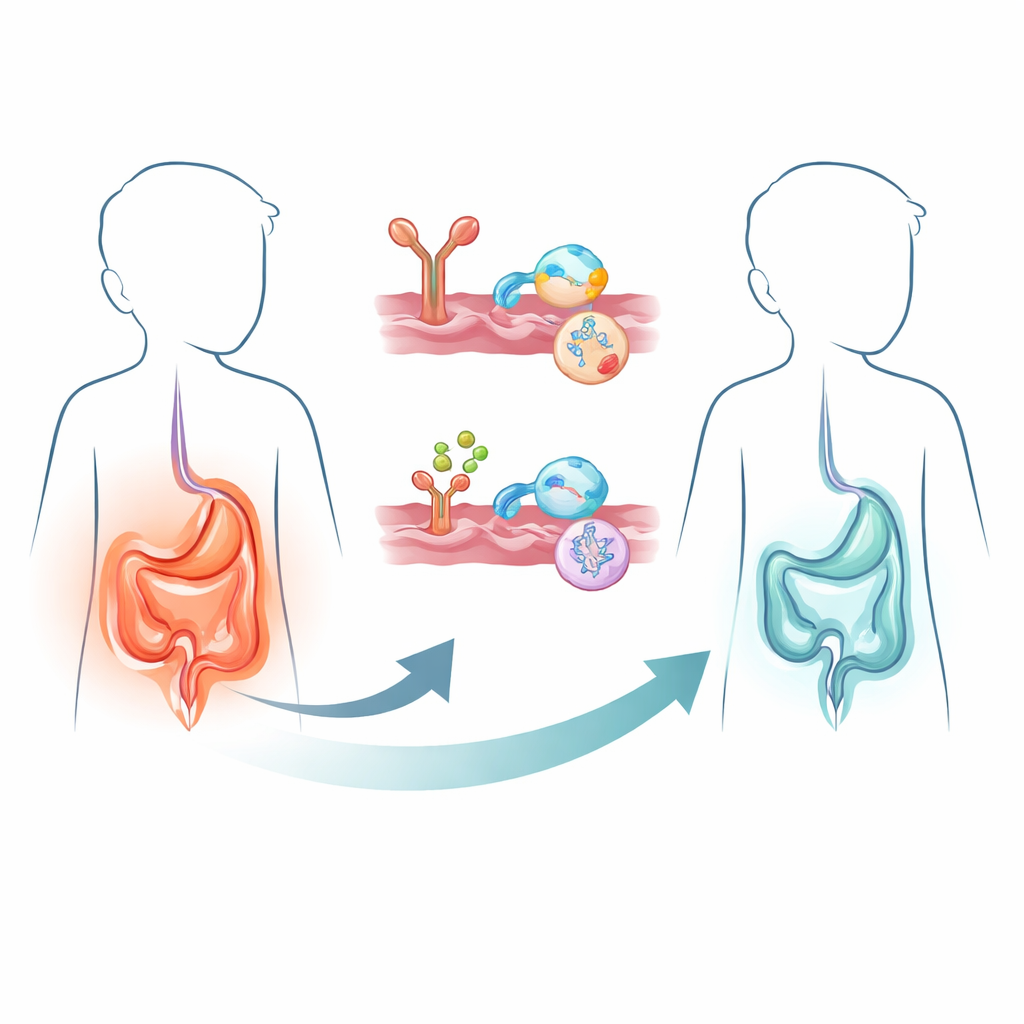
The researchers focused on two molecules that are already important drug targets in adult ulcerative colitis. One is TNF-alpha, a strong alarm signal produced during inflammation. The other, MAdCAM-1, sits on blood vessel walls in the gut and acts like a docking station that helps immune cells enter the intestinal lining. The team studied tissue from ten pediatric patients who had undergone pouch surgery. They examined surgically removed small-intestine tissue as a baseline and compared it with tiny biopsies taken from the pouch when the disease was flaring and again when it had calmed down. Using special staining and computer-aided image analysis, they measured how much TNF-alpha and MAdCAM-1 were present and counted immune cells marked by proteins called CD68, CD163, and CD8.
What Changes When Disease Flares and Improves
The inflamed pouch tissue in children looked very different from their original small-intestine samples. Blood vessels in the pouch showed more MAdCAM-1, and there was heavier infiltration of certain immune cells, especially macrophages marked by CD68 and CD163. During bad flare-ups, when a clinical score called the pouchitis disease activity index (PDAI) was high, both TNF-alpha and MAdCAM-1 were clearly increased, and more CD68-positive macrophages crowded the mucosal lining. When the children’s symptoms improved and their PDAI scores dropped, levels of TNF-alpha, MAdCAM-1, and CD68-positive cells in the same patients’ pouches also fell. The more these molecules were present, the more inflammatory cells had pushed into the tissue, linking the microscopic changes to how sick the children felt.
Clues to How Immune Cells Gather in the Gut
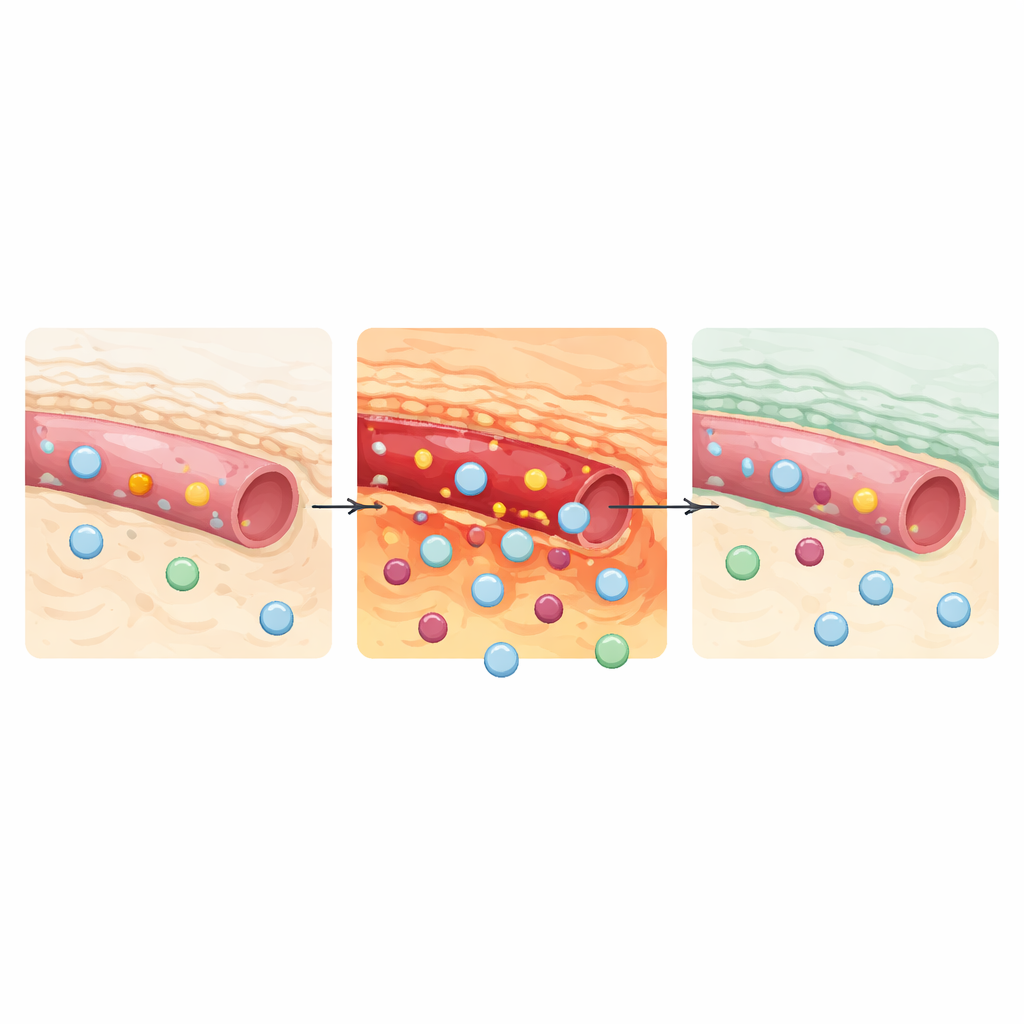
By looking at correlations across all samples, the team found that higher MAdCAM-1 levels went hand-in-hand with more infiltrating immune cells, including several macrophage types and killer T cells. TNF-alpha also tracked with certain immune-cell populations. Interestingly, cells bearing CD163—often thought of as “calming” macrophages—were actually more common when inflammation was high, suggesting that macrophages in pouchitis are more diverse and context-dependent than simple “good” or “bad” categories. Overall, the tissue patterns painted a picture in which activated blood vessels and intense immune signaling help draw inflammatory cells into the pouch, reinforcing and sustaining the disease.
What This Means for Future Care
This small, exploratory study cannot prove which treatments will work best, but it offers important biological evidence. In children with pouchitis, the same key molecules targeted by adult drugs—TNF-alpha and MAdCAM-1–related pathways—are switched on and strongly linked to how severe the disease is. That suggests that carefully adapted versions of adult therapies that block these signals may be reasonable candidates for pediatric trials, provided that safety in growing children is rigorously monitored. In simple terms, the microscopic fingerprints of inflammation in kids’ pouches closely resemble those in adults, opening the door to smarter, evidence-based treatment strategies instead of guesswork.
Citation: Otake, S., Khorolgarav, E., Yokobori, T. et al. Therapeutic targets established in adult ulcerative colitis exhibit correlations with disease severity and pathological relevance in pediatric pouchitis. Sci Rep 16, 9433 (2026). https://doi.org/10.1038/s41598-026-40173-7
Keywords: pediatric pouchitis, ulcerative colitis, TNF-alpha, MAdCAM-1, inflammatory bowel disease