Clear Sky Science · en
Ketogenic diet sex-dependent effects on rat bone marrow cells during development and β-HB protection in hypoglycemia
Why this matters for everyday diets
Many people turn to very low-carbohydrate, high-fat ketogenic diets to lose weight or manage diabetes. But bones, like the rest of the body, respond to changes in food supply. This study in rats asks a question that is hard to study directly in humans: if a mother eats a strict ketogenic diet during pregnancy and nursing, how does that affect the growing bones of her offspring, and does it matter whether those offspring are male or female? The authors also look at a key ketone, beta‑hydroxybutyrate, to see whether it can help bone cells cope when sugar is scarce.
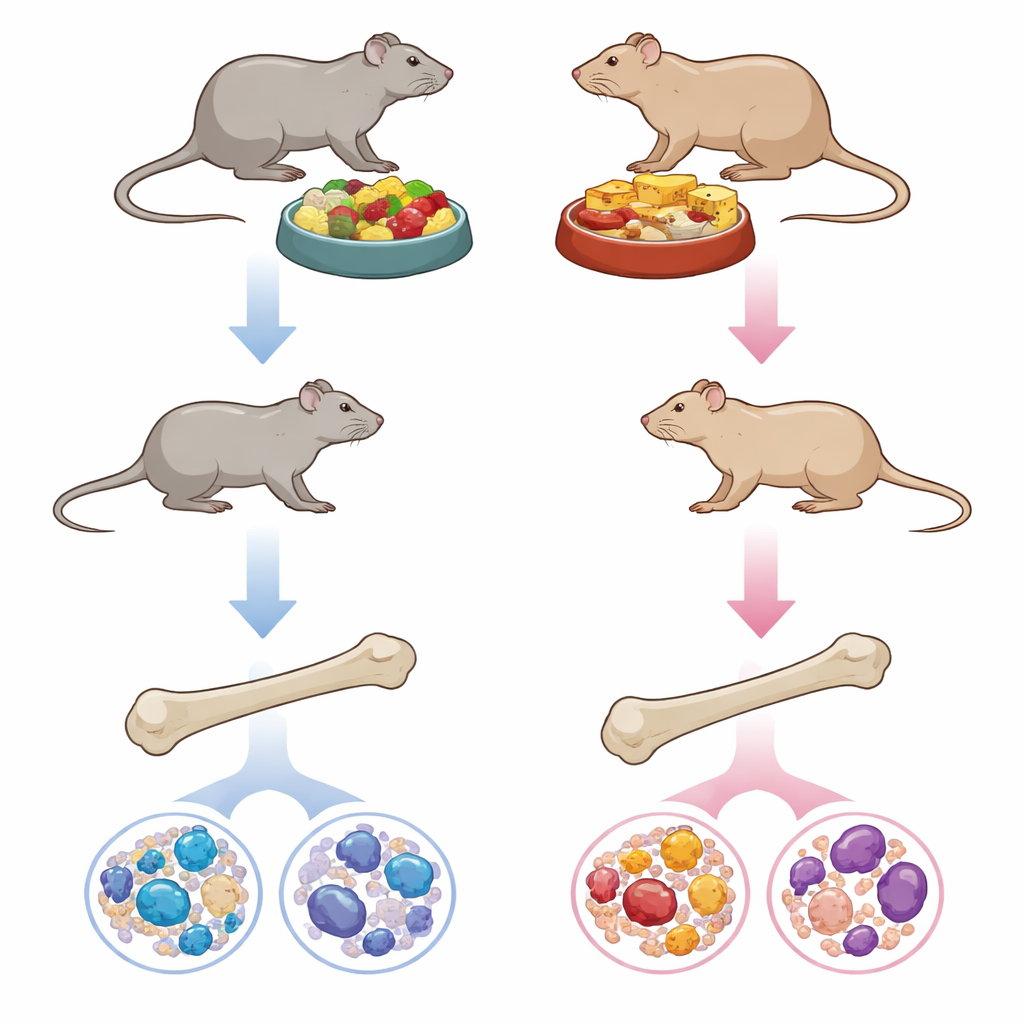
Bones, blood, and a special high-fat diet
The researchers focused on bone marrow cells, the factory inside bones that produces both bone‑building cells and bone‑eating cells. Female rats were kept either on a normal chow or on a low‑protein ketogenic diet before and during pregnancy, through nursing, and until their pups were 30 days old. At that age—roughly childhood in rat terms—the young animals on the ketogenic diet weighed much less than those on standard food, even though they had been exposed to the diet from the womb onward. From the thigh bones of these young rats, the team isolated bone marrow cells and examined how readily they grew and specialized.
Different outcomes for sons and daughters
A striking pattern emerged: female offspring seemed to gain bone advantages from the maternal ketogenic diet, while males did not. In females, bone marrow cells showed higher activity of genes linked with forming new bone and lower activity of genes tied to bone breakdown. Under the microscope, female cells more readily turned into bone‑like and cartilage‑like cells. In males, the same diet had almost the opposite effect: their bone marrow cells showed fewer bone‑building signals, more of an enzyme associated with bone‑eating cells, and overall a reduced ability to form bone or cartilage. Both sexes had lower signs of inflammatory signaling in these cells, hinting that the diet may calm certain immune pathways while reshaping bone biology in a sex‑dependent way.
When sugar drops, a ketone comes to the rescue
To separate the effects of low blood sugar from those of ketones, the scientists next moved to cell culture dishes. They took bone marrow cells from normal‑diet juvenile and adult rats and grew them in an “osteogenic” medium that encourages bone formation. Then they dialed down the glucose to mimic low blood sugar and, in some dishes, added beta‑hydroxybutyrate—the main ketone produced during ketosis. Low glucose alone tended to reduce mineral deposition by the cells and ramp up inflammatory markers and genes linked to bone‑eating cells, especially in adult males. Adding beta‑hydroxybutyrate largely reversed these changes: bone‑forming genes rose, mineral crystals accumulated more strongly, cell survival improved, and inflammatory signals and bone‑resorbing enzymes dropped.
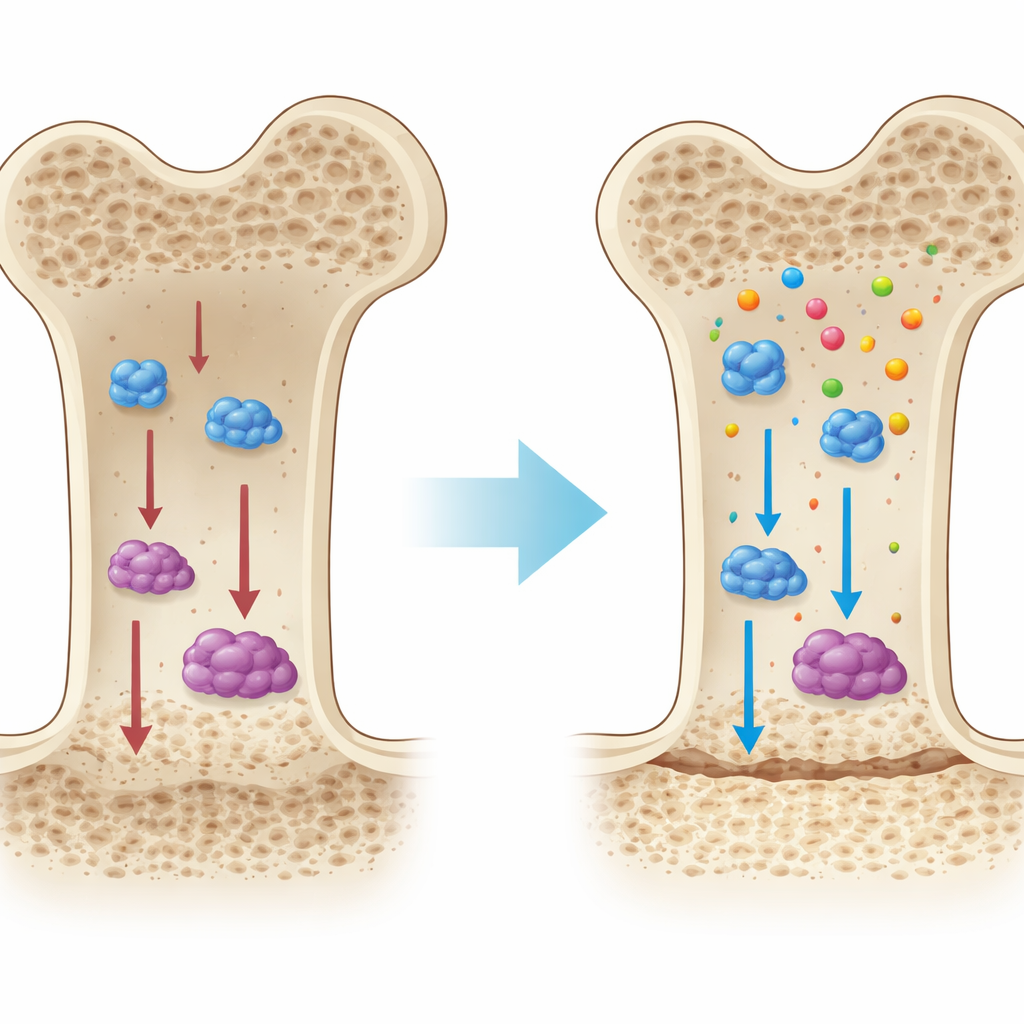
Age and sex shape the response
The way cells responded depended not just on sex but also on age. Juvenile bone marrow cells were somewhat resistant to low glucose, but adult cells were more vulnerable: they lost viability and deposited less mineral in sugar‑poor conditions. At the same time, adult cells showed a particularly strong benefit from beta‑hydroxybutyrate, which boosted both their growth and their bone‑forming output. Juvenile female cells generally showed higher bone‑building activity than juvenile males across conditions, echoing the in‑vivo findings that the long‑term ketogenic diet favored bone formation in daughters but impaired bone regenerative potential in sons.
What this could mean for people
For readers considering or already using a ketogenic diet, this rat study offers both caution and nuance. It suggests that exposing developing offspring to a strict, low‑protein ketogenic diet can shrink body size and alter bone marrow behavior in ways that differ between males and females—supporting bone formation in females while weakening it in males. At the same time, the work highlights that one ketone, beta‑hydroxybutyrate, can help bone cells cope when glucose is low by promoting bone building, curbing bone breakdown, and dampening inflammation. Translating these findings to humans will require more research, but they underscore that sex, age, protein intake, and blood sugar all matter when restrictive diets or fasting are used, especially around pregnancy or in efforts to support bone health.
Citation: Truchan, K., Ilnicki, B., Setkowicz, Z. et al. Ketogenic diet sex-dependent effects on rat bone marrow cells during development and β-HB protection in hypoglycemia. Sci Rep 16, 9219 (2026). https://doi.org/10.1038/s41598-026-40169-3
Keywords: ketogenic diet, bone health, beta-hydroxybutyrate, sex differences, bone marrow cells