Clear Sky Science · en
Bovine coronavirus and SARS-CoV-2 seroprevalence in livestock: marked host-species differences and insights from the first large-scale neutralization survey
Why Farm Viruses Matter to Everyone
Viruses that circulate in farm animals do not stay neatly behind the fence. Some, like the virus that caused COVID-19, can jump between species, sometimes with far‑reaching consequences for human health. This study looks at two related coronaviruses—one that sickens cattle and another that caused the global pandemic—to understand how often they infect cattle and water buffaloes in southern Italy, and whether signs of infection in animals really mean they have encountered the human virus.
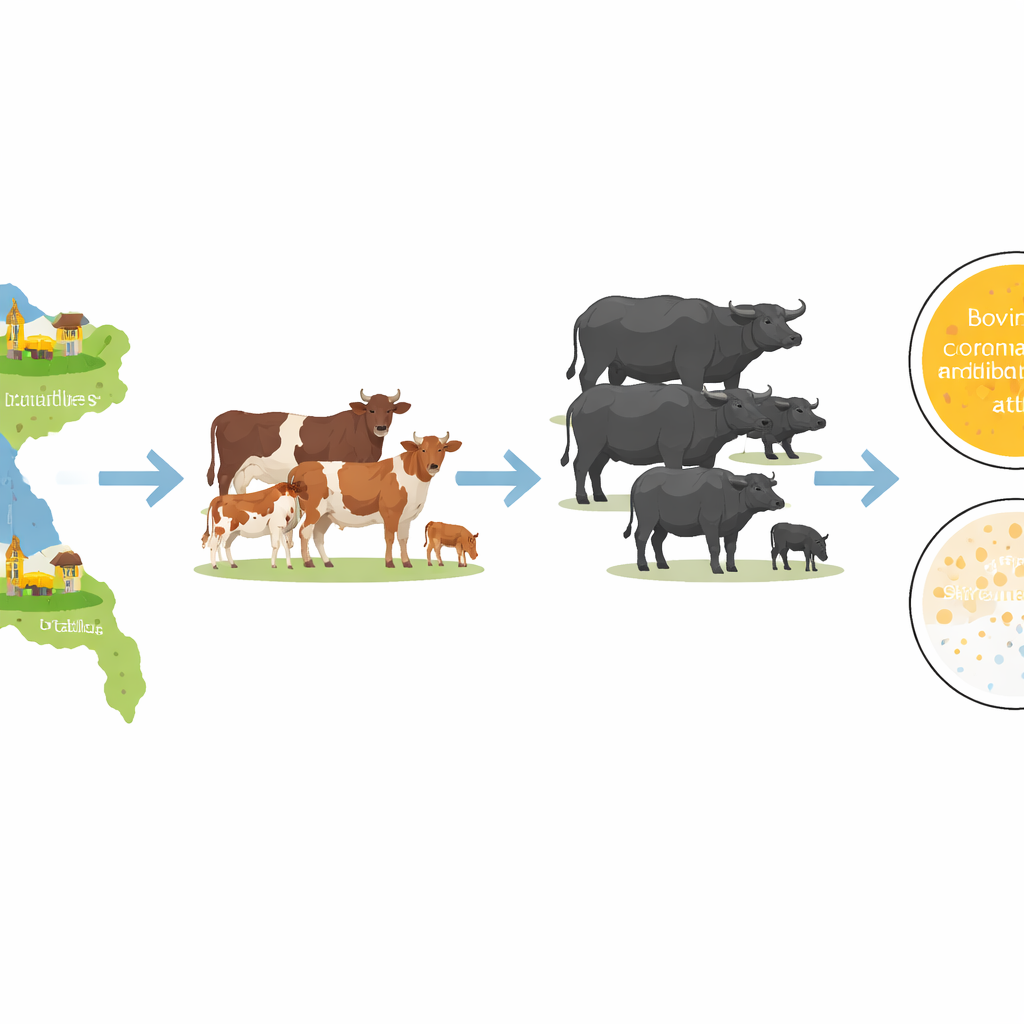
Two Related Viruses, Two Very Different Hosts
The researchers focused on bovine coronavirus, a long‑known cause of respiratory and gut disease in cattle, and SARS-CoV-2, the virus behind COVID-19. Both belong to the same broader virus family and can, in principle, cross species barriers. Bovine coronavirus has already been found in many ruminants and even in pets and wild birds, while SARS-CoV-2 has been detected in dozens of wild and domestic species worldwide. That overlap raises an important question: could livestock act as hidden reservoirs or mixing vessels where new, potentially risky variants emerge?
Testing Hundreds of Animals on Working Farms
To tackle this question, the team analyzed blood samples from 945 adult animals—491 cattle and 454 water buffaloes—living on 34 farms in the Campania and Calabria regions of southern Italy. These samples had originally been collected for routine disease control, then reused for coronavirus testing. First, the scientists used standard antibody screening tests to see whether each animal had previously met either bovine coronavirus or SARS-CoV-2. Then, for positive samples, they ran a more demanding laboratory test called a neutralization assay, which checks whether the antibodies can actually block the virus from infecting cells, a much stronger sign of a true past infection.
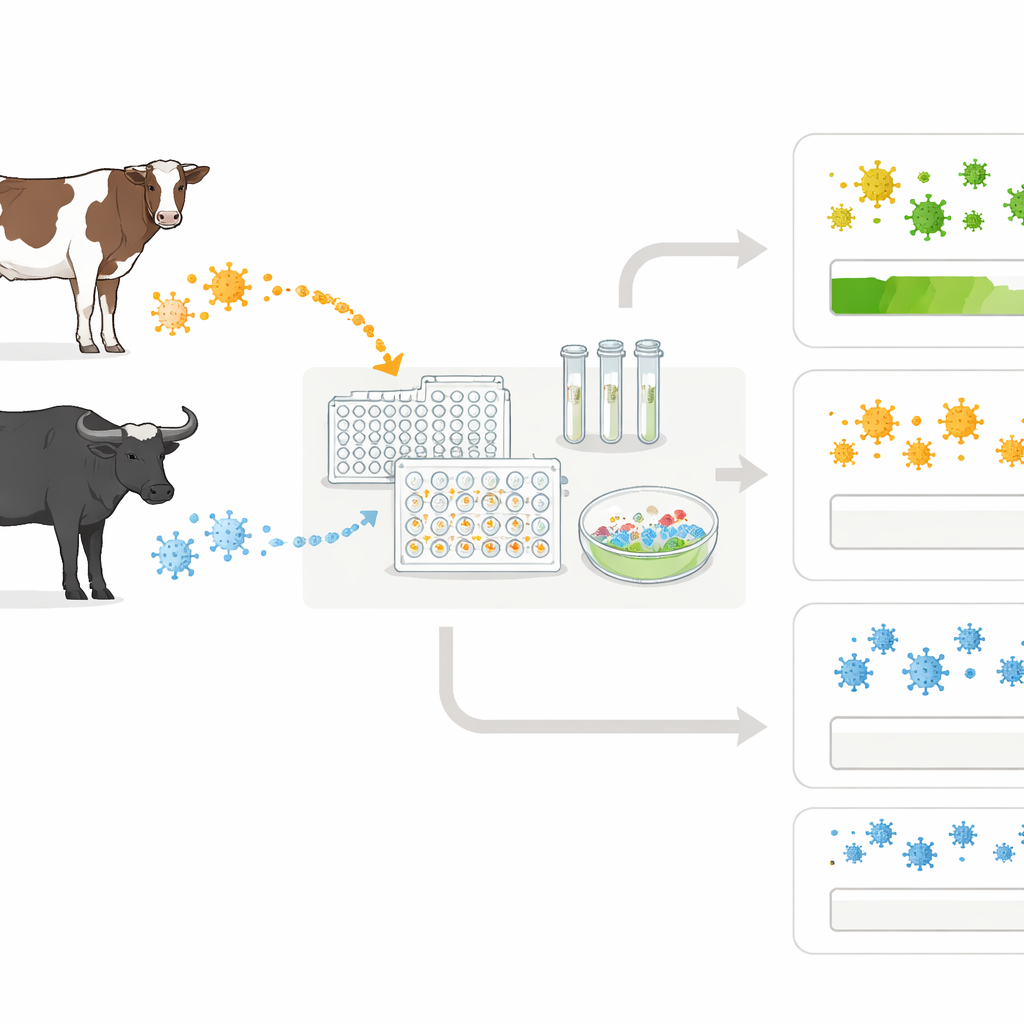
Cattle Show Strong Signals, Buffaloes Show Almost None
The results revealed a sharp contrast between species. Nearly half of all animals had antibodies against bovine coronavirus, but this burden fell overwhelmingly on cattle: about 87% of cows tested positive, compared with just over 1% of buffaloes. When the team looked for protective, virus‑blocking antibodies, around two‑thirds of the bovine coronavirus–positive cattle had them, while none of the buffaloes did. Geography also mattered. Farms in Calabria generally had more animals with bovine coronavirus antibodies than those in Campania, pointing to differences in local farm practices, animal movement, or contact with wildlife.
A Hint of COVID‑19, but No Firm Proof
Signals related to SARS-CoV-2 were far weaker and more puzzling. Only 2.8% of animals showed antibodies in the initial screening test, with cattle again more often positive than buffaloes. Yet when those same samples were checked with the neutralization assay, none contained antibodies capable of blocking SARS-CoV-2. Some of the SARS-CoV-2–reactive cattle also had strong responses to bovine coronavirus, raising the possibility that the screening test was detecting antibodies made against other, related animal coronaviruses rather than true exposure to the human virus. The authors also note that the particular screening kit they used targets a viral protein known to give less reliable results across different species, which complicates interpretation.
What This Means for Animal and Human Health
Taken together, the findings portray bovine coronavirus as a common and well‑established infection in cattle herds, but not in water buffaloes, even when the two share the same environment. In contrast, there is no solid evidence here that SARS-CoV-2 is actively circulating or persisting in either cattle or buffalo populations in southern Italy. Instead, the weak and non‑neutralizing antibody signals likely reflect either brief, poorly sustained infections or harmless cross‑reactions with other, similar viruses. For public health, this is reassuring: these livestock do not currently appear to be a hidden source of COVID‑19 spread. At the same time, the study highlights how tricky it can be to interpret simple antibody tests when closely related viruses are involved, and it underscores the need for continued, carefully designed surveillance at the interface of human, livestock, and wildlife health.
Citation: Fusco, G., Picazio, G., de Martinis, C. et al. Bovine coronavirus and SARS-CoV-2 seroprevalence in livestock: marked host-species differences and insights from the first large-scale neutralization survey. Sci Rep 16, 8431 (2026). https://doi.org/10.1038/s41598-026-40159-5
Keywords: bovine coronavirus, SARS-CoV-2 in livestock, cattle health, water buffalo, One Health surveillance