Clear Sky Science · en
Deciphering the groove-binding mode of dolutegravir with salmon sperm DNA through spectroscopic and molecular modelling approaches
Why this matters for everyday health
Most people know that medicines are designed to hit specific targets, such as a virus or a tumor. But many drugs can also brush up against our own DNA, sometimes in helpful ways and sometimes with unwanted side effects. This study asks a simple but important question about the widely used HIV drug dolutegravir: when it encounters DNA, how does it attach, and how gentle is that interaction? The answers help scientists judge long‑term safety and explore whether this antiviral might also be repurposed as an anti‑cancer agent.
A closer look at a key HIV medicine
Dolutegravir is a cornerstone treatment for HIV infection. It works by blocking an enzyme the virus needs to stitch its genetic material into human DNA, effectively stalling the infection cycle. Recently, researchers have noticed that dolutegravir can also slow the growth of certain cancer cells, raising hopes that it might be adapted for oncology. That possibility makes it crucial to understand how the drug behaves around DNA itself. Directly studying human chromosomes is complex, so the team turned to salmon sperm DNA, a standard laboratory stand‑in with very similar structural features, to map out how dolutegravir approaches and attaches to the DNA double helix.
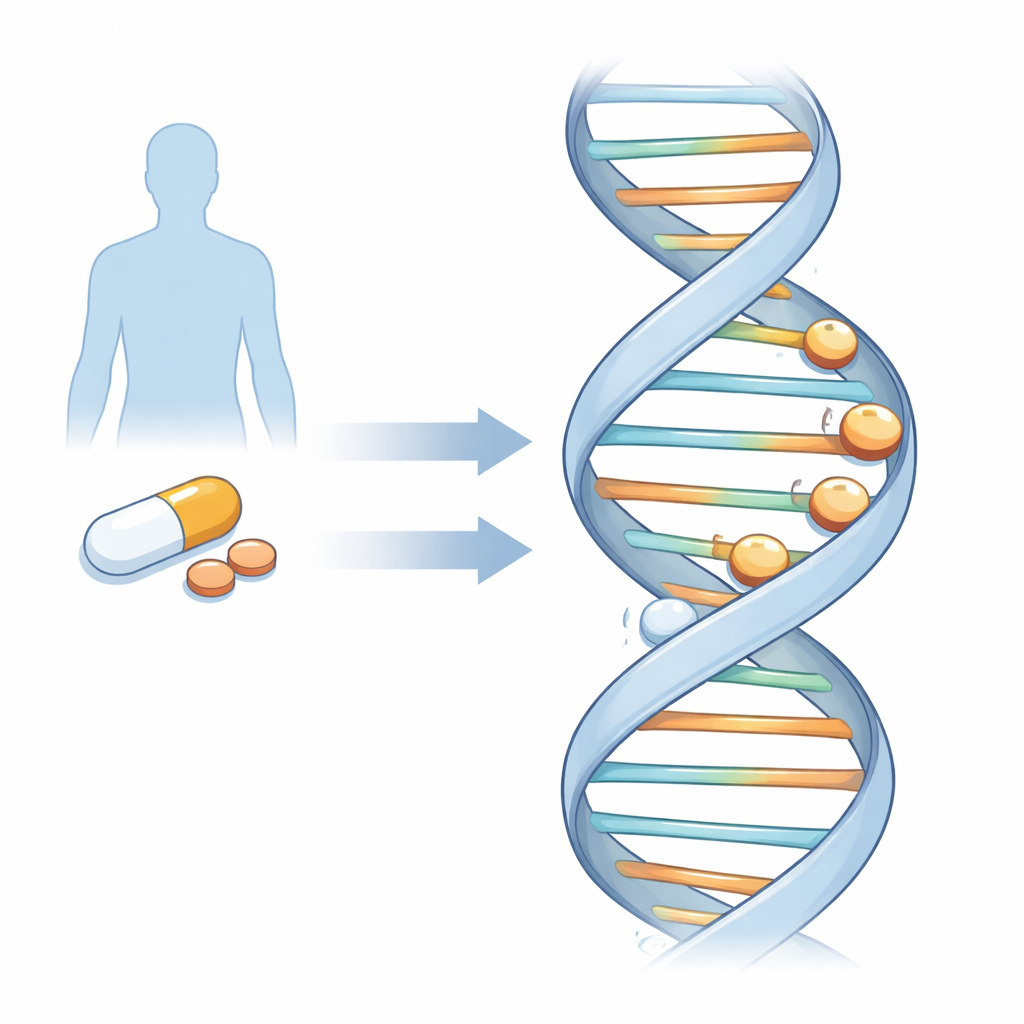
Testing how the drug sits on the DNA ladder
DNA looks like a twisted ladder with two kinds of grooves running along its surface: wide major grooves and narrow minor grooves. Some drugs wedge themselves between the rungs of the ladder, strongly distorting the structure; others sit more gently in one of the grooves, largely preserving the helix. The researchers used several light‑based techniques to tell these possibilities apart. Ultraviolet measurements showed that adding dolutegravir mostly increased the overall brightness of DNA’s signal without shifting its color, a fingerprint typical of groove binding rather than deep insertion between base pairs. By fitting these data to standard equations, they found that dolutegravir binds DNA with moderate strength, forming a simple one‑to‑one complex instead of piling on in large numbers.
Fluorescent dyes and flow experiments confirm a gentle touch
To double‑check the binding style, the team used glowing dyes that attach to DNA in well‑understood ways. One dye lodges between base pairs; another nestles in the minor groove. When dolutegravir was added, it failed to displace the intercalating dye but readily kicked out the groove‑binding dye, a clear sign that the drug prefers the groove route. Quenching experiments with iodide ions showed that dolutegravir remains equally accessible to the surrounding solution whether or not it is bound, which would not be the case if it were deeply buried between base pairs. Finally, careful measurements of how easily DNA solutions flowed through a thin capillary revealed almost no change in viscosity upon drug addition. Intercalating agents usually lengthen and stiffen DNA, making the solution flow more slowly; the unchanged viscosity here points again to a surface‑hugging groove interaction.
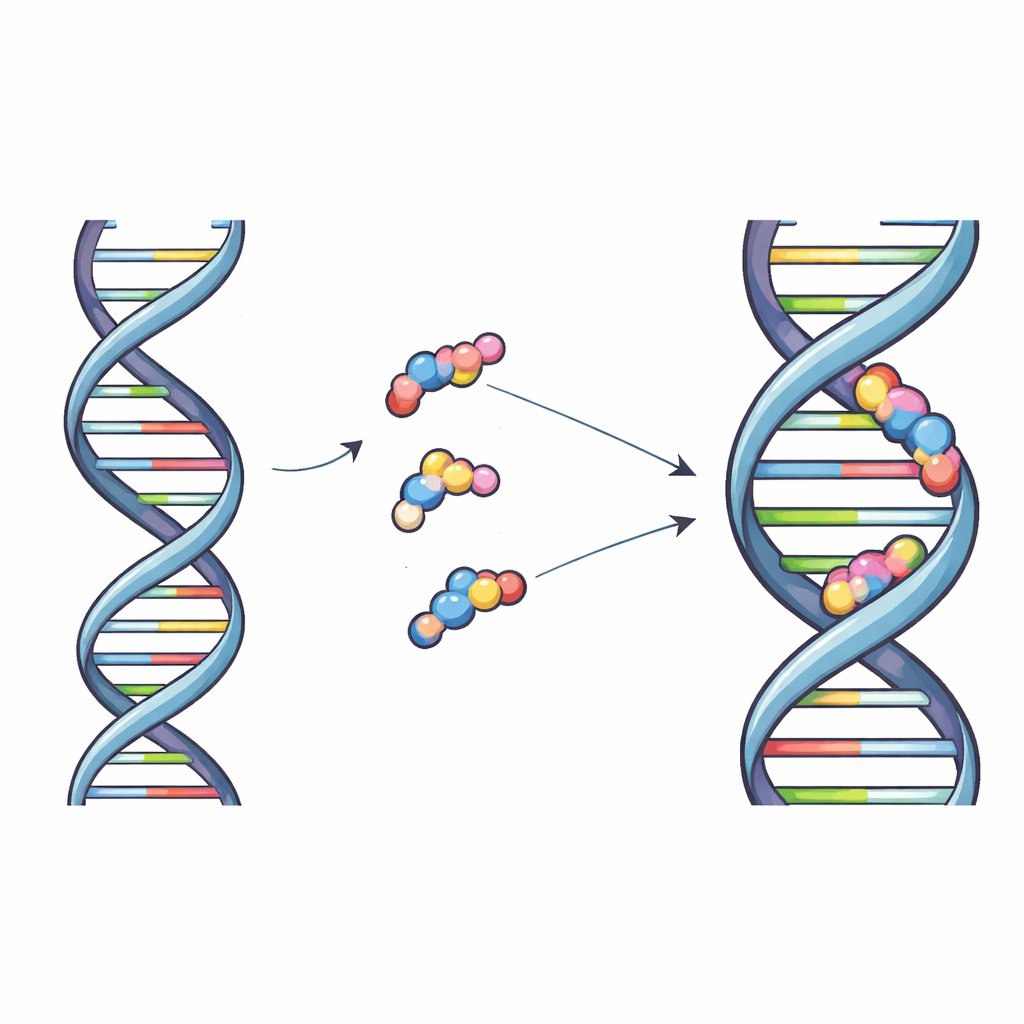
Computer models reveal the favored landing sites
Experiments in test tubes were complemented by computer docking studies that visualize how dolutegravir might sit on real DNA sequences at the atomic level. Using high‑resolution DNA structures, the simulations consistently placed the drug within the minor groove, especially in regions rich in the G and C building blocks of DNA. In these poses, the molecule formed several short, directional hydrogen bonds with nearby bases and snuggled against them through close‑range contact forces, all without prying the ladder rungs apart. Thermodynamic analysis of the binding data supported this picture: the interaction was spontaneous and stabilized mainly by hydrogen bonds and gentle van der Waals attractions, not by strong charge‑driven or deeply embedding forces.
What this means for safety and future therapies
Taken together, the findings paint dolutegravir as a relatively polite guest on the DNA landscape. It does bind to the minor groove, especially in certain sequence regions, but it does so without dramatically bending, lengthening, or unwinding the double helix. That behavior suggests a lower risk of severe DNA damage than drugs that intercalate, while still leaving room for subtle effects on how DNA and proteins communicate—effects that might be harnessed in cancer treatment. The study offers a detailed experimental and computational roadmap for judging how other medicines interact with DNA, helping researchers design next‑generation drugs that are both more selective and potentially safer over the long term.
Citation: Yosrey, E., Elmorsy, M.A., Elmansi, H. et al. Deciphering the groove-binding mode of dolutegravir with salmon sperm DNA through spectroscopic and molecular modelling approaches. Sci Rep 16, 9092 (2026). https://doi.org/10.1038/s41598-026-40136-y
Keywords: dolutegravir, DNA binding, minor groove, drug safety, drug repurposing