Clear Sky Science · en
Temporal shifts in alternaria spore seasons increase the risk of allergy
Why Shifting Spore Seasons Matter for Your Lungs
For many people with asthma or hay fever, “allergy season” used to mean a few predictable months of sneezing and wheezing. This study shows that in Islamabad, Pakistan, a common mold called Alternaria is changing when and how intensely it fills the air with microscopic spores that can trigger serious breathing problems. By tracking these spores over twenty years and comparing them with weather and air pollution, the researchers reveal how a warming, more polluted city can reshape allergy risks across the year.
The Invisible Dust We Breathe
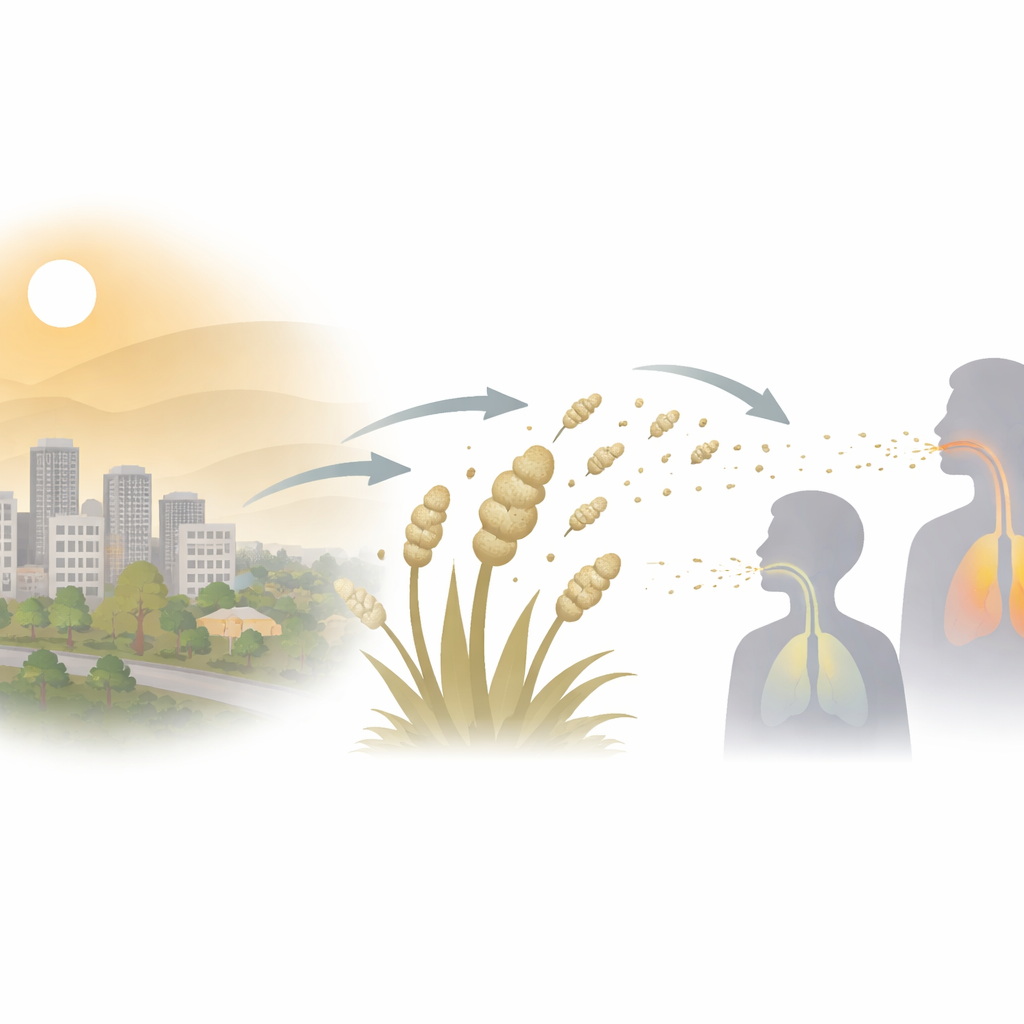
The air around us is full of bioaerosols—tiny bits of living material such as pollen grains, bacteria, viruses, and fungal spores. Among them, Alternaria spores are especially important for allergy and asthma. They are small enough to reach deep into the airways and carry a dozen known allergens on their surface. When their concentration in air exceeds about 100 spores per cubic meter, a sizable share of sensitive people can experience strong symptoms, including asthma attacks that may require hospitalization. Because these spores flourish in warm, somewhat dry but still humid conditions, any long-term shift in local climate or land use can alter how much of this hidden dust we breathe, and when.
A Twenty-Year Watch on a Growing City
Islamabad offers a telling case study. Over recent decades, the city has expanded rapidly, with built-up areas growing from about 6% to more than a quarter of the landscape. To understand how this changing environment affects fungal exposure, the Pakistan Meteorological Department monitored daily Alternaria spores from 2004 to 2023 using a rooftop air sampler, while also recording temperature, rainfall, humidity, and wind. In 2022–2023, a separate instrument continuously measured ten common air pollutants, including carbon dioxide, ozone, nitrogen oxides, and volatile organic compounds. The team converted these high‑frequency pollution readings into monthly averages and applied statistical tools to explore how weather and pollution tracked with the total seasonal spore load.
Longer Warm Seasons, Shifting Spore Peaks
Across two decades, the Alternaria spore season in Islamabad usually began in March and ended around October, but the exact start and finish varied strongly from year to year. Some seasons lasted more than 240 days, while others were closer to 100. Spore levels often rose above the health‑relevant threshold of 100 spores per cubic meter in the shoulder months of spring and autumn, and reached their highest values from April through August. A particularly intense year, 2019, saw 66 days above the threshold and the highest total spore count, whereas 2012 never crossed that line. Overall, the study found that the bulk of spores now appears between April and October, leaving the cooler months from November to March with much lower levels.
Weather, Pollution, and a Puzzling Decline
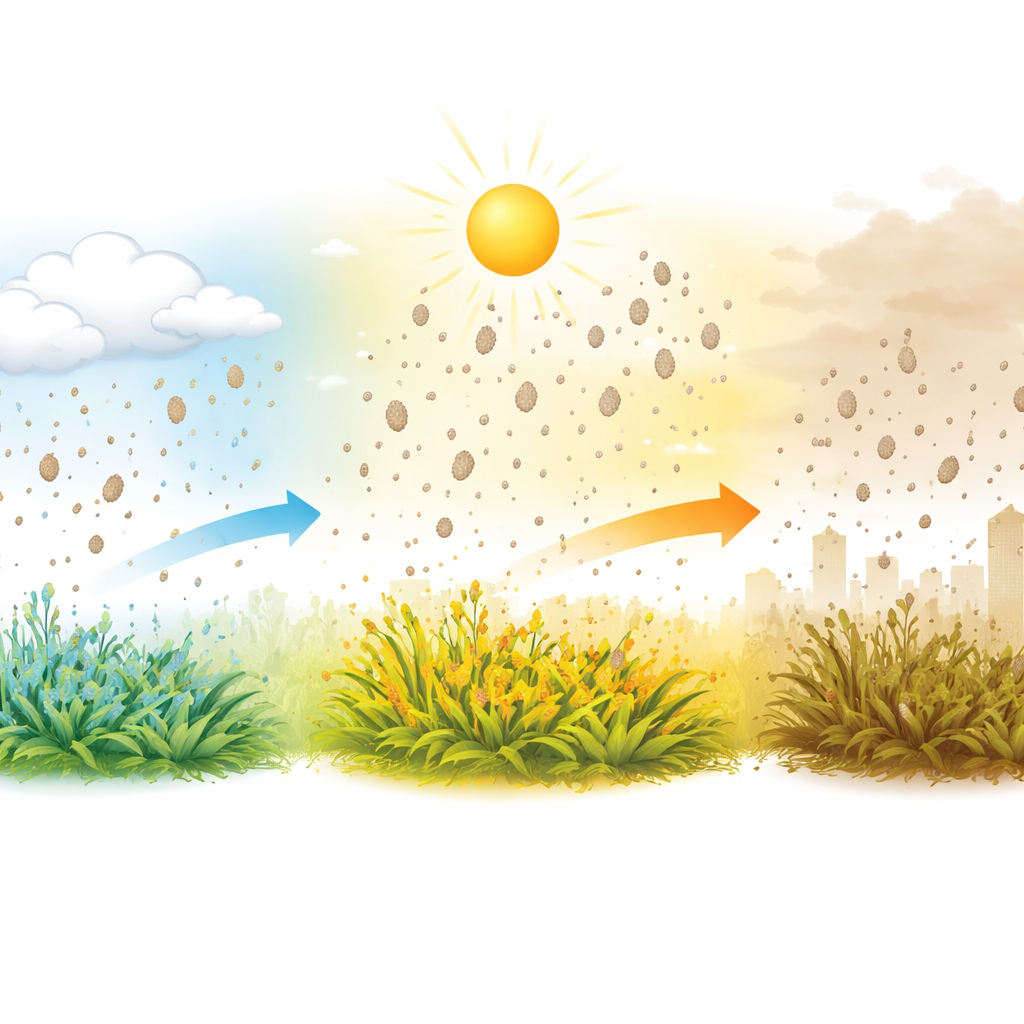
The analysis uncovered clear links between spores, weather, and pollution. Warmer temperatures and higher carbon dioxide levels were strongly associated with increased airborne spores, while higher relative humidity and rainfall tended to suppress them. Several pollutants, including ozone and nitrogen oxides, also showed positive or negative relationships with spore counts, suggesting that both climate and urban emissions influence fungal growth and release. Yet, despite the expectation that a warmer, more polluted city should harbor more spores, the long‑term trend in total seasonal spores actually declined from about 18,000 to around 9,000 spores per year. The authors argue that rapid urbanization—replacing vegetation with buildings and roads—may be reducing the local habitats where Alternaria thrives, even as climate conditions become more favorable for fungal growth.
What This Means for Allergy Sufferers
For people living with asthma and allergies, the study’s message is double‑edged. On one hand, the overall amount of Alternaria in the air appears to have declined, likely due to shrinking green space. On the other hand, the timing of spore seasons has shifted, and warm‑season episodes with very high spore counts—and thus high allergy risk—still occur, especially from spring through early autumn. Because these spores are strongly tied to weather and air quality, future climate change and urban growth could further reshape when dangerous peaks occur, even if annual totals fall. The authors argue that long‑term spore monitoring, coupled with real‑time automatic detectors, will be essential for reliable allergy forecasts and for helping doctors, public health officials, and patients prepare for invisible waves of fungal dust in a warming world.
Citation: Humayun, M., Ullah, K., Naseem, S. et al. Temporal shifts in alternaria spore seasons increase the risk of allergy. Sci Rep 16, 9053 (2026). https://doi.org/10.1038/s41598-026-40133-1
Keywords: fungal spores, allergic asthma, air pollution, climate change, Islamabad