Clear Sky Science · en
Factors associated with poor practice of dietary salt intake among patients with hypertension in a primary health care clinic in Malaysia
Why Too Much Salt Matters for Everyday Health
For many people with high blood pressure, the real danger may be hiding not in their medicine cabinet but on their dinner plate. This study from a primary health clinic in Malaysia looks closely at how people with hypertension use salt in their daily lives, and why many still struggle to cut back even when they know it is harmful. Understanding these habits can help patients, families, and health authorities design more practical ways to protect hearts and blood vessels through simple changes in the kitchen.
Looking at Real Life in One Busy Clinic
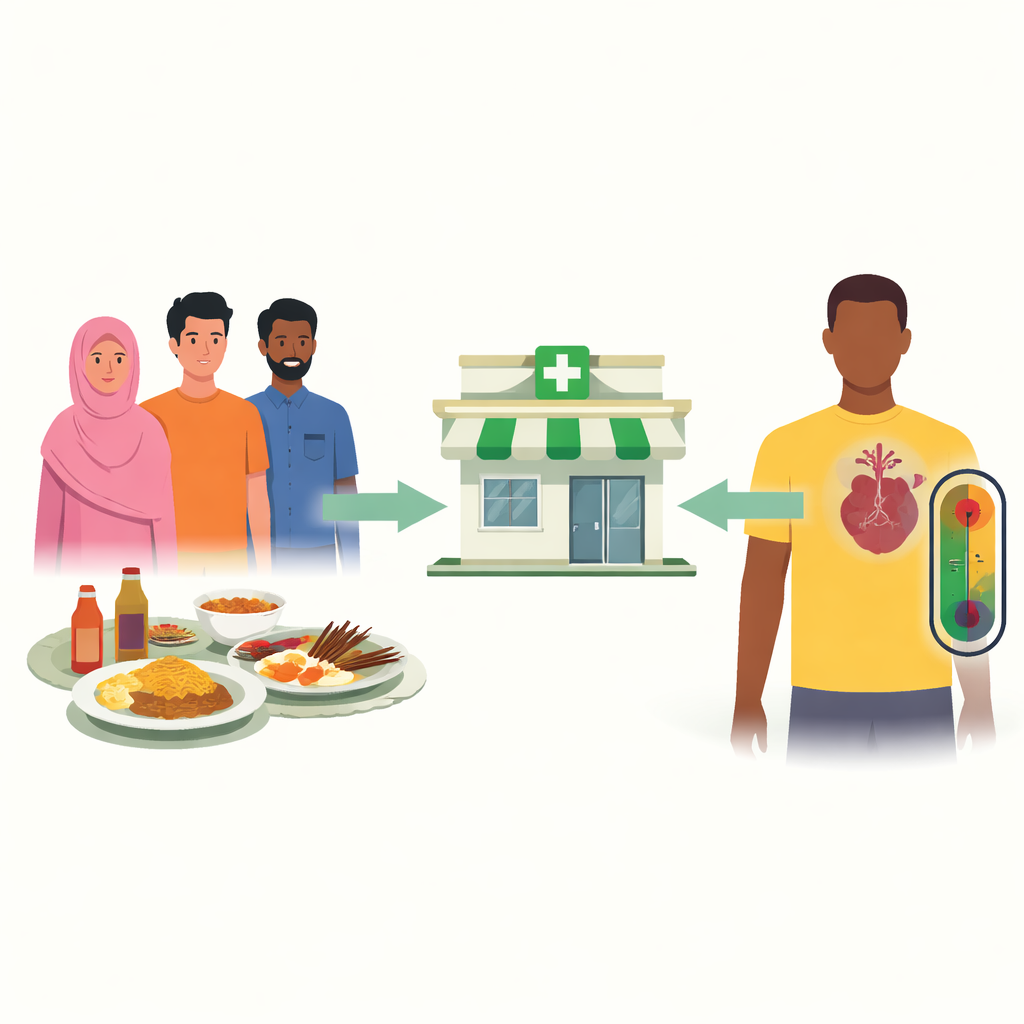
The researchers surveyed nearly 400 adults with hypertension who were followed at a government primary care clinic in Ipoh, in the state of Perak, which has one of the highest rates of high blood pressure in Malaysia. Using a detailed questionnaire, they assessed three things: how much patients knew about salt and health, how they felt about reducing salt, and what they actually did in daily life. Answers were scored and grouped into “good” or “poor” knowledge, attitude, and practice. The team also collected basic health details such as age, weight, blood pressure, and other illnesses from medical records, then used statistical tests to see which factors were linked to poor salt-related behavior.
What People Know, Believe, and Really Do
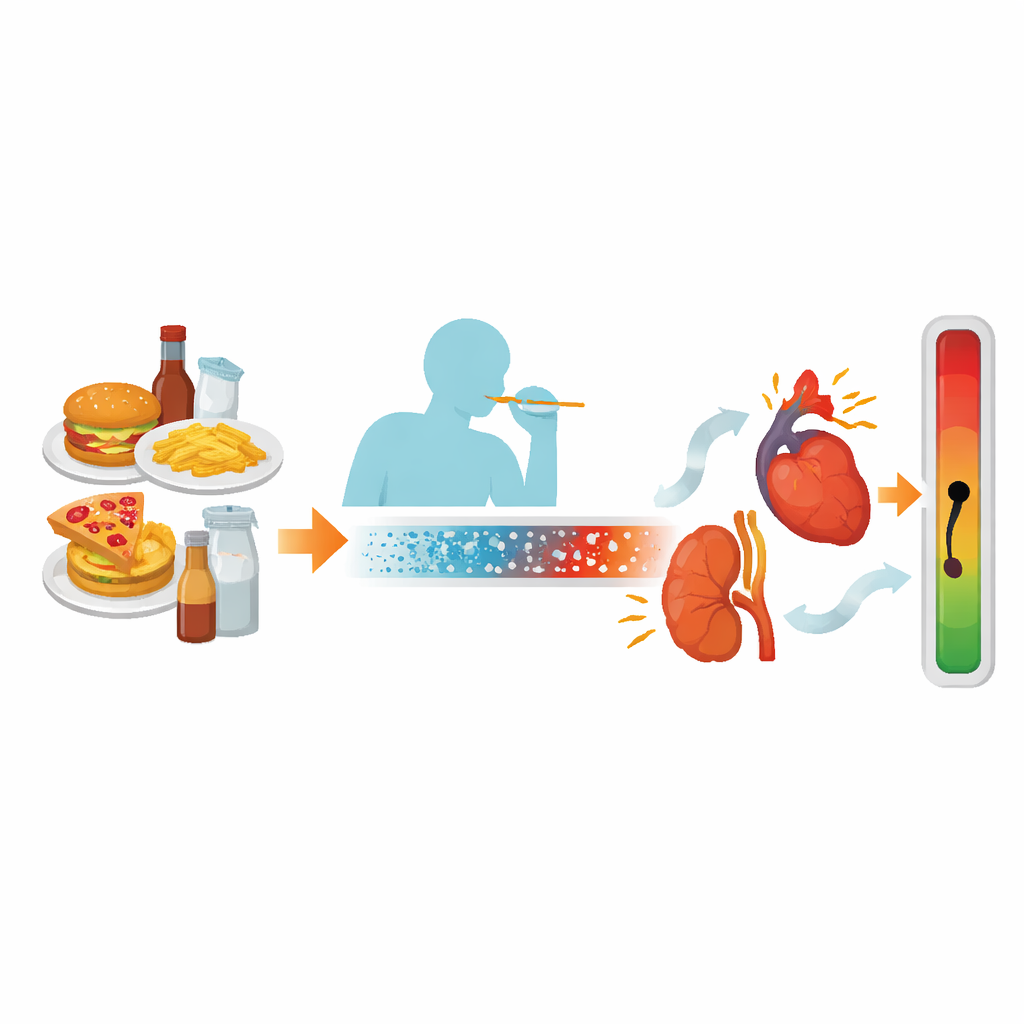
On the surface, the picture looked encouraging: about two-thirds of the patients had good knowledge about salt and its health risks, and a majority expressed a positive attitude toward cutting down. Yet the reality on the plate told a different story. Almost one in three patients still had poor salt-reduction practices, such as frequently eating salty foods or not checking food labels. Many held a key misunderstanding—more than half believed that simply drinking extra water could “wash away” excess salt—showing that knowing salt is bad does not always mean understanding how to avoid it. Difficulty reading and interpreting nutrition labels was also common, suggesting that current health messages may be too abstract and not practical enough.
Who Is Most at Risk of Salty Habits?
When the researchers dug deeper, several clear risk patterns emerged. Chinese patients were about three times more likely to report poor salt-control habits than Indian patients, even after accounting for other factors. The authors link this to traditional Chinese-style dishes that rely heavily on salty sauces, preserved foods, and soups. Patients who also had ischemic heart disease, a serious problem where the heart’s own blood supply is narrowed, were more than twice as likely to have poor salt practices as those with hypertension alone—an alarming finding, since they stand to benefit the most from stricter salt control. Most striking of all, patients with an unfavourable attitude toward salt reduction were almost four times as likely to have poor habits, and those with weaker knowledge were about twice as likely, highlighting how beliefs and understanding directly shape behavior.
Why Good Intentions Often Fail at the Table
The study highlights a familiar struggle: many patients say they want to eat less salt, but taste, culture, and convenience get in the way. Older adults may find low-salt foods bland, and long-standing cooking styles in multi-ethnic Malaysian households often depend on salty seasonings. Social norms around shared meals can make it hard for one person to ask for less salt. At the same time, brief or generic advice during clinic visits may not give patients the hands-on skills they need, such as how to choose lower-sodium products or adapt favourite dishes without losing flavor. For people already coping with heart disease, denial about illness or feeling that change is too hard can further weaken motivation.
Turning Findings into Practical Change
In simple terms, the study concludes that about one in three Malaysian patients with high blood pressure in this clinic are still eating too much salt, and certain groups—especially Chinese patients, those with heart disease, and those with weaker knowledge or negative attitudes—are at higher risk. The authors argue that health messages must move beyond broad warnings to tailored, culture-sensitive counselling that respects different cuisines while showing concrete ways to cut salt. They also call for stronger national programs that correct common myths and teach label-reading and cooking skills. If such efforts succeed, many people could gain better blood pressure control not by adding more pills, but by making smarter, realistic choices about what they eat every day.
Citation: Ong, Y.K., Ching, S.M., Abdul Manap, A.H. et al. Factors associated with poor practice of dietary salt intake among patients with hypertension in a primary health care clinic in Malaysia. Sci Rep 16, 9791 (2026). https://doi.org/10.1038/s41598-026-40124-2
Keywords: hypertension, dietary salt, Malaysia, health education, cardiovascular risk