Clear Sky Science · en
Comparison of health-related quality of life between radiofrequency ablation and surgery for unifocal T1N0M0 papillary thyroid carcinoma: follow-up study with up to 5 years of observation
Why this thyroid study matters to everyday life
Papillary thyroid cancer is often highly curable, but the way it is treated can shape a person’s daily comfort, appearance, and peace of mind for years. This study followed patients with very small, low‑risk thyroid tumors and compared two options: traditional surgery and a needle‑based heat treatment called radiofrequency ablation. Instead of focusing only on cure rates, the researchers asked how each approach affected people’s long‑term quality of life, including energy, mood, and how they felt about the look and feel of their neck.
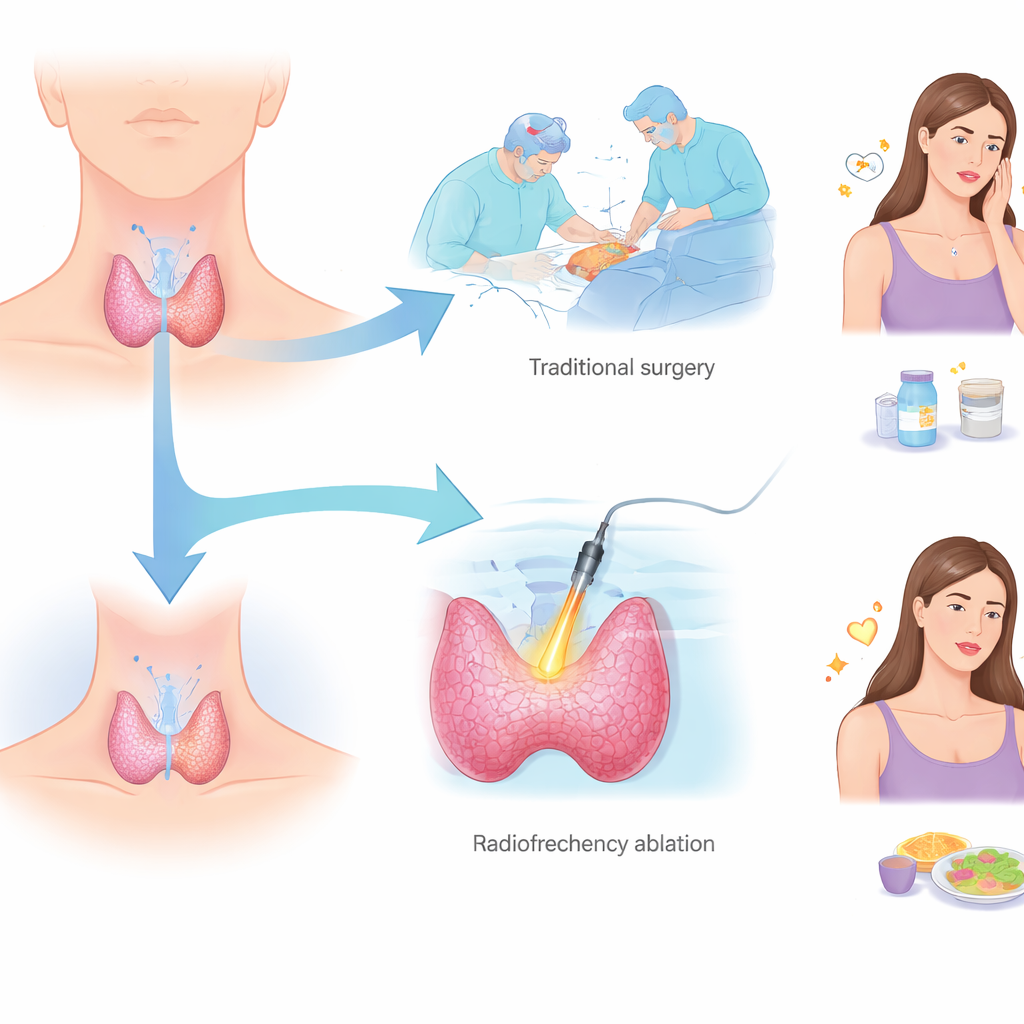
Two different ways to remove a tiny tumor
The team looked at adults in one Chinese hospital who had a single small papillary thyroid cancer limited to the thyroid gland, with no spread to lymph nodes or distant organs. One group chose standard surgery, in which part of the thyroid lobe is removed through an incision in the neck. The other group chose radiofrequency ablation, in which doctors guide a thin needle into the tumor using ultrasound and heat it from the inside to destroy it while leaving most of the thyroid in place. To make the comparison fair, the researchers carefully matched 150 patients in each group so they were similar in age, sex, education, and other background factors.
Keeping cancer under control
Both treatments did their main job well: controlling the cancer. In the ablation group, every tumor was completely treated in one session, and over the years most treated areas shrank until they disappeared on scans. In the surgery group, all operations also succeeded. Over nearly five years of follow‑up, only five patients across both groups showed any sign of cancer coming back or a new tumor appearing, and none developed spread to lymph nodes or distant sites. All of these recurrences were managed successfully with additional ablation. Major complications were rare, but only the surgery group had issues such as hoarseness, bleeding under the skin, or wound infection. Many surgical patients also needed long‑term thyroid hormone pills, while none of the ablation patients did.
How treatment choices shape daily well‑being
To understand how people were feeling, patients repeatedly filled out two detailed questionnaires. One measured general health and mental well‑being, comparing scores to those of the wider Chinese population. At diagnosis, thyroid cancer patients scored worse across nearly all areas, especially younger women, reflecting the emotional shock of a cancer label and worries about treatment. Within two years after either surgery or ablation, most of these scores rose to match those of the general population and stayed similar up to five years, suggesting that people gradually recovered their physical and emotional footing regardless of which treatment they chose.
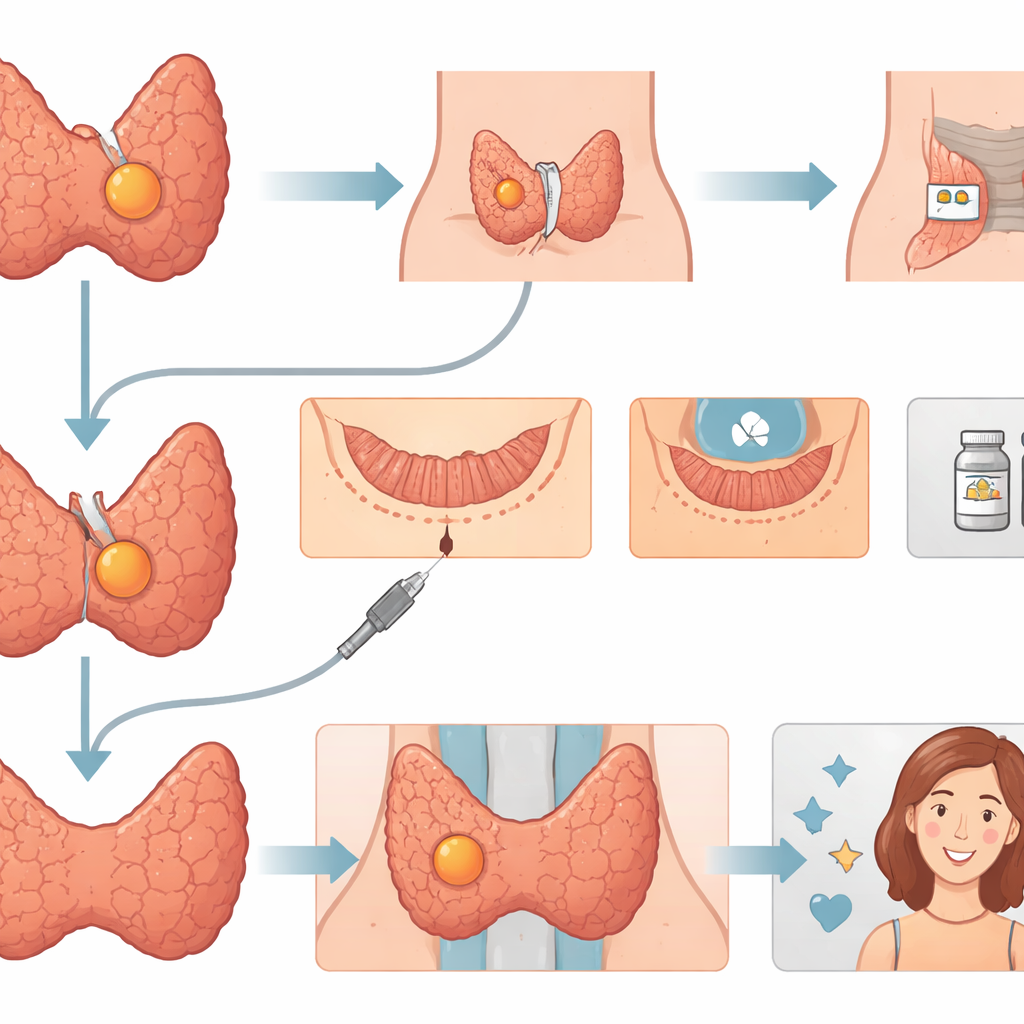
Scars, self‑image, and peace of mind
The second questionnaire focused on problems specific to thyroid cancer, such as voice changes, throat discomfort, nerve symptoms, and body image. Here, a clearer difference emerged. Both groups had a short‑term dip in quality of life a few months after their procedures, likely due to temporary nerve irritation and healing. Over time, most issues eased in both groups. However, people who had surgery reported more ongoing concern about their neck scars and somewhat more psychological distress than those who had radiofrequency ablation. The ablation group, who typically kept more of their thyroid and avoided a large incision and daily hormone pills, tended to feel better about their appearance and overall experience.
What this means for patients with small thyroid cancers
This study suggests that adults in China with small, low‑risk papillary thyroid cancers generally do well in the long run, no matter which active treatment they receive. Cancer control was excellent for both surgery and radiofrequency ablation. Yet when it comes to everyday life—how the neck looks, whether medication is needed, and how people feel about themselves—radiofrequency ablation offered some advantages. For patients who place a high value on a natural‑looking neck and minimal disruption of thyroid function, this minimally invasive option may be a particularly appealing choice, provided it is performed by experienced specialists and carefully matched to low‑risk tumors.
Citation: Zhou, Z., Xue, Y., Yao, Y. et al. Comparison of health-related quality of life between radiofrequency ablation and surgery for unifocal T1N0M0 papillary thyroid carcinoma: follow-up study with up to 5 years of observation. Sci Rep 16, 8568 (2026). https://doi.org/10.1038/s41598-026-40119-z
Keywords: papillary thyroid cancer, radiofrequency ablation, thyroid surgery, quality of life, minimally invasive treatment