Clear Sky Science · en
Environmental co-exposure to organophosphate and pyrethroid pesticides and mental health status in rural communities near an industrial pig farming facility
Invisible Chemicals, Visible Feelings
Many people picture pesticides as something that only farm workers worry about. But this study shows that simply living near large farms and industrial pig operations may quietly affect the water you drink, the soil around your home, and even how you feel day to day. By looking at rural communities in Chile, the researchers asked a simple but important question: could low, long-term levels of common pesticides in soil and well water be linked to symptoms of depression, anxiety, and overall quality of life in people who do not work with these chemicals?
Life Next to Big Farms
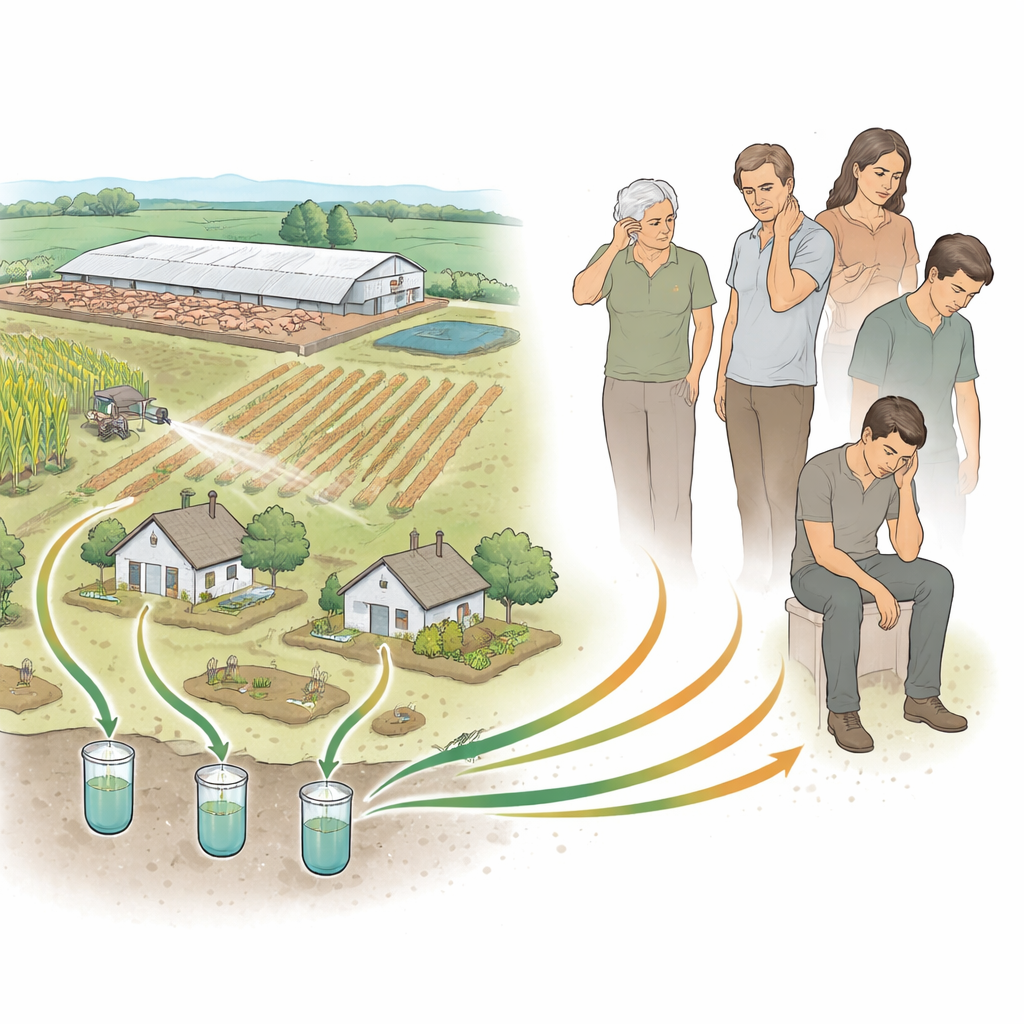
The research took place in a rural area known as “El Arbolillo” in Chile’s Maule Region, where vineyards, forestry plantations, crop fields, and an industrial pig farm sit close to scattered homes. Residents have long complained about strong odors and swarms of flies, which in turn have led to heavy insecticide use for pest control. From community lists, the team recruited 82 adults who had lived there for at least a year and were not employed as pesticide applicators. This allowed them to focus on routine environmental exposure rather than direct handling of chemicals.
Testing Soil, Water, and Minds
Scientists collected soil samples from the ground around each house and water samples from wells used for drinking or irrigation. They searched for five widely used insect killers: three from the organophosphate family (chlorpyrifos, diazinon, pirimiphos-methyl) and two pyrethroids (cypermethrin and lambda-cyhalothrin). Using highly sensitive laboratory techniques, they measured how much of each substance was present. At the same time, health professionals gave participants standard questionnaires that are commonly used around the world to rate depressive symptoms, anxiety and distress, positive and negative emotions, and physical and mental quality of life.
What the Measurements Revealed
Pesticide residues turned up in many samples, especially chlorpyrifos, which was the most common in both soil and water. In some wells, levels of chlorpyrifos and diazinon were higher than international guidelines recommend for safe drinking water. Residues tended to be stronger in homes located closer to forestry sites, vineyards, cherry orchards, and the pig farm, suggesting that wind drift and water runoff were carrying chemicals into nearby yards and wells. Most households also reported using insect sprays indoors, often pyrethroids, to deal with fly problems linked to the pig facility.
Links Between Place and Mood
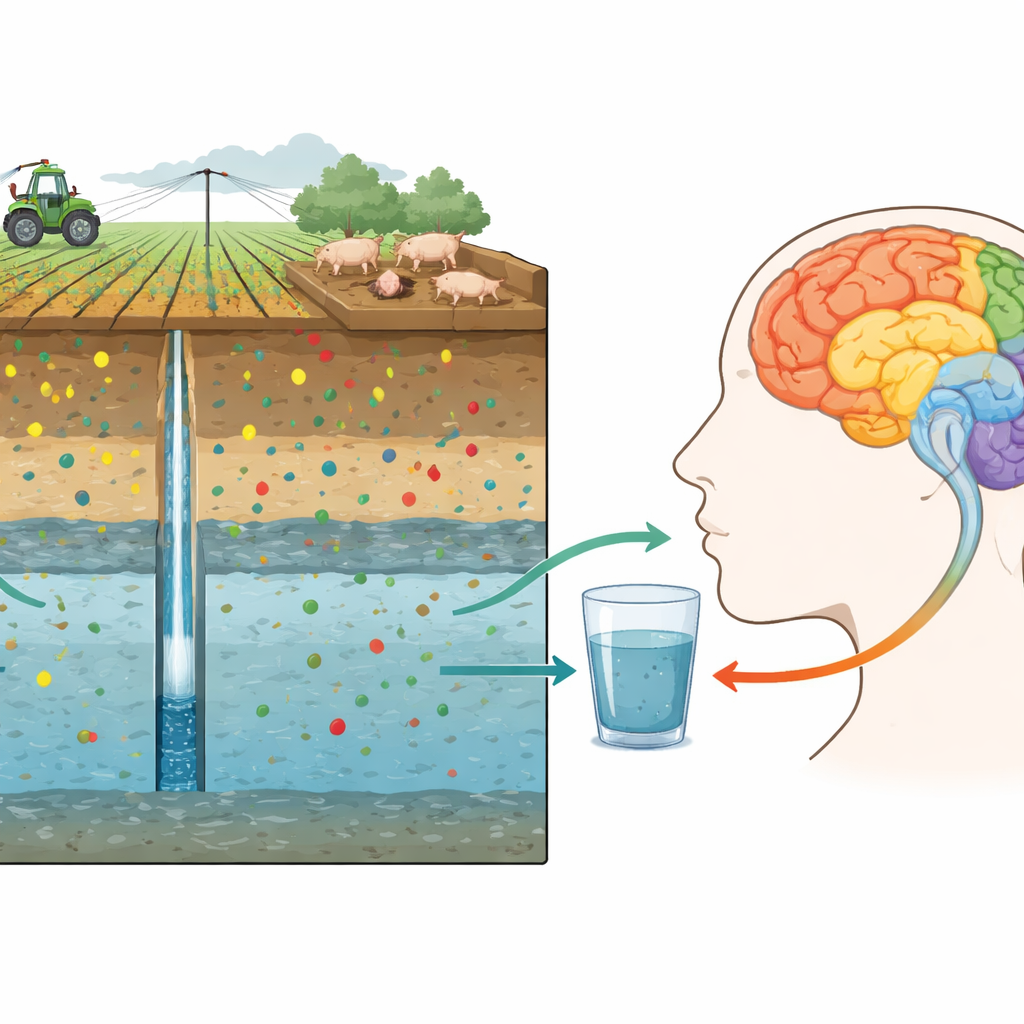
When the researchers combined the environmental data with the mental health scores, clear patterns emerged. Higher chlorpyrifos levels in well water were associated with more depressive symptoms and poorer mental health–related quality of life. Cypermethrin in water was tied to greater psychological distress. In soil, the organophosphate pirimiphos-methyl was linked with more depressive symptoms, while the relationships for cypermethrin and lambda-cyhalothrin were more complex and depended on whether they were found in soil or water. Overall, the statistical models suggested that pesticide residues explained a noticeable share of the differences in mood and well-being, even after accounting for age, sex, education, body weight, and income.
What It Means for Rural Communities
Although this was a snapshot in time rather than a long-term follow-up, the findings add to growing evidence that everyday exposure to mixtures of pesticides may influence mental health, not just cause obvious poisonings. For residents who rely on private wells and live near intensive farming or livestock facilities, the study underscores that invisible chemicals in soil and water can be part of the puzzle behind feelings of sadness, worry, or low energy. The authors argue that better monitoring of rural water sources, safer pest-control practices, and stricter rules for the most hazardous insect killers could help protect both the land and the minds of people who live there, in Chile and in similar communities around the world.
Citation: Hojas, R., Norambuena, J., Ponce, A. et al. Environmental co-exposure to organophosphate and pyrethroid pesticides and mental health status in rural communities near an industrial pig farming facility. Sci Rep 16, 9769 (2026). https://doi.org/10.1038/s41598-026-40098-1
Keywords: pesticides, drinking water, rural mental health, environmental exposure, industrial farming