Clear Sky Science · en
Temperature and voltage effects on the charge and health of lithium-ion battery modules in light electric vehicles
Why hot days matter for e-bike batteries
Electric bikes and scooters promise cleaner, easier travel, but the batteries that power them quietly struggle with heat. This study looks inside the battery pack of a light electric vehicle to see how real-world driving and different temperatures—from a mild room to desert-like heat—change how much energy the battery can hold and how long it will last. The findings help explain why range drops on very hot days and why smarter cooling and charging are essential for safe, durable urban e-mobility.
Looking inside a small electric ride
The researchers focused on a common type of light electric vehicle, similar to a power-assisted bicycle, equipped with a 48-volt lithium-ion battery pack built from 52 small cylindrical cells. Instead of treating the pack as a single black box, they disassembled it so each cell could be measured on a special test bench. For every cell, they determined how much charge it could store and how "healthy" it was compared with when it was new. They then rebuilt the pack, mounted the vehicle on rollers, and ran it through a standardized driving cycle used for motorcycle testing, simulating stop-and-go city riding and bursts of higher speed.
Turning up the heat in a controlled way
To see how temperature changes battery behavior, the team placed the whole pack in a sealed metal box where they could fix the surroundings at 25, 35, 45, or 65 degrees Celsius. While the vehicle "drove" on the rollers, sensors tracked voltage, current, and temperature in real time, both on the outside of the pack and near its center. After each set of tests at a given temperature, the pack was again taken apart so that the charge capacity and health of every single cell could be re-measured. Thermal camera images gave a direct picture of how heat built up and spread within the module during use and charging.
What happens to charge and health as things get hot
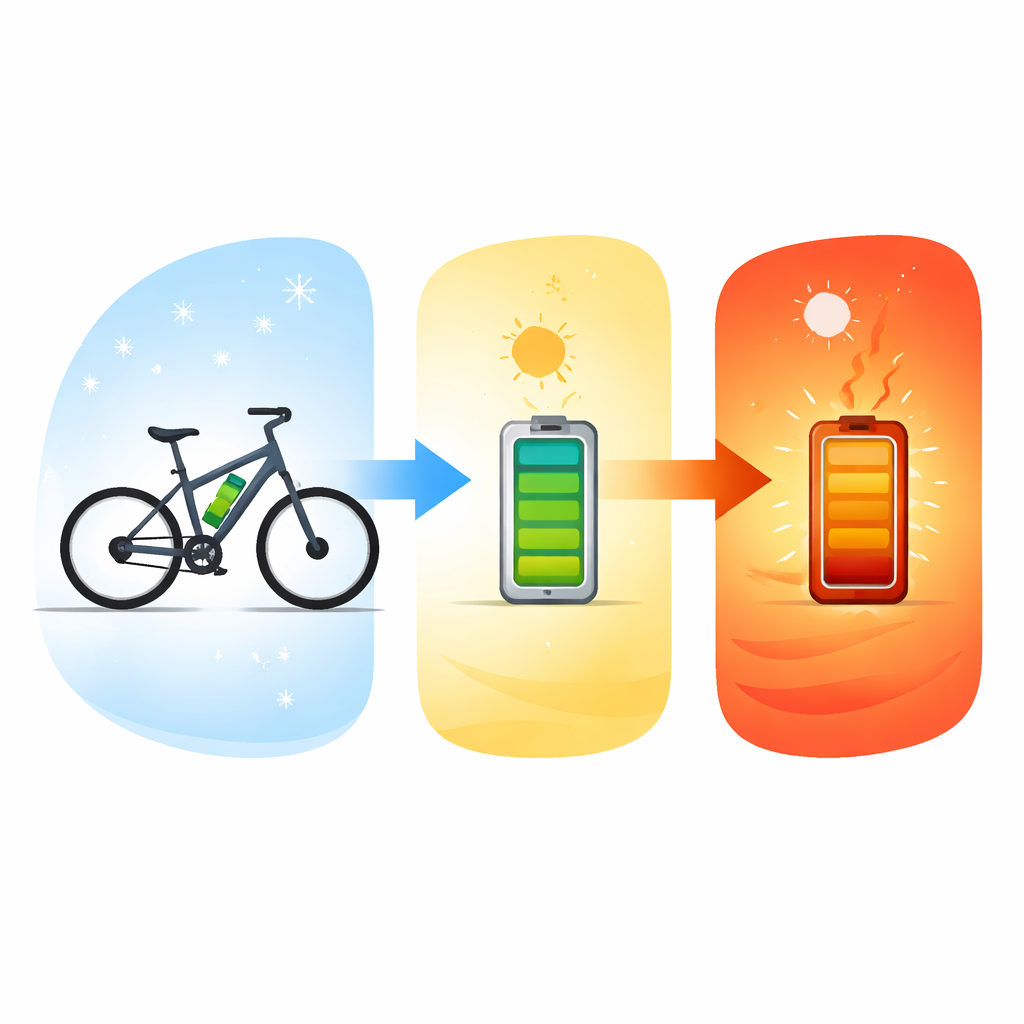
At moderate temperatures—around 25 to 35 degrees Celsius—the battery behaved well. The pack could charge close to its target voltage, and the vehicle’s simulated driving drew energy smoothly, with only small rises in temperature. In this range, the state of charge (how full the battery is) and the state of health (how much capacity remains compared with new) stayed within desirable limits. But as the temperature climbed to 45 degrees and especially to 65 degrees, problems appeared. The pack lost voltage faster during the drive cycle, meaning the vehicle would have less range. Some cells lost a noticeable share of their original capacity, slipping below commonly accepted health limits for continued use in vehicles.

Heat hides in the middle
Thermal images and sensor readings revealed that heat did not spread evenly. The central cells in the module consistently ran hotter than those on the sides. In the mild 25-degree test, the warmest spot inside the pack reached just under 30 degrees, but in the 65-degree test the hot core climbed above 80 degrees. During charging, the situation worsened: the pack held onto heat in its middle, while the protective electronics and cables also warmed up. At the highest temperature, the battery management system cut off charging early to prevent damage, which protected the pack but also caused some cells to be undercharged compared with others. This imbalance further reduced usable energy and sped up aging in the most stressed cells.
Design lessons for safer, longer-lasting rides
Overall, the study shows that light electric vehicle batteries are comfortable only in a relatively narrow thermal window, roughly 25 to 35 degrees Celsius. Above that, they lose energy more quickly, age faster, and develop uneven hot spots—especially in the center of the pack—while protective electronics struggle to keep them safe. For riders, this translates into shorter range and a higher risk of premature battery replacement in hot climates. For designers and city planners, the work underlines the need for simple but effective cooling or ventilation, smarter pack layouts that avoid overheated cores, and careful monitoring of cell-level health. With these measures, small electric vehicles can deliver cleaner transport without sacrificing safety or battery life.
Citation: Quintana, J.M., Paredes-Rojas, J.C., Vázquez-Medina, R. et al. Temperature and voltage effects on the charge and health of lithium-ion battery modules in light electric vehicles. Sci Rep 16, 9408 (2026). https://doi.org/10.1038/s41598-026-40094-5
Keywords: lithium-ion batteries, electric bikes, battery temperature, battery health, thermal management