Clear Sky Science · en
Comparison of retention of resin-based filled and unfilled pit and fissure sealants using different isolation techniques
Why Protecting Kids’ Molars Matters
Tooth decay is one of the most common health problems in children worldwide, and the chewing surfaces of the back teeth are especially at risk. These surfaces are crisscrossed with tiny grooves where food and bacteria can easily hide, making them hard to clean even with good brushing. This study asks a practical question that matters to dentists, parents, and health planners alike: when sealing those grooves to prevent cavities, does the type of sealant or the way the tooth is kept dry during treatment really change how well the protection lasts?
Sealing the Weak Spots in Young Teeth
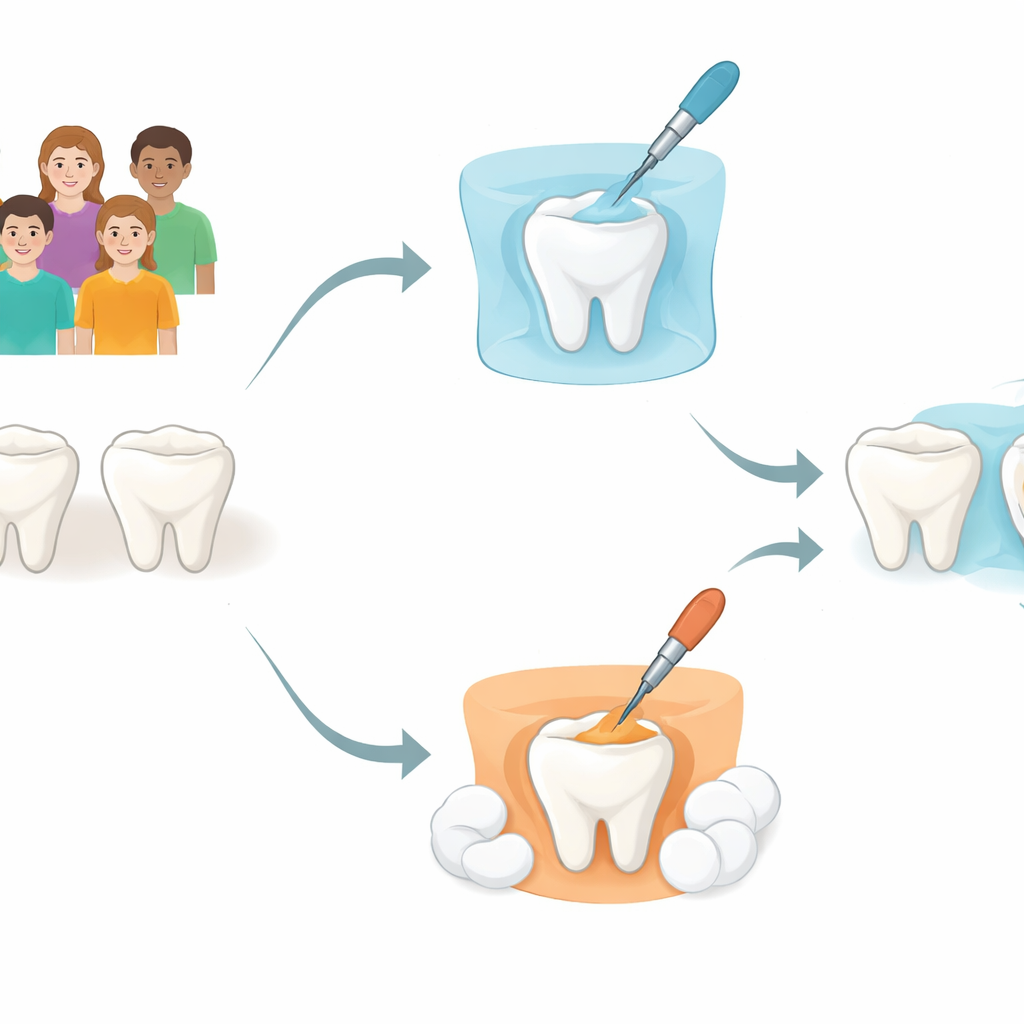
When permanent first molars erupt in childhood, their deep pits and fissures make them prime targets for early decay. Dentists often paint liquid plastics called sealants into these grooves to create a smooth, protective coating that blocks bacteria and food. In this trial, researchers worked with 100 children, each contributing both lower first molars, to compare two kinds of resin-based sealants that also release fluoride: one thicker and packed with tiny filler particles, and one thinner and without fillers. Because every child received both materials, the team could fairly compare how well each product stayed in place over 18 months.
Two Ways to Keep Teeth Dry
For sealants to grip the tooth, the surface must be clean and dry; moisture from saliva can weaken the bond. Dentists commonly rely on two strategies. One is a rubber sheet stretched around the tooth to block saliva completely, known for creating an especially dry, clean field but sometimes uncomfortable for children. The other is a simpler setup with cotton rolls and suction to soak up saliva around the tooth, which is usually easier and quicker but may not seem as watertight. In this study, each of the two sealant types was applied under both conditions: rubber dam isolation and cotton roll isolation, creating four treatment combinations that could be compared head to head.
What Stayed Put—and What Didn’t
The children returned at 6, 12, and 18 months so examiners, who did not know which material or method had been used, could check whether the sealants were fully in place, partly lost, or completely gone. After 18 months, about three-quarters of teeth treated with the unfilled, more fluid sealant still had all of their coating intact, compared with a bit over half for the highly filled, thicker sealant. When the researchers looked at how long the materials survived over the entire follow-up period, the unfilled sealant clearly held on better. By contrast, the way the teeth were kept dry did not make a meaningful difference: whether a rubber sheet or cotton rolls were used, retention rates were similar for both materials, and the overall survival patterns over time overlapped.
How the Material Itself Helps
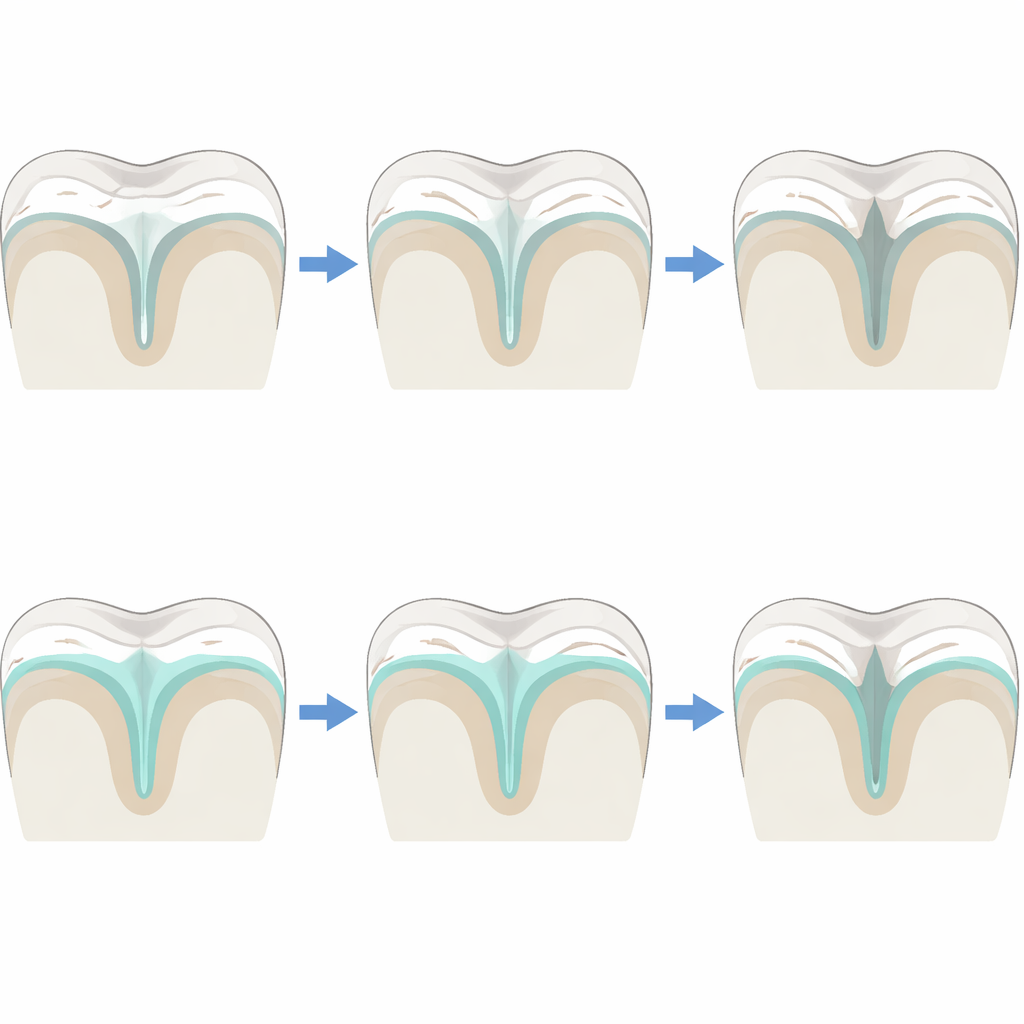
The findings hint at why the thinner sealant may have had an edge. Because it flows more easily, it can seep deeper into the tooth’s tiny grooves and microscopic roughness created by acid etching, forming long, interlocking “tags” that anchor it in place. Thicker, heavily filled sealants may be tougher against wear but can struggle to penetrate narrow spaces as thoroughly, which may limit their grip. Both products in this study also release fluoride, which can strengthen the enamel and slow down bacterial activity, adding a chemical layer of defense to the physical barrier created by the coating.
Healthy Teeth, Whatever the Setup
Perhaps most reassuring for parents and practitioners is that, over the 18 months of observation, none of the sealed molars developed cavities— even in grooves where some of the sealant had worn away. This suggests that, when properly applied, both types of fluoride-containing sealants can provide strong protection against decay in newly erupted molars. It also indicates that dentists have flexibility: they can choose between filled and unfilled sealants, and between rubber sheets or cotton rolls for moisture control, without sacrificing short- to medium-term cavity prevention. The key message is that getting those vulnerable grooves sealed early and carefully may matter more than the fine print of which specific product or isolation method is used.
Citation: Kucukyilmaz, E., Savas, S., Ozdemir, T. et al. Comparison of retention of resin-based filled and unfilled pit and fissure sealants using different isolation techniques. Sci Rep 16, 9055 (2026). https://doi.org/10.1038/s41598-026-40093-6
Keywords: dental sealants, child tooth decay, molar fissures, fluoride protection, pediatric dentistry