Clear Sky Science · en
Chitosan and polycaprolactone blended PDMS coatings improve biocompatibility of magnetic elastomers
Soft robots that can safely live in the body
Engineers are developing tiny soft machines that can snake through blood vessels, gently squeeze organs, or release drugs on command when exposed to a magnetic field. These devices must bend and move like living tissue while remaining harmless to nearby cells. The study described here tackles a key obstacle: how to stop the strong magnets inside such soft robots from slowly corroding and leaking toxic metals once they are surrounded by body fluids.
Why strong magnets become a health problem
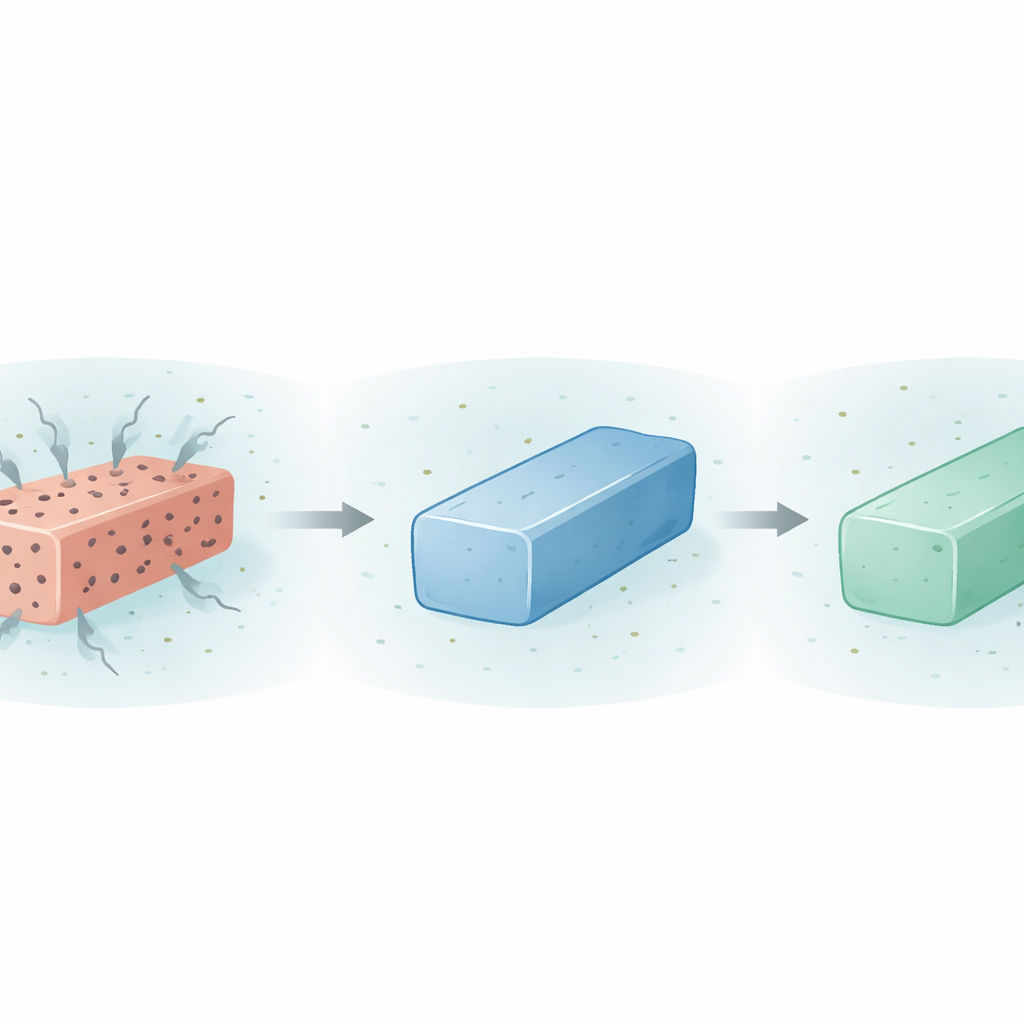
Many promising soft medical devices are made by embedding powerful magnetic particles in a stretchy silicone rubber. This combination allows an external magnet to stiffen or move the material without any wires or batteries inside the body. But the magnetic particles, made from an alloy containing neodymium and iron, do not get along with salty liquids like blood or tissue fluid. Over weeks and months, the metal surface corrodes and releases charged metal fragments into the surrounding liquid. In lab tests, these fragments quickly reach levels that are harmful to animal cells, blocking the path toward long-term implants unless the particles can be sealed off.
Designing a protective skin for soft magnets
The research team set out to build a thin, flexible “skin” that would wrap the magnetic core and act as a barrier against the body’s fluids without spoiling its magnetic performance. They focused on two well-known medical plastics: chitosan, a sugar-based material derived from crustacean shells with natural antibacterial properties, and polycaprolactone, a slowly degrading polyester used in dissolvable implants. To make these materials stick to the naturally slippery silicone and bend with it instead of cracking, the team blended each one with silicone itself and spin-coated it into layers about as thick as a human hair on both sides of the magnetic slab, creating a sandwich-like structure.
Putting the new coatings through a long bath
The coated and uncoated samples then spent nearly half a year soaking in salty water warmed to body temperature. The scientists tracked changes in the liquid’s acidity, electrical properties, and the exact amount of metal that seeped out. Without any coating, the magnets shed enough neodymium and iron to easily exceed known toxicity limits. A plain silicone layer helped only a little, confirming that this rubber alone is too porous to shield against ions. By contrast, both blended coatings cut metal release by over 95 percent. The chitosan blend was especially effective at trapping neodymium, thanks to chemical groups along its chains that grab and hold metal ions, turning the coating into an active filter rather than a simple physical wall.
Keeping motion and fighting microbes
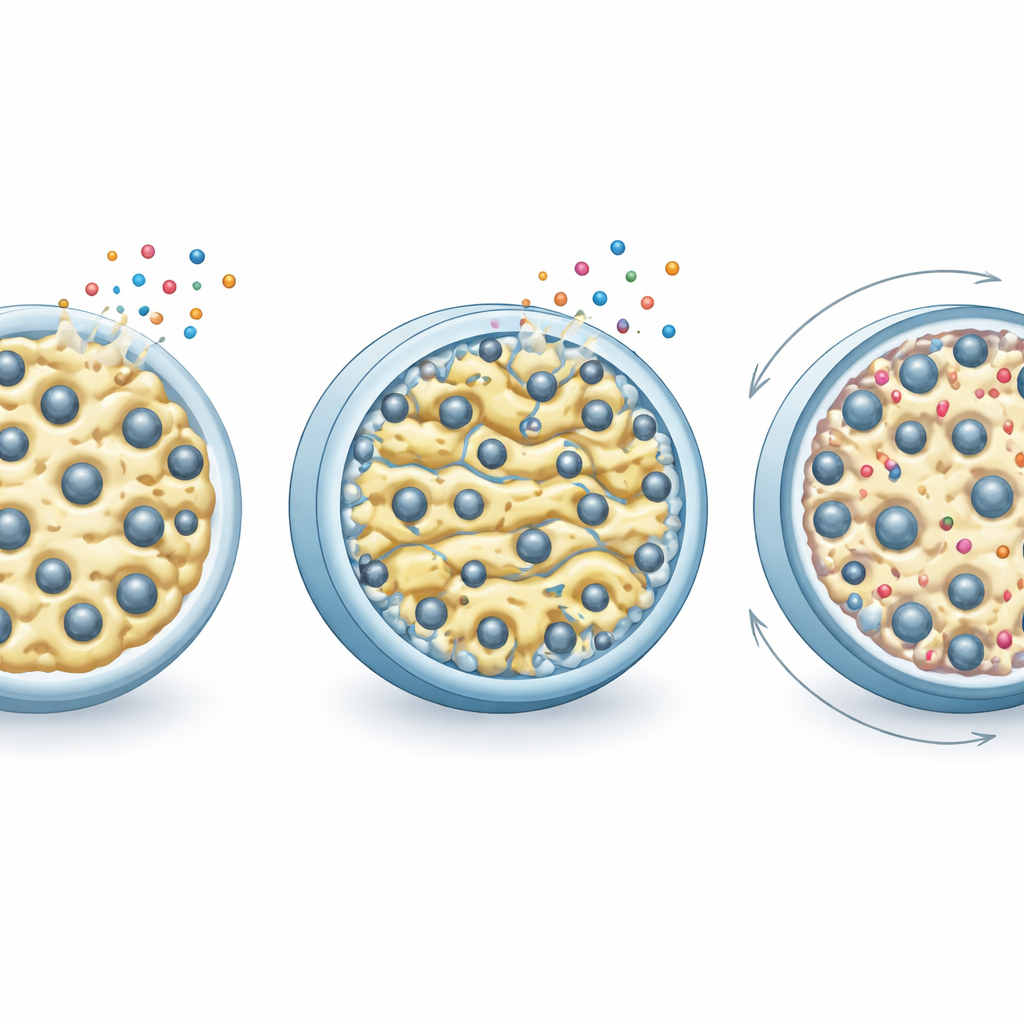
Protecting health is only half the story; the material also has to move when a magnetic field is applied. Measurements of how stiff the samples became under a magnetic field showed a clear trade-off. The polycaprolactone blend preserved almost exactly the same change in stiffness as the uncoated material, meaning it delivers essentially full actuation power while still blocking most ions. The chitosan blend sacrificed about half the actuation strength but delivered the tightest seal against metal escape. Tests with red blood cells and mouse skin cells showed that all coated versions remained friendly to living tissue, with little damage to blood cells and healthy-looking cell shapes on their surfaces. In bacterial tests, the coatings strongly discouraged the growth of a common hospital pathogen, although a common fungus still formed stubborn films, pointing to a remaining challenge.
Choosing between maximum safety and maximum force
Taken together, the results show that it is possible to turn magnet-filled silicone—once too corrosive for long-term contact with the body—into a much safer platform for soft medical machines simply by adding the right kind of thin, blended coating. The polycaprolactone version offers a strong balance: it allows the device to keep its full magnetic “muscle” while pushing metal leakage below harmful levels. The chitosan version provides even stronger chemical capture of stray ions, ideal where maximum safety matters more than force. With further testing in animals and better strategies against fungal colonization, these coated magnetic elastomers could underpin a new generation of soft, wire-free actuators for catheters, drug delivery capsules, and other intelligent implants.
Citation: Mystkowska, J., Łysik, D., Czerniakiewicz, A. et al. Chitosan and polycaprolactone blended PDMS coatings improve biocompatibility of magnetic elastomers. Sci Rep 16, 8545 (2026). https://doi.org/10.1038/s41598-026-40085-6
Keywords: soft magnetic actuators, biocompatible coatings, chitosan, polycaprolactone, implantable soft robotics