Clear Sky Science · en
Comparing local brain activity and distant functional connectivity in transgender women compared to cisgender controls
Why this brain study matters
Many people wonder whether being transgender has anything to do with how the brain works. This study looks at the brains of transgender women and compares them with those of cisgender men and cisgender women while they are resting quietly in an MRI scanner. By examining patterns of activity and communication between brain regions, the researchers ask a simple but important question: do transgender women’s brains look more like the sex they were assigned at birth, the gender they identify with, or something different altogether?
Looking at resting brains
To explore this, the team recruited 16 transgender women in China, most of whom were receiving gender-affirming hormone treatment, along with 16 cisgender men and 16 cisgender women of similar age and background. All volunteers lay still in the scanner while researchers measured slow, spontaneous changes in blood flow across the brain—an indirect sign of neural activity. The scientists then used several well-established measures to describe how active each small region was, how tightly neighboring areas fired together, and how strongly distant regions communicated as part of larger brain networks.
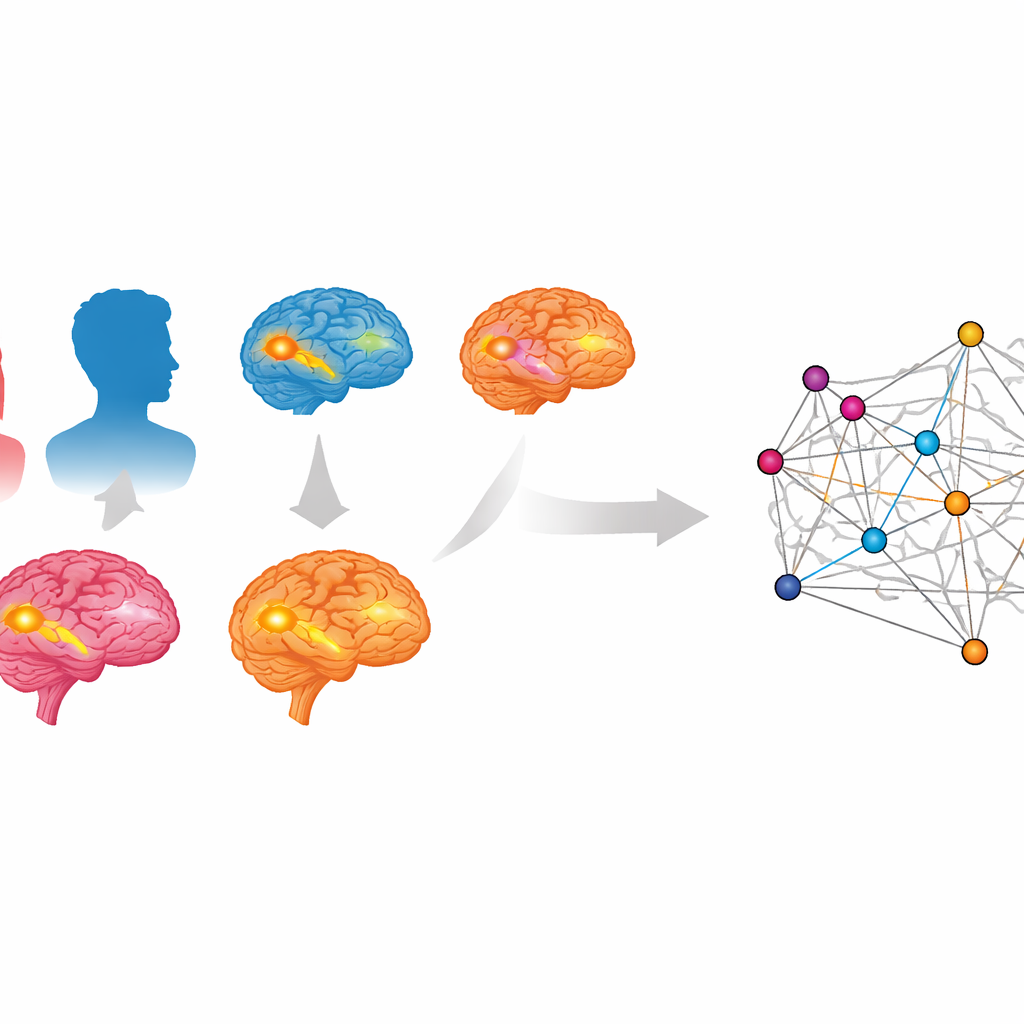
Local hotspots in movement and body regions
When the team examined local activity, they found that transgender women showed stronger signals than cisgender people in a set of regions involved in movement and bodily sensation, including the cerebellum, thalamus, and a strip of tissue in the frontal lobe that helps plan and control actions. At the same time, in an area called the precuneus—part of a network often linked to daydreaming and thinking about oneself—transgender women showed lower local synchronization than cisgender women, and in some spots also lower than cisgender men. These results suggest that, even at rest, certain brain areas that help sense and coordinate the body behave differently in transgender women.
Weaker long-distance links in key networks
Beyond individual regions, the researchers asked how well different networks across the brain talked to one another. They focused on the “sensorimotor” network, which handles touch and movement, and the “ventral attention” network, which helps us respond to important events, including sensations from our own bodies. Transgender women showed weaker long‑distance connections within the sensorimotor network and between this network and the attention network than both cisgender men and cisgender women. In many of these connections, cisgender women showed the strongest links, cisgender men were in the middle, and transgender women had the weakest. Measures of how efficiently information circulates within local clusters of the whole brain network told a similar story: transgender women had lower local efficiency than both cisgender groups, hinting at less tightly knit communication among nearby brain regions.
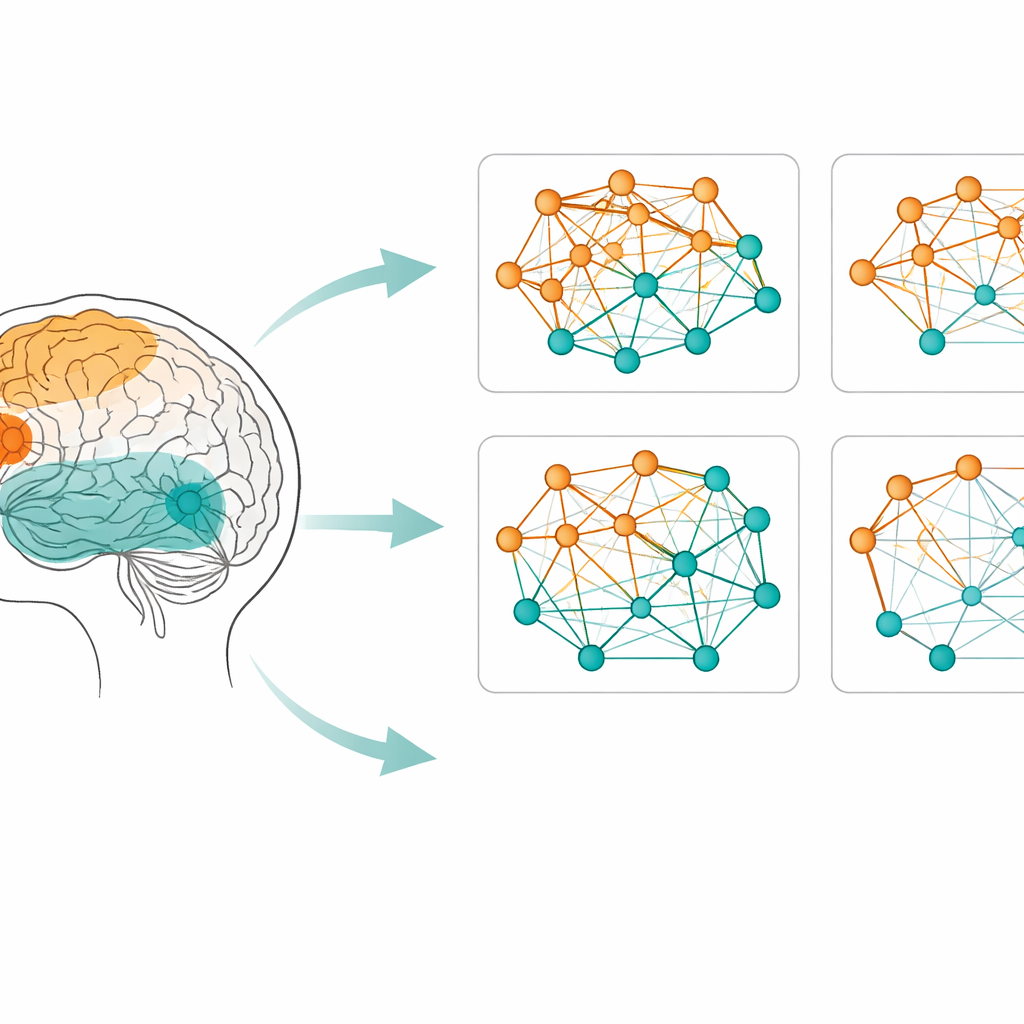
Changes over time in brain communication
The team also explored how these patterns fluctuated over the several minutes of scanning. Instead of treating connectivity as fixed, they slid a time window along the scan and calculated how strongly pairs of regions were linked in each window. This allowed them to see how stable or variable connections were. While moment‑to‑moment changes in local activity did not differ clearly among groups, some long‑distance links involving the visual network shifted more over time in transgender women, with cisgender men again showing intermediate values and cisgender women the most stable connections. These dynamic findings were more modest but support the idea that not only the strength but also the steadiness of brain communication differs between groups.
What the results may mean
Putting all these pieces together, the authors argue that transgender women show a distinctive pattern of brain function, particularly in systems that stitch together body sensations, movement, and self‑related thoughts. Their brains do not simply match those of cisgender women or cisgender men; instead, they have their own configuration, although in some measures they are closer to cisgender men, who share the same sex assigned at birth. One possible interpretation is that heightened local activity in body‑related regions may partly compensate for weaker large‑scale communication, as the brain works to reconcile inner gender identity with signals from the physical body. While the study is limited by its small size and differences in hormone treatment, it provides carefully collected evidence that the brains of transgender women organize and connect information in a characteristic way, reinforcing the idea that gender identity has a biological as well as social dimension.
Citation: Li, X., Xiang, Z., Liu, D. et al. Comparing local brain activity and distant functional connectivity in transgender women compared to cisgender controls. Sci Rep 16, 9253 (2026). https://doi.org/10.1038/s41598-026-40083-8
Keywords: transgender brain, resting-state fMRI, gender identity, brain connectivity, sensorimotor network