Clear Sky Science · en
Psychophysiological restoration in natural versus built cultural environments: a Chinese field-EEG study
Why your surroundings matter for how you feel
Modern life leaves many people feeling tense, drained, and unable to switch off, especially young adults under pressure from studies and work. This study asks a down‑to‑earth question: when you need to recover, is it better to walk in a leafy garden or stroll through an art museum? By taking brainwave recordings and mood surveys from real visitors in a Chinese city, the researchers show that both nature and culture can help us bounce back—but they do so in different ways.
Two calming places, two kinds of restoration
To explore this, the team brought one group of university students to a large botanical garden and another group to a modern art museum in Changsha, China. Before and after each visit, they measured brain activity with a light, wearable electroencephalogram (EEG) headset and asked volunteers to rate their feelings, including tension, fatigue, anger, sadness, confusion, energy, and self‑esteem. This combination of “inside the head” signals and self‑reported mood let the researchers see not just whether people felt better, but how their bodies responded. 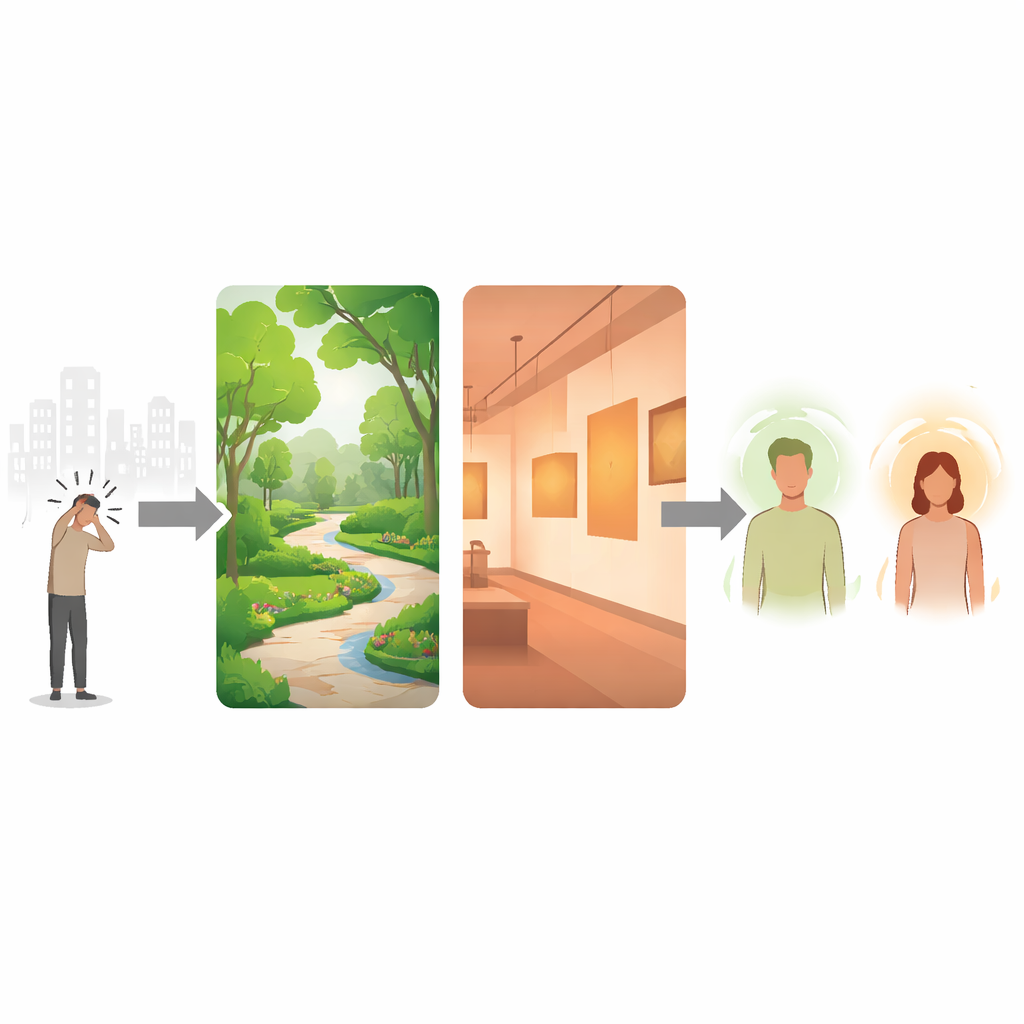
Nature quiets the body and eases the bad feelings
Time in the botanical garden clearly soothed the nervous system. Brainwave patterns linked with relaxed attention and mental calm became stronger, and overall “mood disturbance” scores dropped. Negative feelings such as tension, depression, and confusion eased for many visitors, and attention recovered more strongly than it did in the museum group. In other words, being surrounded by trees, sunlight, and open space seemed to help students unwind from stress and reclaim their mental focus without needing to work at it. The authors connect this to long‑standing ideas that soft, gently interesting natural scenes allow the mind to rest and the body to step back from a stressed state.
Art energizes and builds you up
The art museum told a different, but equally hopeful, story. Here too, visitors’ brainwaves signaled greater relaxation after the visit, and many mood scores improved. But the strongest changes were not in reducing bad feelings—they were in boosting good ones. People reported more energy, less fatigue, and higher self‑esteem, and overall mood disturbance dropped even more than in the garden group. The authors argue that rich, carefully designed cultural spaces can be mentally stimulating in a good way. When visitors manage to make sense of the artworks and displays, they may feel a sense of achievement and connection that lifts their spirits and builds psychological “capital” rather than simply refilling an empty tank.
Different people, different responses
The study also found that benefits were not evenly spread. On average, the natural setting helped a slightly larger share of students across more measures, supporting the idea that humans have a broad built‑in affinity for nature. At the same time, patterns varied with gender, academic year, and each person’s starting state: students who were in worse shape beforehand often improved more, and men and women showed somewhat different strengths in attention versus relaxation gains. By clustering people’s combined brain and mood data, the researchers could distinguish “high responders” from those who changed little, underscoring that no single place will work the same for everyone. 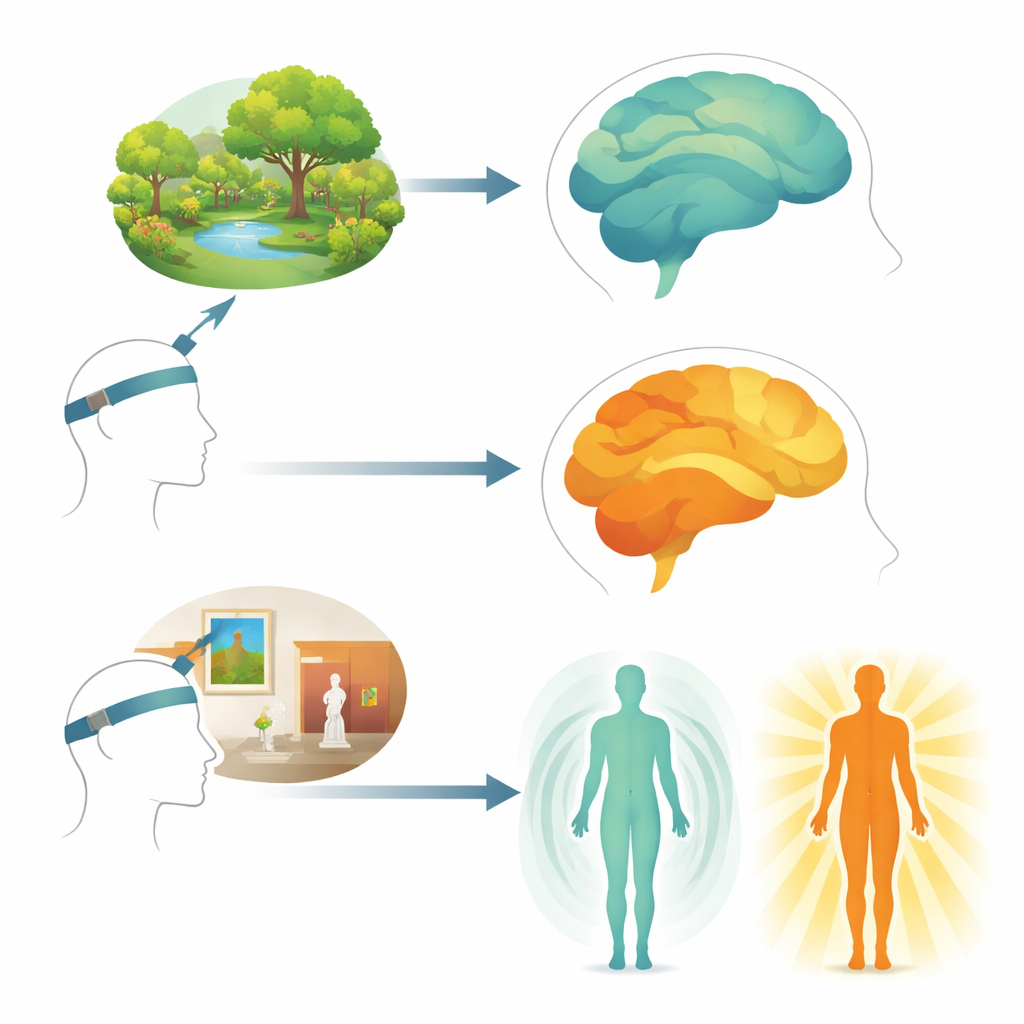
Linking feelings and the brain
By looking at correlations between mood scores and brainwave‑based relaxation, the team showed that shifts in feelings—especially anger, fatigue, and depression—explained a modest but meaningful slice of the changes seen in the EEG data. This suggests that when a setting helps people feel less distressed or more energized, the body’s stress systems also start to loosen their grip. Natural scenes seem to work mainly by calming negative arousal, while cultural spaces appear better at sparking upbeat engagement and pride.
What this means for everyday life
For someone simply trying to feel better, the message is straightforward. If you feel weighed down by worry, tension, or mental overload, a walk in a green, sunlit environment may be especially good at dialing down those negative states and restoring basic calm and focus. If you feel flat, unmotivated, or in need of inspiration, a well‑designed cultural space—such as an art museum, library, or other thoughtfully curated venue—may be better at lifting your energy and sense of self. Both types of places are valuable, but they work through different paths. Designing cities, campuses, and tourist sites that offer easy access to both nature and culture could give stressed urban residents a more complete “toolkit” for caring for their minds and bodies.
Citation: Wang, G., Zhang, S. & Chen, X. Psychophysiological restoration in natural versus built cultural environments: a Chinese field-EEG study. Sci Rep 16, 9513 (2026). https://doi.org/10.1038/s41598-026-40082-9
Keywords: restorative environments, urban stress, nature and health, art museums, EEG and mood