Clear Sky Science · en
Green synthesis of silica nanoparticles using chia seeds boosts rice germination and physiological responses
Seeds, Science, and a Growing Food Challenge
Feeding a growing world on a warming planet will require crops that sprout quickly, grow strongly, and withstand stress without relying on heavy chemical use. This study explores an inventive, plant-based nanotechnology that uses common chia seeds to create tiny particles of silica that can be soaked into rice seeds before planting. By comparing these “green” particles with conventional materials, the researchers show how rethinking chemistry at the smallest scale could help farmers boost rice productivity more sustainably.
Tiny Helpers Made from Everyday Seeds
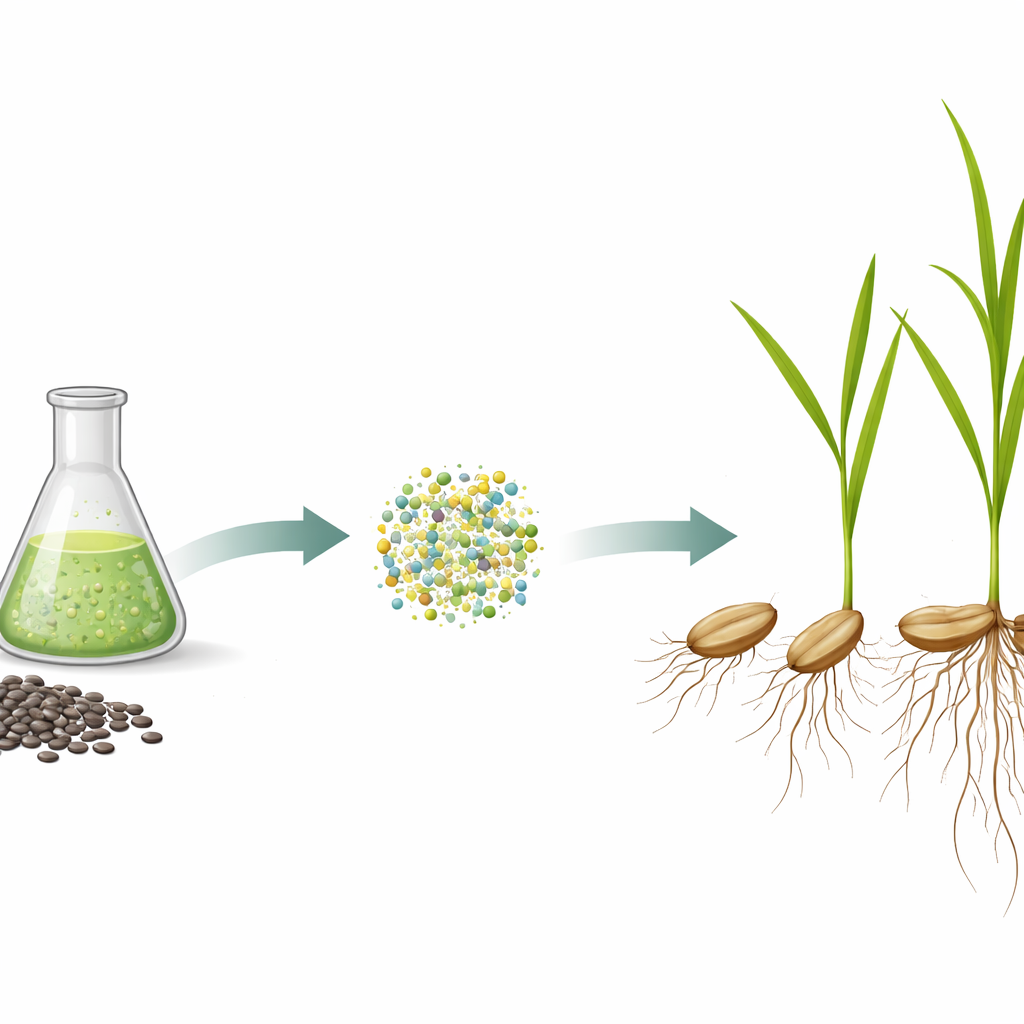
The researchers set out to make silica nanoparticles—extremely small grains of silicon dioxide—from the same basic ingredient found in sand, but in two different ways. One was a standard chemical route using industrial solvents and acids. The other used a “green” route in which ground chia seeds were mixed with hot water to produce an extract rich in natural oils, sugars, and plant compounds. This extract acted as both the engine and the protector in building the nanoparticles, helping dissolved silica form stable, ultra-small spheres while coating them in a thin layer of plant-derived molecules.
How the New Particles Behave
Using a suite of imaging and analytical tools, the team examined what these particles looked like and how they behaved in water. Both kinds of nanoparticles were only about ten billionths of a meter across, but those grown with chia extract were slightly larger, more uniform, and carried a stronger negative surface charge. This charge keeps them from clumping together, allowing them to stay evenly dispersed in water. Chemical fingerprints showed that the chia-based particles carried traces of the plant’s own substances on their surfaces, which likely help them interact more smoothly with living tissues like seed coats and young roots.
Soaking Rice Seeds in a Nano Bath
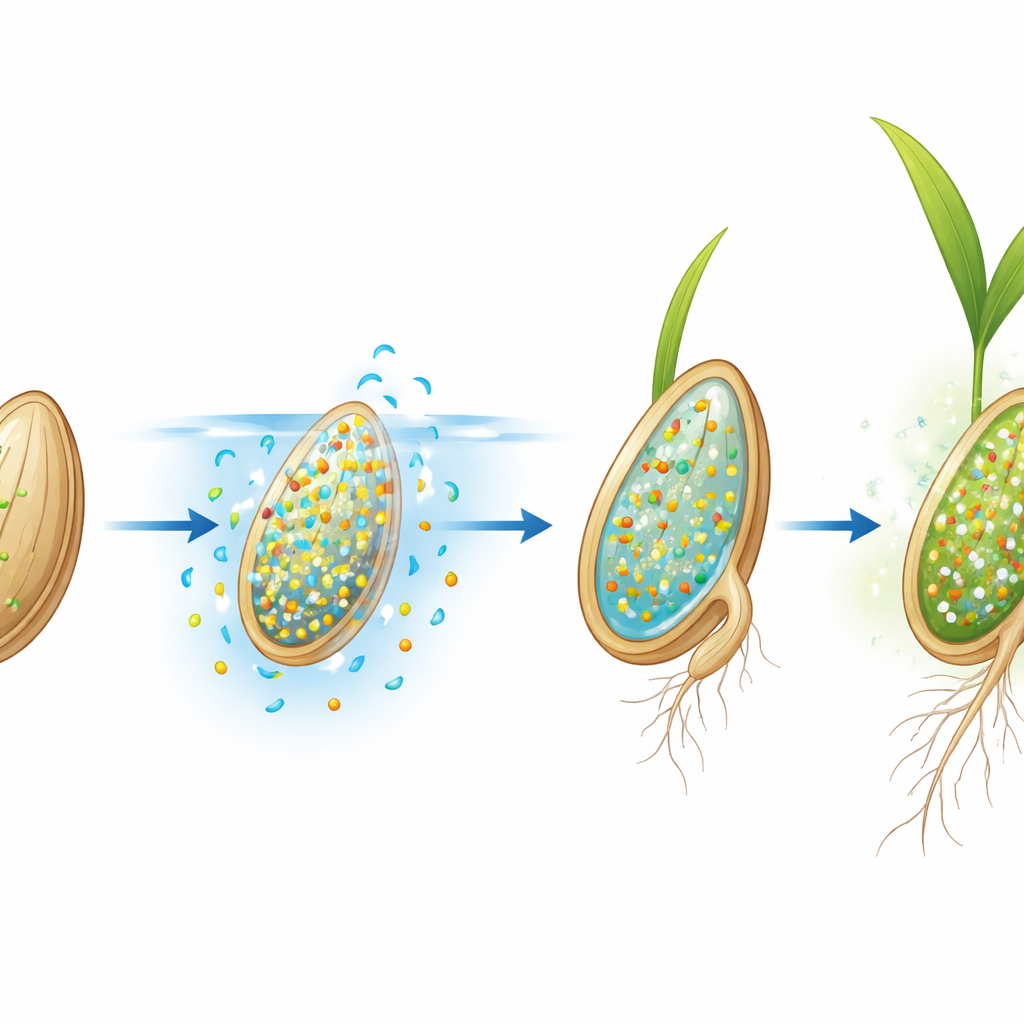
The central test was simple but powerful: rice seeds were soaked for 24 hours in different priming solutions—plain water, regular silica, chemically made nanoparticles, or chia-based nanoparticles—each at low and high doses. After priming, the seeds were allowed to germinate for six days. Seeds treated with chia-based nanoparticles at the higher dose consistently outperformed all others. They germinated more rapidly, produced longer seedlings with greater fresh and dry weight, and soaked up more water during the first crucial hours of sprouting. Measurements inside the seedlings showed higher silicon levels, more simple sugars, and greater activity of key enzymes that break down stored starch and power early growth.
Managing Stress While Seeds Wake Up
Germination is a stressful time for seeds: as metabolism ramps up, reactive molecules can build up and damage cells. The study tracked markers of this internal strain, as well as the seedlings’ own protective systems. All silica treatments altered these stress signals, but chia-based nanoparticles struck the most beneficial balance. At the higher dose they drove strong growth while boosting the seedling’s antioxidant defenses, including an important molecule called glutathione. At the lower dose they were especially good at limiting damage-related markers, while still improving some growth traits. In contrast, bulk silica and chemically made nanoparticles tended to trigger more stress compounds and higher levels of a protective amino acid that often rise when plants are under strain.
What This Means for Future Harvests
To a non-specialist, the takeaway is that how we make a material can matter as much as what it is made of. By using chia seed extract instead of harsh chemicals, the researchers produced silica nanoparticles that are more stable in water and better tuned to work with living seeds. When used to pre-soak rice, these “green” particles helped seeds sprout faster, grow stronger seedlings, and fine-tune their internal stress responses. While field trials and environmental checks are still needed, this work points toward a future in which simple, plant-based nanomaterials could help farmers raise resilient crops with fewer synthetic inputs, supporting both food security and environmental health.
Citation: Tourky, S.M.N., Abdelghany, A.M. & Elghareeb, E.M. Green synthesis of silica nanoparticles using chia seeds boosts rice germination and physiological responses. Sci Rep 16, 8953 (2026). https://doi.org/10.1038/s41598-026-40078-5
Keywords: rice germination, green nanotechnology, silica nanoparticles, seed priming, chia seed extract