Clear Sky Science · en
Aluminum-induced proteomic responses in Qualea dichotoma (Mart.) warm: a dataset descriptive analysis
Why a Tree That Loves Metal Matters
Most farmers dread aluminum in their soils, because in acidic ground this common metal becomes toxic to crops and sharply cuts yields. Yet in Brazil’s vast Cerrado savanna, some native trees not only tolerate aluminum but actually need it to grow well. This study explores one of those species, Qualea dichotoma, by cataloging the many proteins in its leaves when grown with and without aluminum. The work doesn’t test every cause-and-effect, but it builds a detailed parts list that future researchers can use to understand how a wild tree turns a widespread soil poison into something closer to a nutrient.
A Tough Tree in a Harsh Landscape
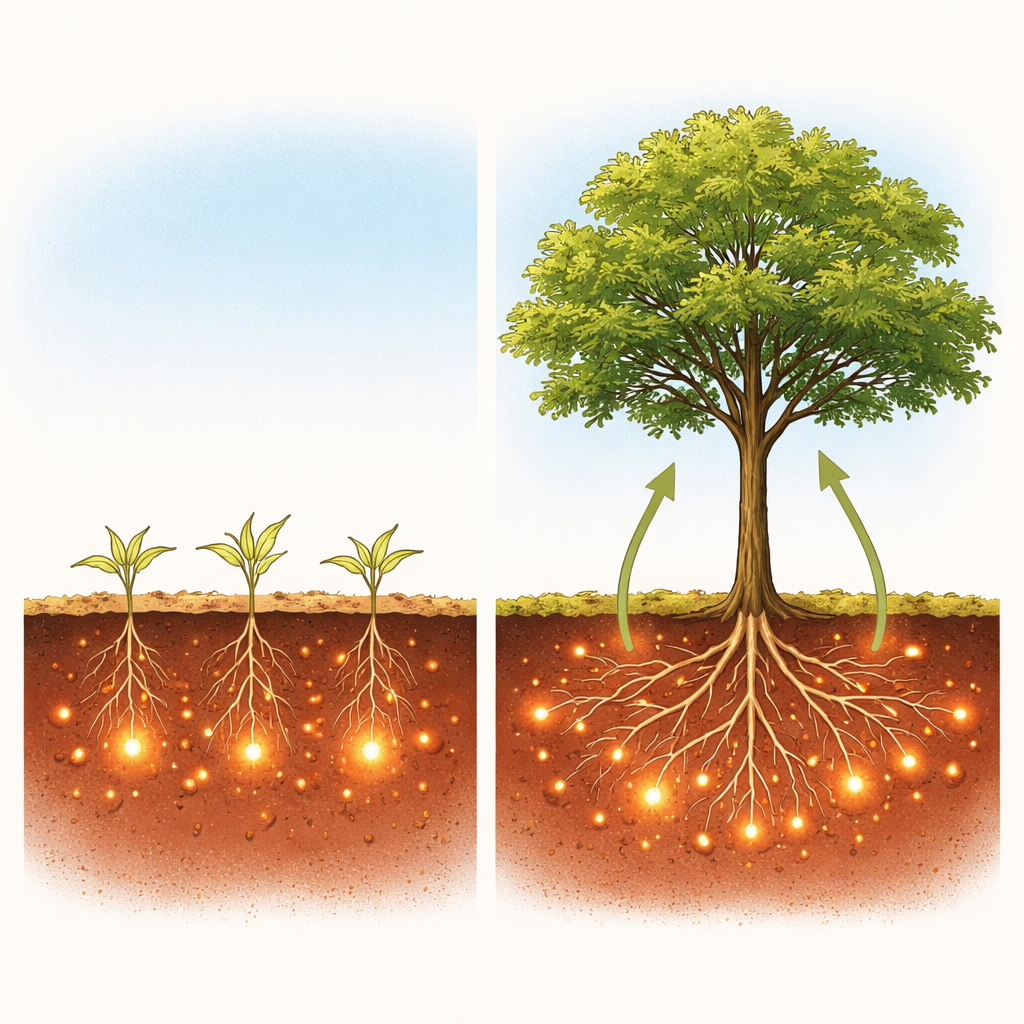
The Cerrado covers an area nearly the size of western Europe and hosts immense biodiversity and genetic resources, many of which remain poorly understood. Its soils are typically acidic and poor in nutrients, conditions that release aluminum into forms that damage the roots of most crop plants. Qualea dichotoma, however, is an aluminum-accumulating tree that naturally inhabits these tough soils and actually requires the metal for normal growth. Understanding how this species copes with and uses aluminum could reveal biological tricks that help conserve the Cerrado and might one day inspire strategies for farming better on marginal lands.
Taking a Protein Census
To peer inside this aluminum-loving tree, the researchers grew seedlings of Qualea dichotoma in controlled conditions, with and without added aluminum, for about four months. They then collected leaf samples, froze them, and extracted all the proteins. These proteins were chopped into peptides and analyzed using high-resolution mass spectrometry, a technique that weighs and sorts molecules so that computers can identify them. Instead of focusing on how much each protein changed between treatments, the team created a descriptive inventory: a comprehensive list of which proteins are present in the leaves under these conditions.
Comparing Two Reference Maps
One challenge in studying a non-model tree is that its full genetic blueprint and protein list are not completely cataloged. To work around this, the researchers compared their mass spectrometry data against two different reference collections: a broad database of proteins from many species in the Myrtales plant order, and a translated genome from a close relative, Qualea grandiflora. Using specialized software, they identified 1,255 proteins with the broader Myrtales database and 1,062 proteins with the Qualea grandiflora genome. They then used Gene Ontology, a system that groups proteins by job, location in the cell, and role in biological processes, to see how similar the results from the two reference maps were.
What the Proteins Reveal About Leaf Life
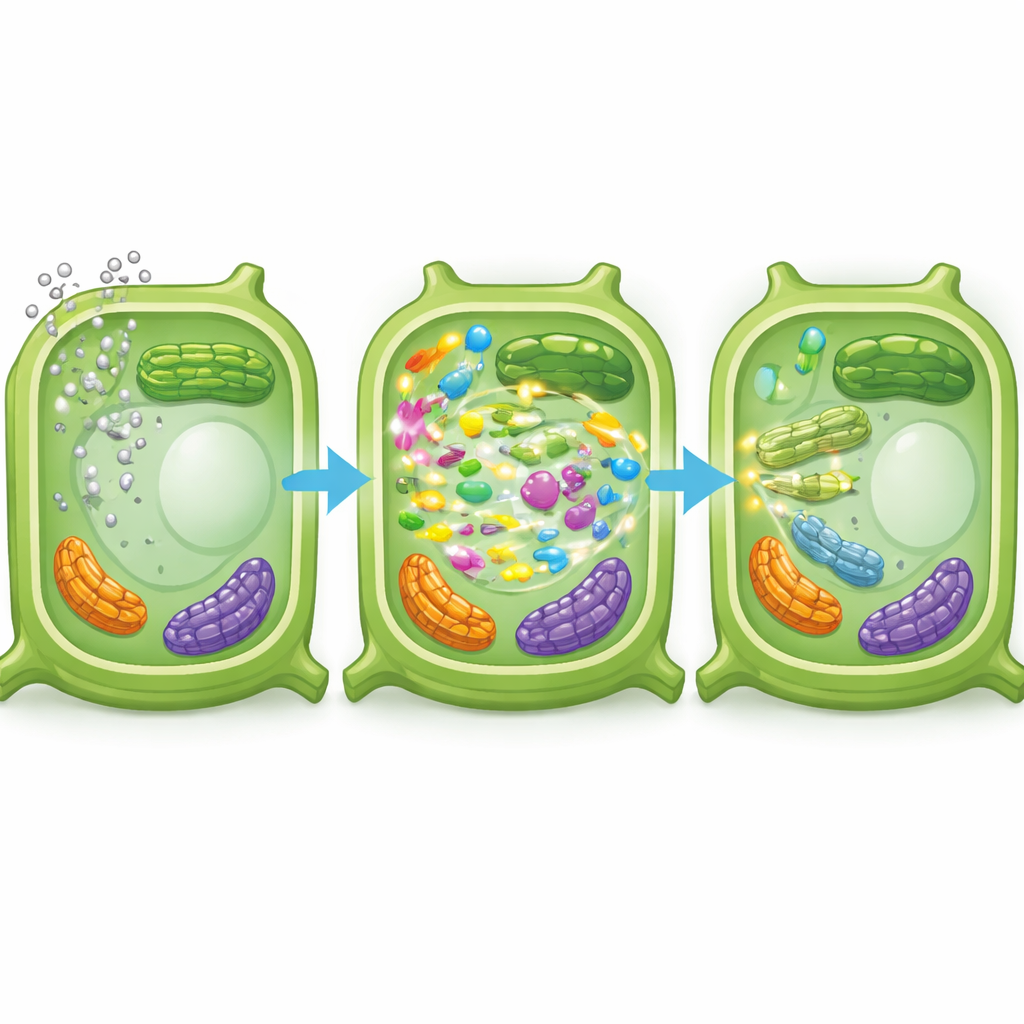
Despite some small differences, the two databases produced remarkably similar pictures of the Qualea dichotoma leaf proteome. Most proteins fell into categories involved in binding ions and organic molecules, living in the cytoplasm, membranes, and internal structures like the endoplasmic reticulum and ribosomes, and driving core processes such as primary metabolism and responses to stimuli. The dataset includes proteins tied to energy production, the tricarboxylic acid (TCA) cycle, the electron transport chain, protein synthesis machinery, and systems that handle reactive oxygen species, which are often produced during metal stress. Together, these findings sketch a busy cellular landscape in which aluminum interacts with central metabolism rather than sitting on the sidelines.
A Starting Point, Not the Final Word
The authors emphasize that their study is descriptive: it identifies which proteins are present but does not quantify how each one rises or falls in response to aluminum, nor does it capture subtle changes such as chemical modifications of proteins over time. Some proteins unique to Qualea dichotoma may also escape detection if they are missing from current databases. Even so, this work provides the first systematic map of leaf proteins in an aluminum-dependent Cerrado tree. For a general reader, the key takeaway is that what looks like a hostile metal in farm fields can be woven into the basic biology of a wild plant. By charting the molecular players that let Qualea dichotoma thrive in aluminum-rich, acidic soils, the study lays groundwork for future efforts to protect the Cerrado and perhaps to develop crops better suited to challenging environments.
Citation: Cury, N.F., de Sousa Ericeira Moreira, D., de Souza Fayad André, M. et al. Aluminum-induced proteomic responses in Qualea dichotoma (Mart.) warm: a dataset descriptive analysis. Sci Rep 16, 8502 (2026). https://doi.org/10.1038/s41598-026-40059-8
Keywords: aluminum-tolerant plants, Cerrado savanna, plant proteomics, acidic soils, metal accumulation in plants