Clear Sky Science · en
Bacteriological quality, antimicrobial resistance profile of Escherichia coli, and associated risk factors in tap water, Addis Ababa, Ethiopia
Why Your Kitchen Tap Matters More Than You Think
Many city dwellers assume that water flowing from the kitchen tap is automatically safe to drink. This study from Addis Ababa, Ethiopia, challenges that assumption. By looking closely at germs and drug-resistant bacteria in household tap water, the researchers show how everyday plumbing, toilets, and trash handling can quietly shape the health of families—especially children—in low and middle-income cities around the world. 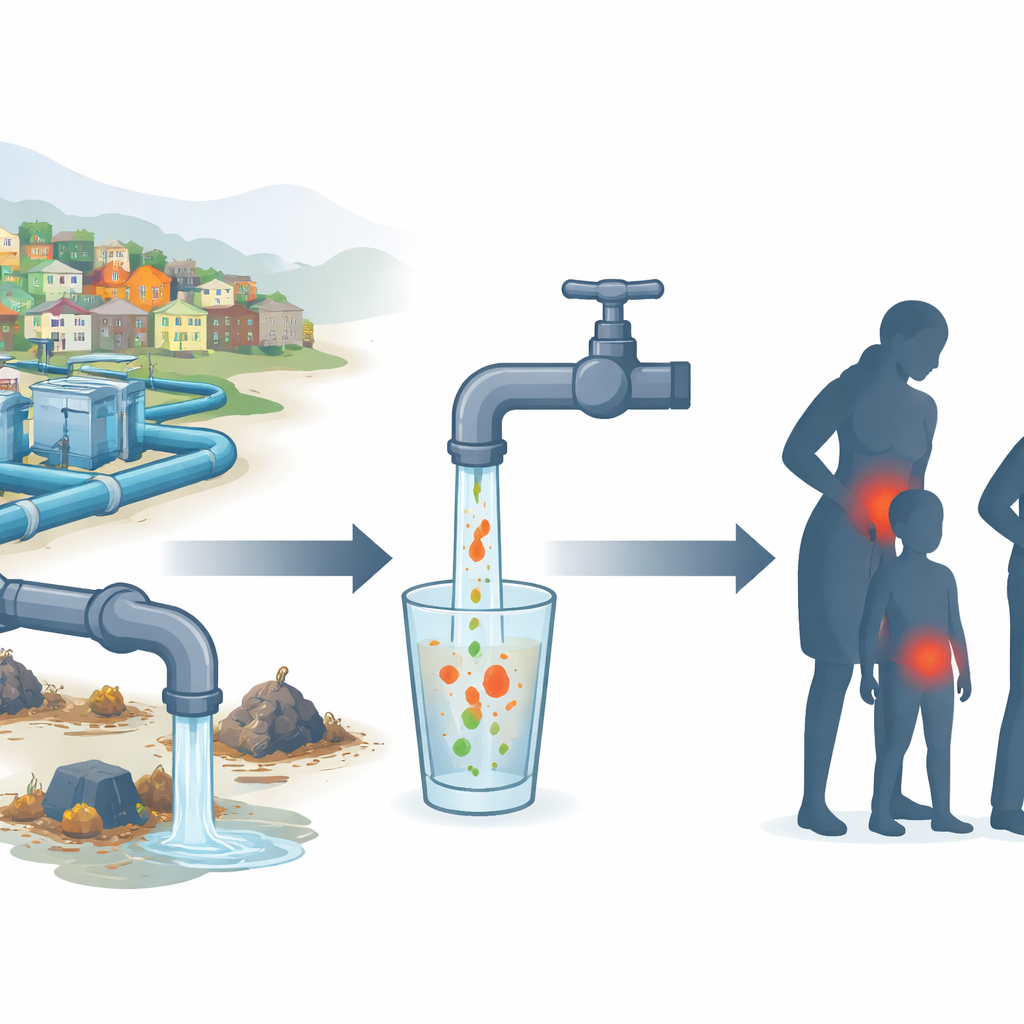
Looking for Hidden Germs in Household Taps
The researchers collected 341 tap water samples from households in two large sub-cities of Addis Ababa, Gullele and Yeka, during May to July 2024. All of these homes relied only on tap water for drinking. Trained staff carefully took samples directly from taps, using sterile bottles and keeping them cold until they reached a public health laboratory. There, the team counted general bacteria in the water and, more importantly, specific groups used worldwide as warning signs of fecal contamination: total coliforms, heat-tolerant coliforms, and Escherichia coli (E. coli). These germs do not always cause disease themselves, but their presence suggests that sewage or human waste has found its way into the water system.
What the Tests Revealed About Water Safety
The findings were troubling. More than four out of five samples (about 82%) contained high levels of general bacteria, and nearly one in five had total coliforms. Heat-tolerant coliforms, which more strongly signal fecal pollution, appeared in almost 15% of samples. Most concerning, E. coli—an indicator that fresh human or animal waste has recently entered the water—was detected in nearly 9% of household taps. International and national standards say drinking water should contain no detectable E. coli at all, so any positive result is a red flag. The contamination levels varied between the two sub-cities, but in both areas a meaningful share of families were drinking water that did not meet safety guidelines. 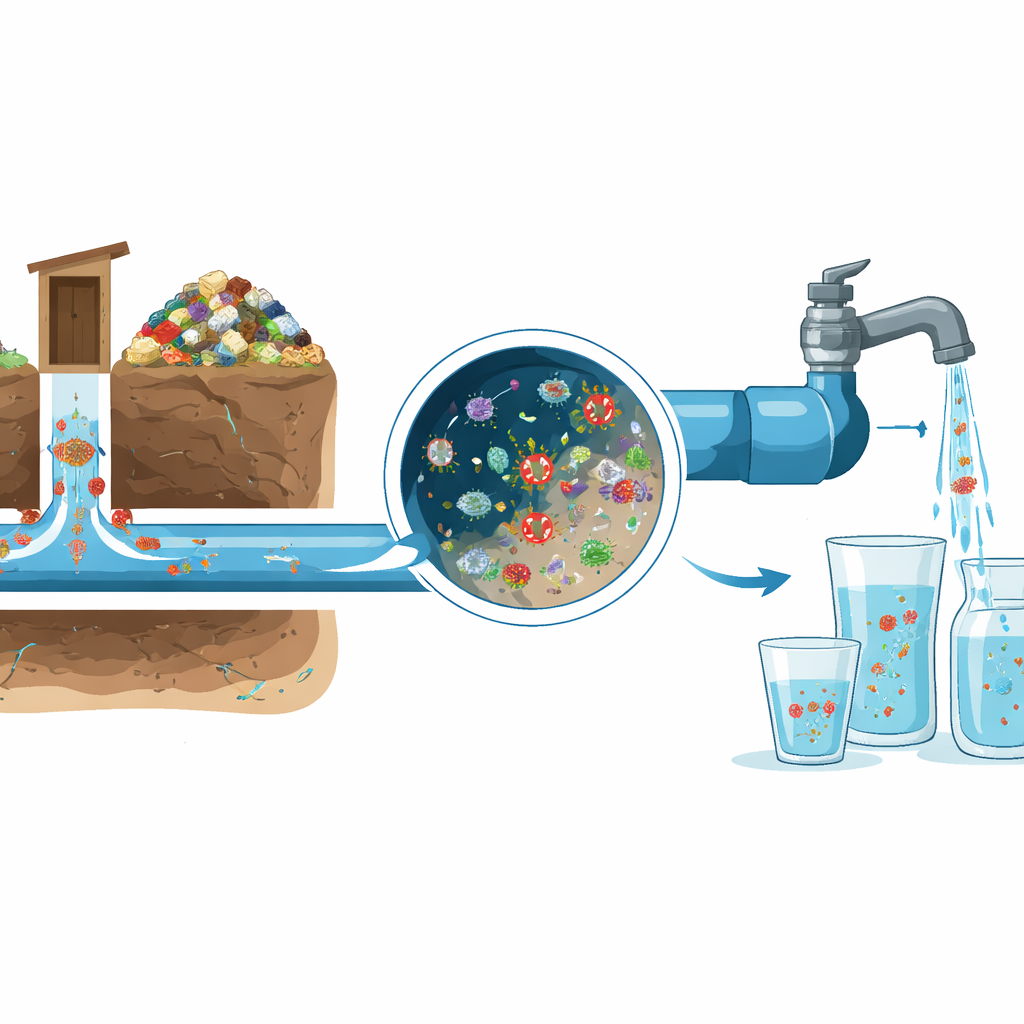
Drug-Resistant Bacteria in the Water
The study did not stop at counting bacteria; it also tested how the E. coli strains responded to commonly used antibiotics. The results showed a worrying pattern. All E. coli isolated from tap water were resistant to amoxicillin, and most resisted ampicillin and nitrofurantoin—drugs often used to treat urinary and gut infections. At the same time, the bacteria remained fully sensitive to some of the stronger or more carefully controlled medicines, such as ciprofloxacin, gentamicin, and meropenem. Even so, 80% of the E. coli strains met the definition of multi-drug resistant, meaning they could withstand several different antibiotic types. This suggests that tap water is not just a carrier of germs, but also a pathway for spreading resistance to the medicines doctors rely on.
How Pipes, Toilets, and Trash Shape Water Quality
To understand why some taps were contaminated and others were not, the researchers compared household conditions. They found three factors strongly linked to the presence of E. coli in drinking water. First, homes with leaking or damaged pipes were almost ten times more likely to have contaminated tap water than those with intact plumbing, suggesting that cracks allow dirty water or soil to seep into the supply. Second, taps located close to latrines were over seven times more likely to show contamination, pointing to the role of nearby toilets and shallow underground mixing. Third, households with poor waste management—such as dumping garbage near water lines or drains—were more than twice as likely to have unsafe tap water. Together, these links show that water safety depends not only on treatment at the plant, but also on how pipes, toilets, and trash are managed in crowded neighborhoods.
What This Means for Families and Communities
For lay readers, the takeaway is stark but actionable: even in a major city with a treated municipal supply, tap water can pick up fecal germs and drug-resistant bacteria before it reaches the glass. The study concludes that a substantial share of Addis Ababa’s household taps fail to meet World Health Organization standards, with E. coli and other warning bacteria appearing where they should not. This combination of contamination and antibiotic resistance raises the risk of hard-to-treat infections. The authors argue that regular inspection of pipes, safer placement of latrines, better waste handling, and careful antibiotic use are all essential to protect public health. In simple terms, keeping pipes sound, toilets distant, and neighborhoods clean may be just as important as what happens inside the water treatment plant.
Citation: Kassa, D.F., Bedada, T.L., Abera, D. et al. Bacteriological quality, antimicrobial resistance profile of Escherichia coli, and associated risk factors in tap water, Addis Ababa, Ethiopia. Sci Rep 16, 9793 (2026). https://doi.org/10.1038/s41598-026-40058-9
Keywords: drinking water safety, E. coli contamination, antimicrobial resistance, urban sanitation, tap water quality