Clear Sky Science · en
Knowledge, screening practice and infection-related behaviors toward Helicobacter pylori among university students in East China—a cross-sectional study
Why stomach germs on campus matter
Many people have heard of ulcers or stomach cancer, but fewer know that a single bacterium, Helicobacter pylori, quietly infects roughly half the world’s population and helps drive these diseases. University students might seem too young to worry about it, yet they are at a turning point in forming lifelong habits and often act as health messengers for their families. This study looked at what students in East China actually know about this stomach germ, how often they get tested, and which everyday behaviors at the dining table may raise or lower their chances of infection.
Taking the pulse of student health
From March to June 2025, researchers surveyed more than 2,000 full‑time students from 18 universities across six provinces in East China. Using a carefully tested questionnaire, they gathered information on students’ backgrounds, their knowledge of Helicobacter pylori, whether they had ever been screened or treated, and details of their diet and hygiene habits. After removing inattentive responses, the team analyzed 2,025 questionnaires from mostly young adults around 20 years old, with a mix of majors from humanities to medicine.
What students know—and don’t know
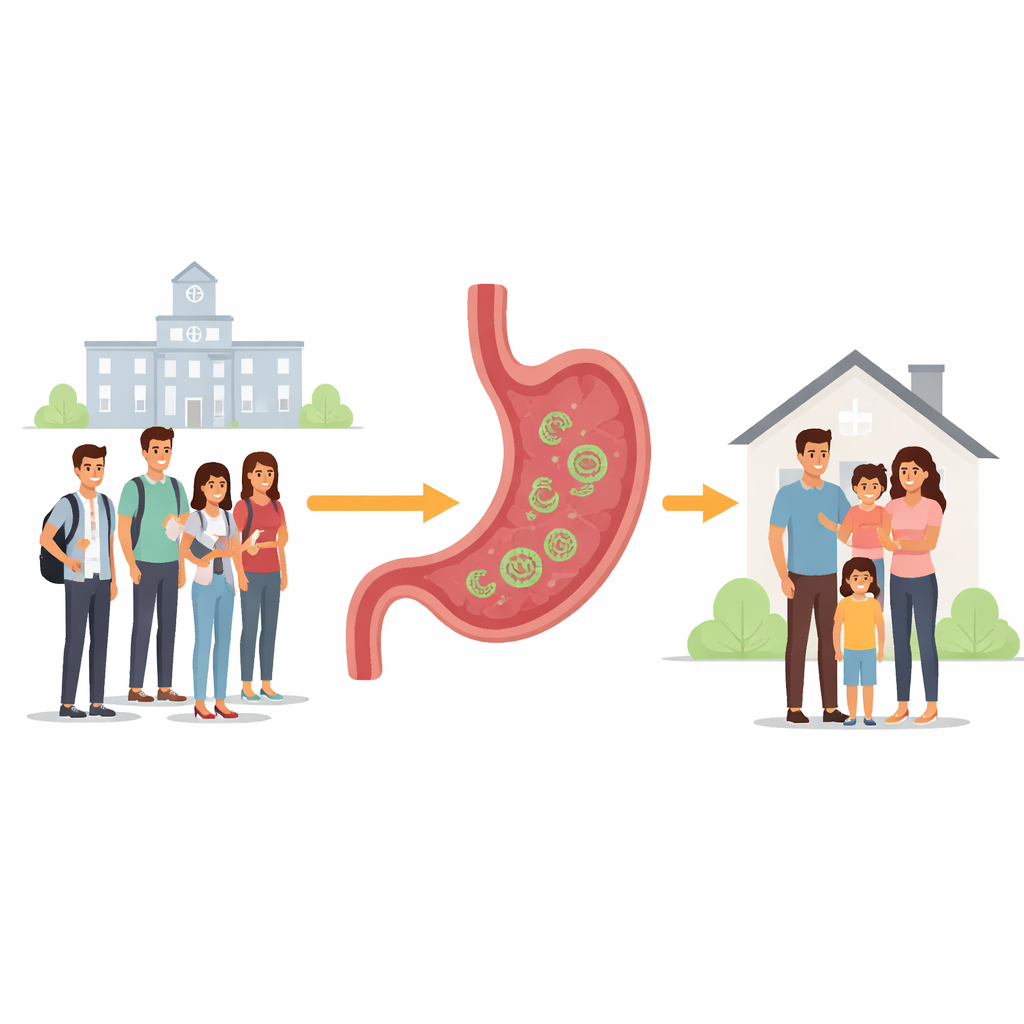
Most students (about 88%) had at least heard of Helicobacter pylori, but their detailed understanding was only moderate. Among these students, roughly one‑third had low knowledge, two‑fifths had a medium level, and only about one‑quarter scored high. Many recognized common stomach troubles such as nausea and pain, and most knew that sharing food or tableware could spread the infection. But only a small fraction correctly grasped that infections can be silent for years, or that the bacterium is a leading trigger of gastric cancer. Knowledge was unevenly distributed: women, medical majors, students from East China, those living in slightly roomier homes, those with better‑educated fathers, and those with a family history of digestive disease tended to know more.
Testing is rare, even in a high‑risk country
Despite China’s heavy burden of gastric cancer, less than a quarter of informed students had ever been screened for Helicobacter pylori. Among those who were tested, about one in four turned out to be infected. Most infected students started treatment, yet fewer than half returned for a follow‑up test to confirm that the bacterium was truly gone, and only a minority achieved clear‑cut eradication. Screening was more common among seniors, medical majors, and students whose parents had more education or who had recently felt gastrointestinal discomfort or had a family history of digestive disease. In other words, students who felt unwell or came from health‑aware families were far more likely to get checked.
Everyday habits at the table
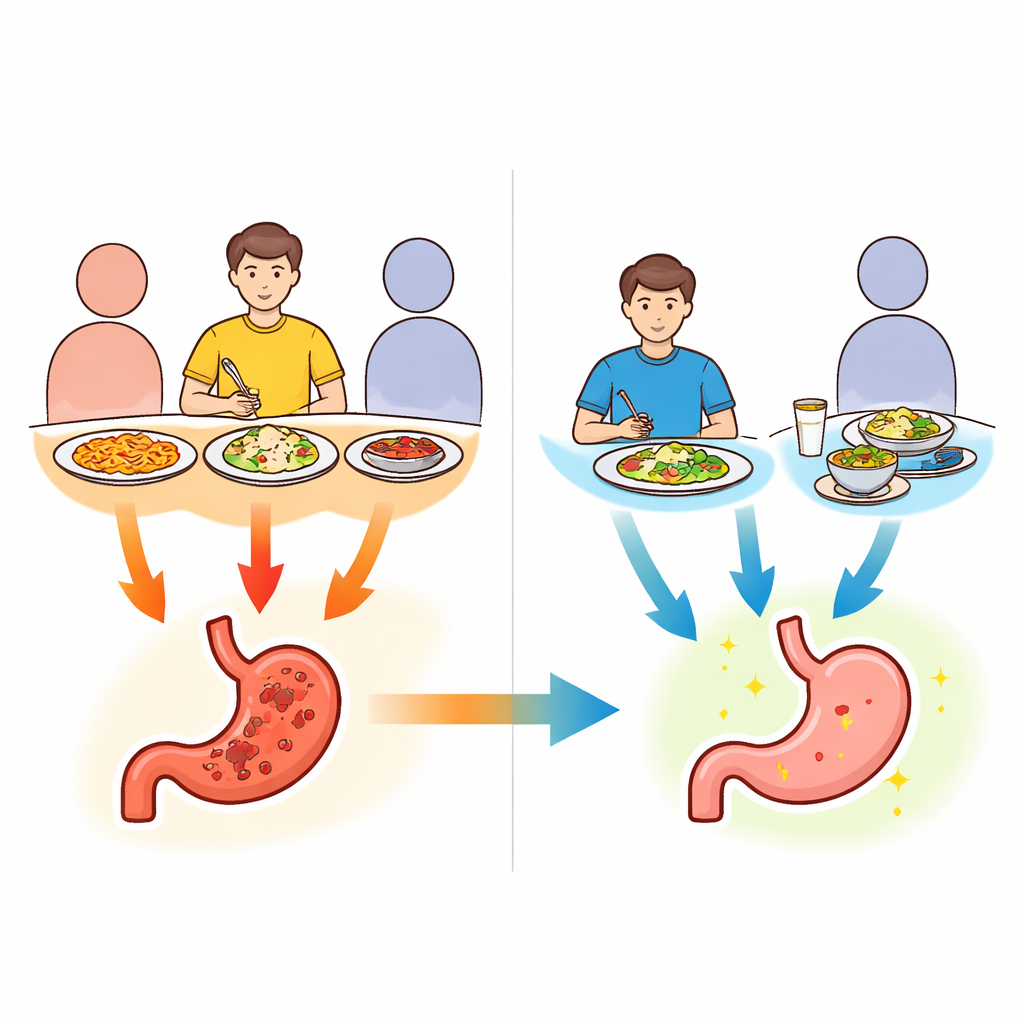
The study also probed behavior in kitchens, cafeterias, and teahouses. Many students favored coffee or milk tea and sweets, yet fewer than one in three ate fruits and vegetables daily. At home, more than half still shared dishes in the traditional family style, and over a third reported sharing tableware with relatives. Serving chopsticks and spoons—separate utensils used to take food from common dishes—were rarely used consistently. Statistical analyses suggested some surprising links: frequent coffee or milk‑tea drinking, frequent seafood consumption, and higher fruit‑and‑vegetable intake were all associated with lower infection rates in this group, while sharing tableware at home clearly tracked with higher infection. The authors caution that diet findings may reflect complex patterns, such as whether food is eaten raw or cooked and how carefully it is washed.
Turning students into health messengers
Overall, the research paints a picture of students who have heard of Helicobacter pylori but lack a full grasp of its hidden dangers and are seldom screened, even when they live in a region where stomach cancer is common. Family background, field of study, and recent stomach discomfort all strongly shape whether students seek testing. At the same time, familiar habits—sharing chopsticks, plates, and cups around the family table—seem to help the bacterium circulate within households. The authors argue that targeted health education on campuses, more accessible screening for at‑risk students, and campaigns that normalize serving utensils and individual dining could help young adults protect themselves and their families from a germ that often remains invisible until serious disease develops.
Citation: Liu, Z., Zheng, H., Du, X. et al. Knowledge, screening practice and infection-related behaviors toward Helicobacter pylori among university students in East China—a cross-sectional study. Sci Rep 16, 9406 (2026). https://doi.org/10.1038/s41598-026-40056-x
Keywords: Helicobacter pylori, university students, gastric cancer risk, screening behavior, dining habits