Clear Sky Science · en
GTPBP2 inactivates Hippo signaling to promote triple-negative breast cancer cell malignancy
Why this research matters
Triple-negative breast cancer is one of the most difficult forms of breast cancer to treat. Unlike other types, it lacks the common molecular “handles” that many modern drugs grab onto, leaving chemotherapy as the mainstay for many patients. This study shines a light on a little-known protein called GTPBP2 and suggests that it may act as a hidden accelerator for tumor growth and spread in this aggressive cancer subtype—and could become a new target for future therapies.
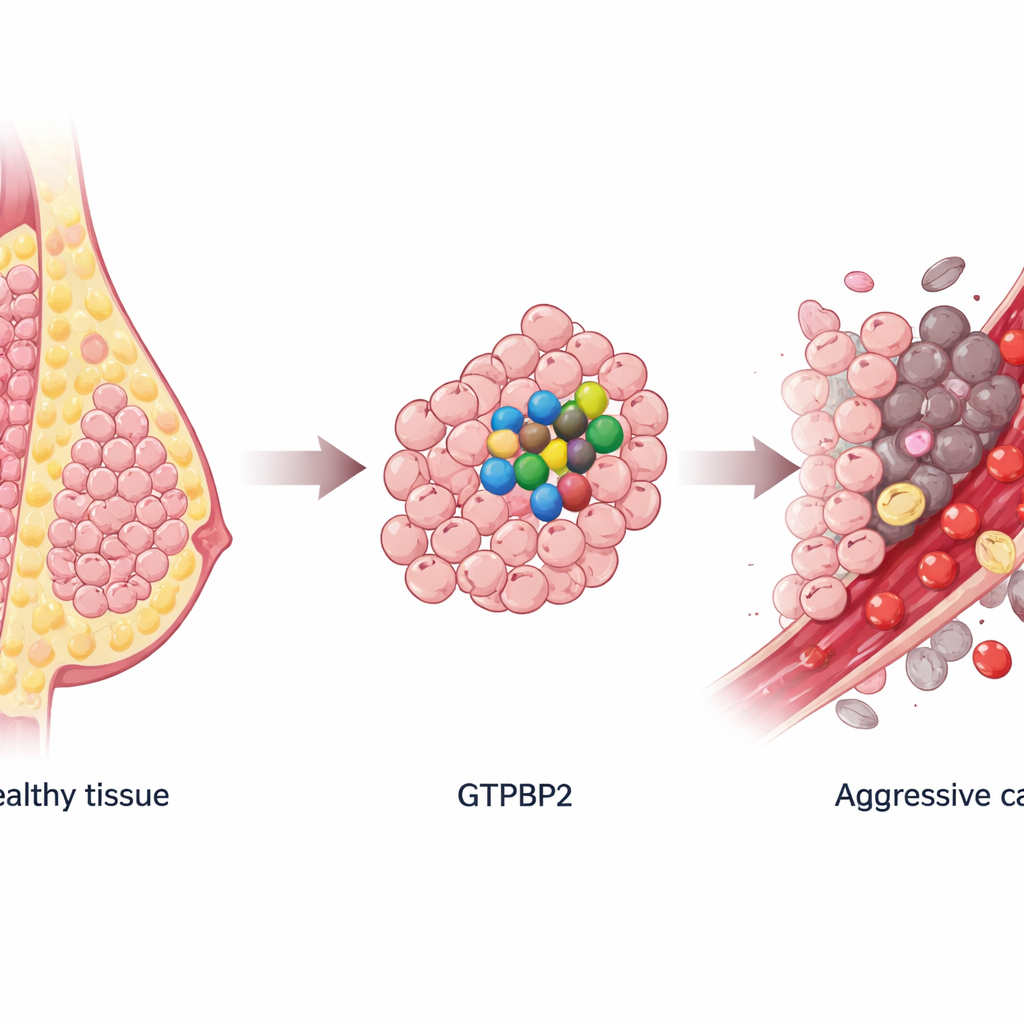
A hidden switch inside breast cancer cells
The researchers began by asking a straightforward question: is GTPBP2 more abundant in breast tumors than in normal breast tissue? By mining several large public databases that compile tumor genetic data, they found that the gene for GTPBP2 is indeed turned up in many cancer types, including breast cancer. When they looked more closely, triple-negative breast cancers showed especially high levels. Importantly, women whose tumors had more GTPBP2 tended to have worse overall survival, hinting that this protein is not just a bystander but may contribute to more dangerous disease.
Zooming in on the most aggressive breast cancers
To move beyond computer data, the team examined GTPBP2 directly in cells and tissues. Using protein-detection methods on patient samples, they confirmed that breast tumors, particularly triple-negative ones, carried more GTPBP2 than normal breast tissue. Single-cell analyses suggested that this protein is concentrated in malignant cells and some blood vessel–lining cells within tumors, placing it at the heart of the cancer microenvironment. Together, these findings painted GTPBP2 as a candidate “malignancy helper” in triple-negative disease.
Testing how GTPBP2 changes cancer cell behavior
The scientists then engineered triple-negative breast cancer cell lines to either crank up or dial down GTPBP2. In dishes, cells with extra GTPBP2 multiplied faster, formed more colonies, closed artificial “wounds” more quickly, and were better at invading through a gel that mimics tissue—signs of greater growth, movement, and invasiveness. In contrast, cells in which GTPBP2 was reduced grew more slowly, formed fewer colonies, migrated less, and had weaker invasive ability. When these modified cells were implanted into mice, tumors with boosted GTPBP2 grew larger and faster, while tumors with reduced GTPBP2 remained smaller, reinforcing the idea that this protein drives tumor aggressiveness in living organisms.
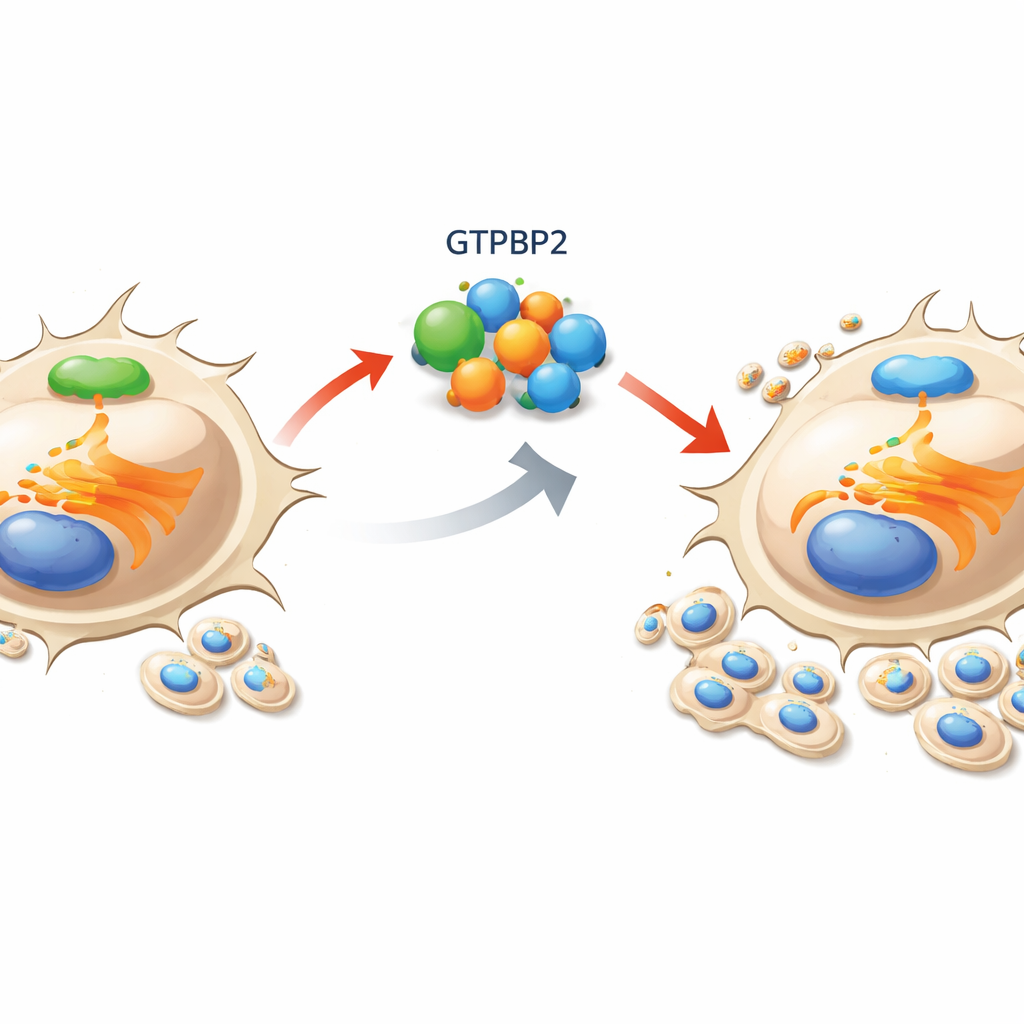
How a growth brake gets turned off
Next, the researchers looked for the signaling system that GTPBP2 might be tampering with. They focused on the Hippo pathway, a major cellular safety mechanism that helps keep organ size and cell numbers in check. When Hippo is active, it keeps two proteins, YAP and TAZ, in a restrained state, preventing runaway cell division. The team found that high levels of GTPBP2 coincided with increased active YAP and TAZ and reduced levels of their “off” forms in triple-negative breast cancer cells and in mouse tumors. When GTPBP2 was lowered, this pattern reversed. These observations suggest that GTPBP2 dampens the Hippo brake, freeing YAP and TAZ to switch on genes that fuel cancer cell growth, survival, and movement.
What this means for patients and future treatments
Taken together, this work identifies GTPBP2 as a powerful promoter of triple-negative breast cancer behavior. By helping to switch off the Hippo pathway’s growth control and unleashing YAP and TAZ, GTPBP2 makes cancer cells divide faster, move more, and invade surrounding tissues more easily. While this research is still at an early stage and more patient-based studies are needed, it highlights GTPBP2 as a promising biomarker of poor prognosis and a potential new therapeutic target. In the future, drugs that blunt GTPBP2 or restore proper Hippo signaling could offer a new line of attack against one of the most challenging forms of breast cancer.
Citation: Zhao, X., Li, W., Han, Q. et al. GTPBP2 inactivates Hippo signaling to promote triple-negative breast cancer cell malignancy. Sci Rep 16, 11467 (2026). https://doi.org/10.1038/s41598-026-40054-z
Keywords: triple-negative breast cancer, GTPBP2, Hippo signaling, YAP TAZ, breast cancer metastasis