Clear Sky Science · en
Investigation of MicroRNAs as predictors of radioligand therapy response in gastroenteropancreatic neuroendocrine tumours
Why tiny RNA switches matter for cancer care
Doctors treating rare gut and pancreatic tumours often rely on a powerful targeted radiation called radioligand therapy to slow or shrink disease. Yet today they still cannot reliably tell, before treatment starts, which patients are likely to benefit and which may see their tumours progress. This study asks whether microscopic genetic switches called microRNAs, preserved in routine biopsy samples, could help forecast early treatment success or failure and guide more personalised care.

Slow-growing tumours, hard treatment choices
Gastroenteropancreatic neuroendocrine tumours are uncommon cancers arising from hormone-producing cells in the digestive system. Many are graded as G1 or G2, meaning they tend to grow slowly, but their course can still vary widely from one person to another. Standard tools such as the Ki-67 proliferation index offer only rough guidance, and imaging-based measures of response to radioligand therapy are technically demanding and not always available. As a result, clinicians lack simple markers that can predict whether a patient will experience early disease progression after therapy.
What microRNAs can reveal from stored tissue
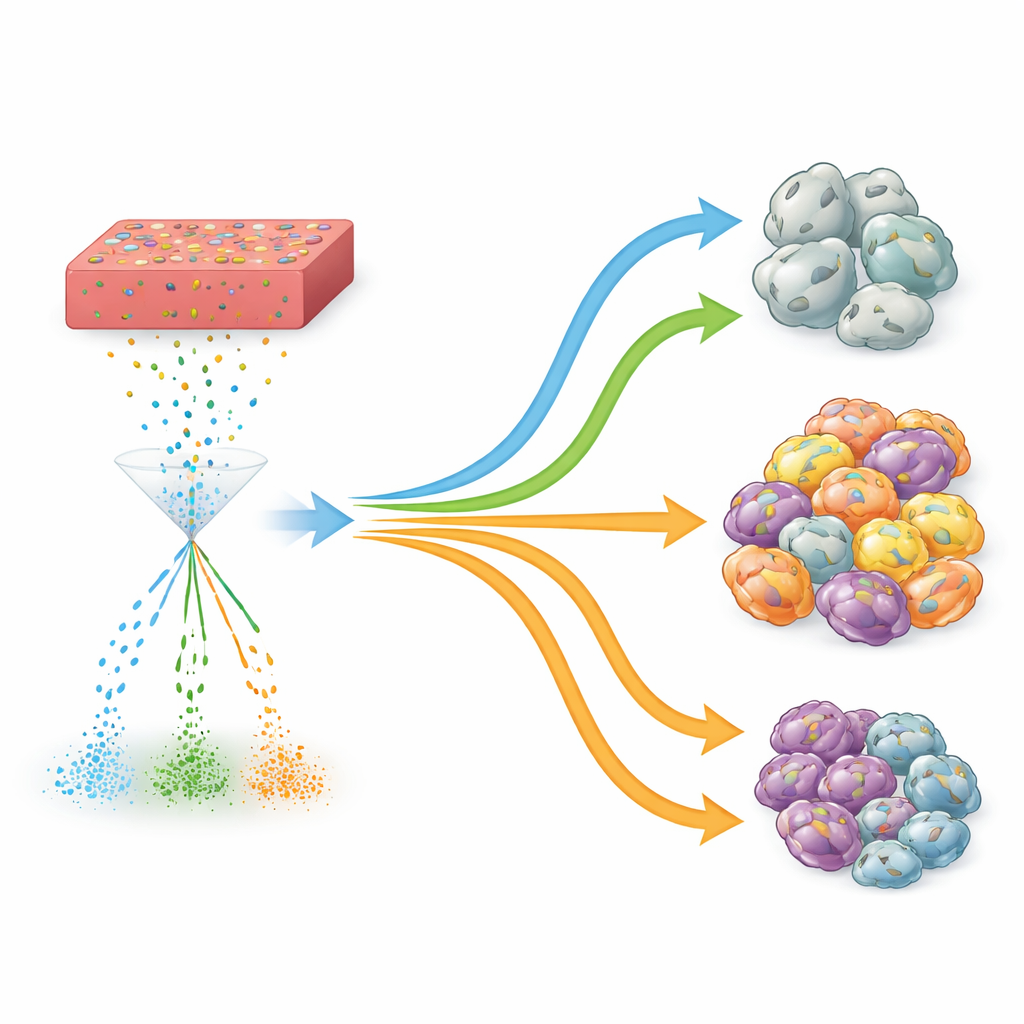
MicroRNAs are very short pieces of RNA that fine-tune the activity of many genes at once, shaping how cancer cells grow, spread and respond to stress. Because they remain stable in archival, formalin-fixed tissue blocks, they can be measured years after a biopsy was taken. The researchers selected 13 microRNAs previously linked to neuroendocrine tumour behaviour, and successfully quantified nine of them in 48 tumour samples from 28 patients with G1–G2 tumours who later received radioligand therapy. Each patient had scans before and after treatment to classify their early outcome as progression or non-progression.
Three promising signals for treatment response
Using statistical models, the team examined whether the amount of each microRNA in the tumour tissue related to early response to radioligand therapy. They found that three microRNAs stood out. Tumours with lower levels of miR-21-5p and miR-196a and higher levels of miR-30a-5p were less likely to show early progression after therapy. By contrast, higher levels of miR-21-5p and miR-196a, both generally considered to promote cancer growth, appeared linked to poorer outcomes. Although the study was exploratory and confidence ranges were wide, these patterns were consistent across several sensitivity checks, suggesting that this small panel of microRNAs may carry useful predictive information.
Clues to where the tumour started and how aggressive it is
Beyond treatment response, the researchers asked whether the same microRNAs reflected basic features of the disease. Focusing on metastatic samples, they observed that tumours originating in the upper digestive tract (foregut) tended to show lower expression of miR-196a and higher expression of miR-30a-5p than those starting in the midgut. Lower miR-196a was also more common in better-differentiated, lower-grade (G1) tumours. Together, these findings echo earlier work linking microRNA patterns to tumour origin and growth rate, and hint that a few key molecules might help classify these cancers when standard pathology or imaging leaves questions unanswered.
First step toward more tailored radioligand therapy
This study was small and retrospective, and the authors stress that their results do not yet justify changing clinical practice. However, they demonstrate that measuring microRNAs in everyday archived tumour samples is practical, and that three candidates—miR-21-5p, miR-196a and miR-30a-5p—show consistent links with early response to radioligand therapy, as well as with tumour origin and grade. With validation in larger, independent patient groups, such molecular fingerprints could help doctors identify who is most likely to benefit from radioligand therapy, sparing others from ineffective treatment and moving care for neuroendocrine tumours closer to a truly personalised approach.
Citation: Scalorbi, F., Garanzini, E.M., Marzi, C. et al. Investigation of MicroRNAs as predictors of radioligand therapy response in gastroenteropancreatic neuroendocrine tumours. Sci Rep 16, 9430 (2026). https://doi.org/10.1038/s41598-026-40046-z
Keywords: neuroendocrine tumors, radioligand therapy, microRNA biomarkers, personalized oncology, treatment response prediction