Clear Sky Science · en
Validity of the 2019 European Society of Cardiology Pre-Test Probability (2019 ESC-PTP) for predicting obstructive coronary artery disease among Malaysians
Why this heart risk tool matters
Chest pain is one of the most worrying symptoms a person can have, yet only some people with chest pain actually have serious heart disease. Doctors need quick ways to decide who truly needs advanced heart tests and who can be safely reassured. This study looks at a simple European risk tool that estimates the chance of clogged heart arteries and asks a crucial question: does it work well for Malaysians, whose health profiles differ from the European patients the tool was built on?
A simple checklist for a serious problem
The heart problem in question is obstructive coronary artery disease, where fatty build-up narrows the blood vessels supplying the heart. This can lead to heart attacks and remains a leading cause of death in Malaysia. To avoid missing dangerous disease while also preventing unnecessary invasive tests, doctors often use “pre-test probability” tools. The 2019 European Society of Cardiology pre-test probability (ESC-PTP) tool is intentionally simple: it relies mainly on age, sex, chest pain type, and whether the person is short of breath. It sorts people into three groups—low, moderate, or high likelihood of having blocked heart arteries—to guide which tests, if any, should come next. 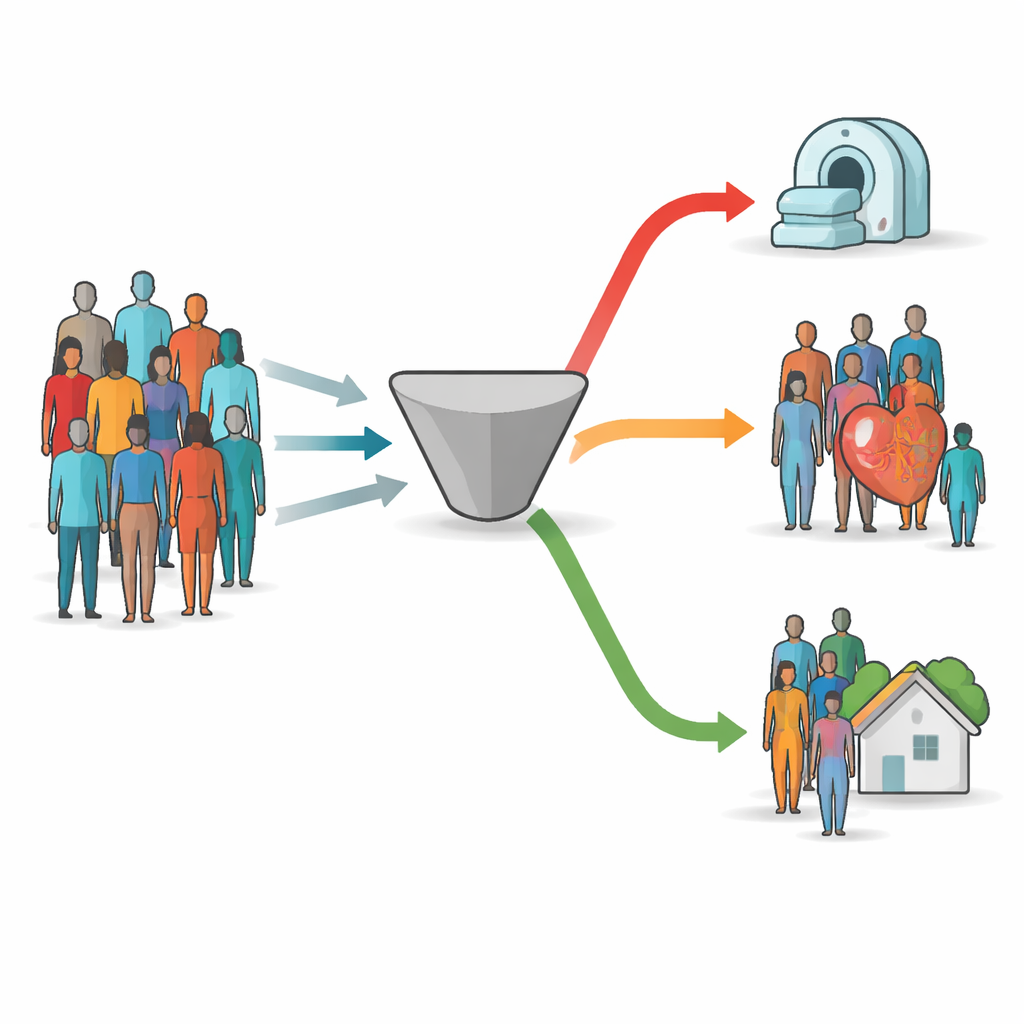
Testing the tool in Malaysian patients
The researchers studied 194 adults from a specialist centre in Selangor who had already undergone detailed heart imaging, either an invasive dye test of the heart arteries or a high-resolution CT scan. None had previously known coronary disease. Using telephone interviews and medical records, the team reconstructed what each patient’s chest pain was like at the time they were first seen, then calculated their ESC-PTP scores based on the 2019 guideline cut-offs. They then compared those scores with the actual scan results, defining obstructive disease as at least 50% narrowing in a heart artery.
What the numbers reveal
More than half of the participants—about 57%—did in fact have obstructive coronary disease, a much higher proportion than in comparable European or Chinese studies. Most of those with disease were older, male, and more likely to smoke, have high blood pressure, or diabetes. When the team looked at how well the ESC-PTP tool separated people with and without blocked arteries, they found that almost all patients with disease were placed in the moderate or high risk groups. The tool correctly identified 95.5% of those with disease (high sensitivity). However, it was less good at reassuring doctors that someone did not have disease: only 25% of people without blocked arteries landed in the low-risk group (low specificity). Overall, the balance between correct positives and negatives gave the tool a “good” discrimination score. 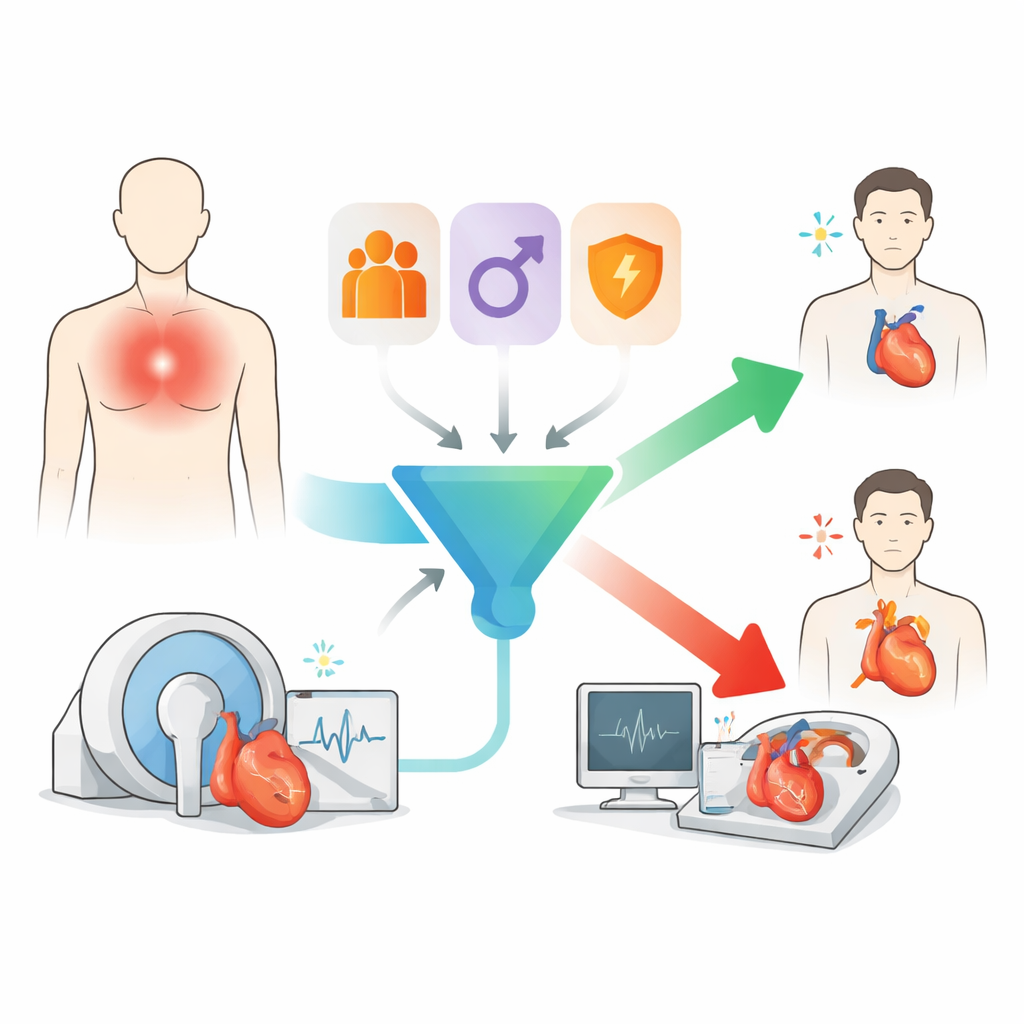
How this affects patients in the clinic
In practical terms, this means the tool is very good at making sure dangerous disease is not overlooked in Malaysians with chest pain. If the ESC-PTP score puts someone in the low-risk group, there is a strong chance they really do not have serious artery blockages, although a small fraction will still turn out to have disease. On the other hand, being labelled moderate or high risk does not guarantee a blocked artery. In this study, roughly four out of ten people in that combined group turned out not to have obstructive disease, so further testing—such as CT scans of the heart arteries—remains essential before making big treatment decisions. The tool works best as a first filter, not as a final verdict.
What this means going forward
For lay readers, the main takeaway is that a quick, checklist-style assessment can safely help doctors decide which Malaysian patients with chest pain are unlikely to have serious artery blockages and do not need immediate, invasive tests. However, because it often overestimates risk, many people still need follow-up imaging to confirm whether disease is truly present. The authors conclude that the 2019 ESC-PTP tool is useful as part of a stepwise approach to chest pain in Malaysia—especially for ruling out disease in low-risk patients—but it should always be combined with clinical judgement and, where needed, more precise heart imaging.
Citation: Mohammad Rafee, M.A., Ibrahim, K.S., Kadir, R.F.A. et al. Validity of the 2019 European Society of Cardiology Pre-Test Probability (2019 ESC-PTP) for predicting obstructive coronary artery disease among Malaysians. Sci Rep 16, 9173 (2026). https://doi.org/10.1038/s41598-026-40037-0
Keywords: chest pain, heart artery blockage, risk scoring, cardiac screening, Malaysia