Clear Sky Science · en
Determinants of intention to undergo risk-reducing salpingo-oophorectomy among high-risk women for breast and ovarian cancer
Why this choice matters for many families
For women who come from families marked by breast or ovarian cancer, deciding whether to remove healthy ovaries and fallopian tubes to reduce future cancer risk can feel like choosing between two frightening options. This study follows hundreds of such women in Brazil to see how modern genetic tests and careful counseling shape their intentions about undergoing this preventive surgery, and what personal factors most influence that life‑altering decision.
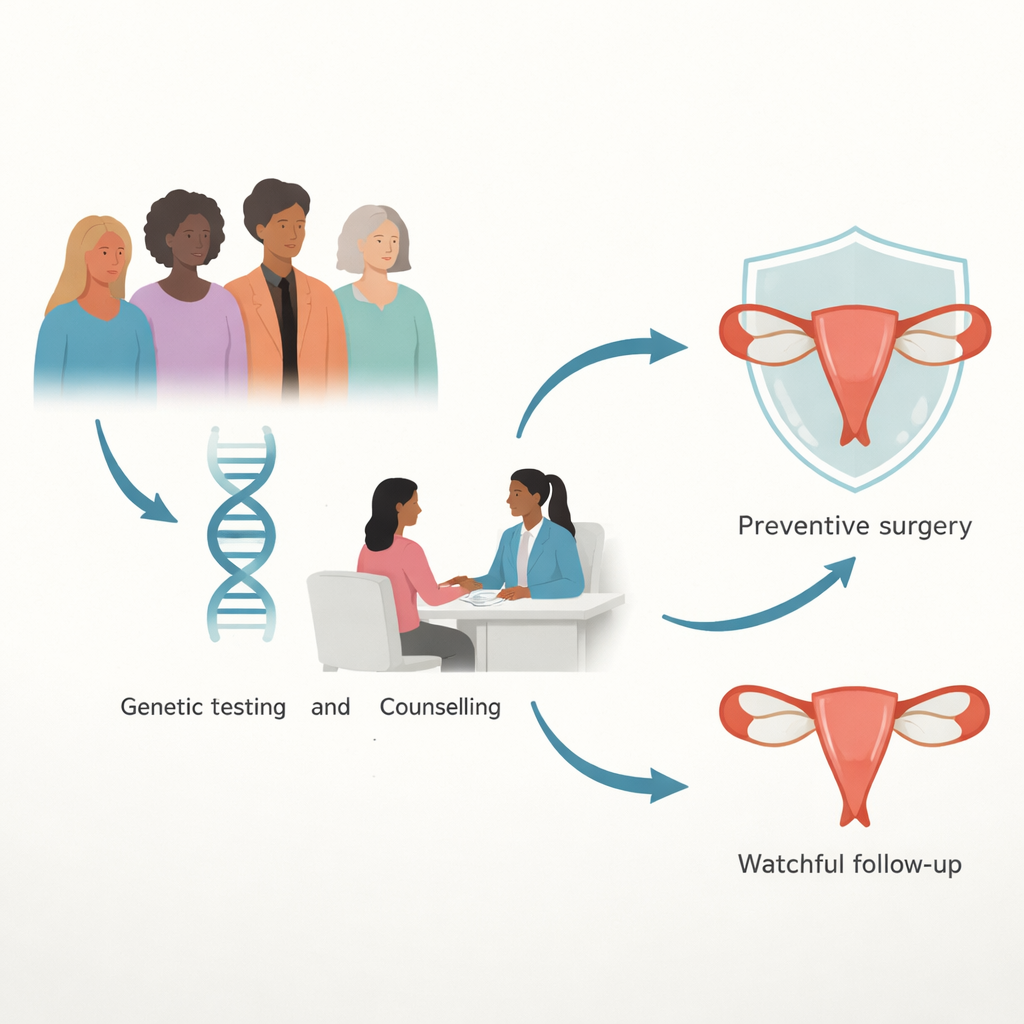
Who the women were and what they faced
The researchers followed 355 women treated at a public university hospital who either had a strong family history of breast or ovarian cancer or had already faced these cancers themselves. Most were in their early forties, premenopausal, and had close relatives affected by cancer. All received detailed questionnaires about their health, family background, and education. They then underwent broad genetic testing that searched many cancer‑related genes, including the well‑known BRCA1 and BRCA2, and met with trained doctors for counseling before and after the test. This set‑up allowed the team to compare what women thought they wanted to do about surgery before they knew their genetic results and after they had precise information about their risk.
How genetic information changed intentions
Initially, before any genetic results were available, about four in ten women said they intended to have their ovaries and fallopian tubes removed as a preventive step. After testing and a follow‑up counseling session that explained the meaning of their specific results, that number fell to roughly one in three. Many women who discovered they did not carry high‑risk mutations, or only had uncertain findings, pulled back from surgery. By contrast, women who learned that they carried clearly harmful changes in genes such as BRCA1 or BRCA2 were far more likely to newly adopt an intention to have the operation. In other words, genetic results helped sort women into groups for whom the surgery seemed clearly worthwhile and those for whom the balance of benefit and burden no longer felt as compelling.
Personal history, age, and other powerful influences
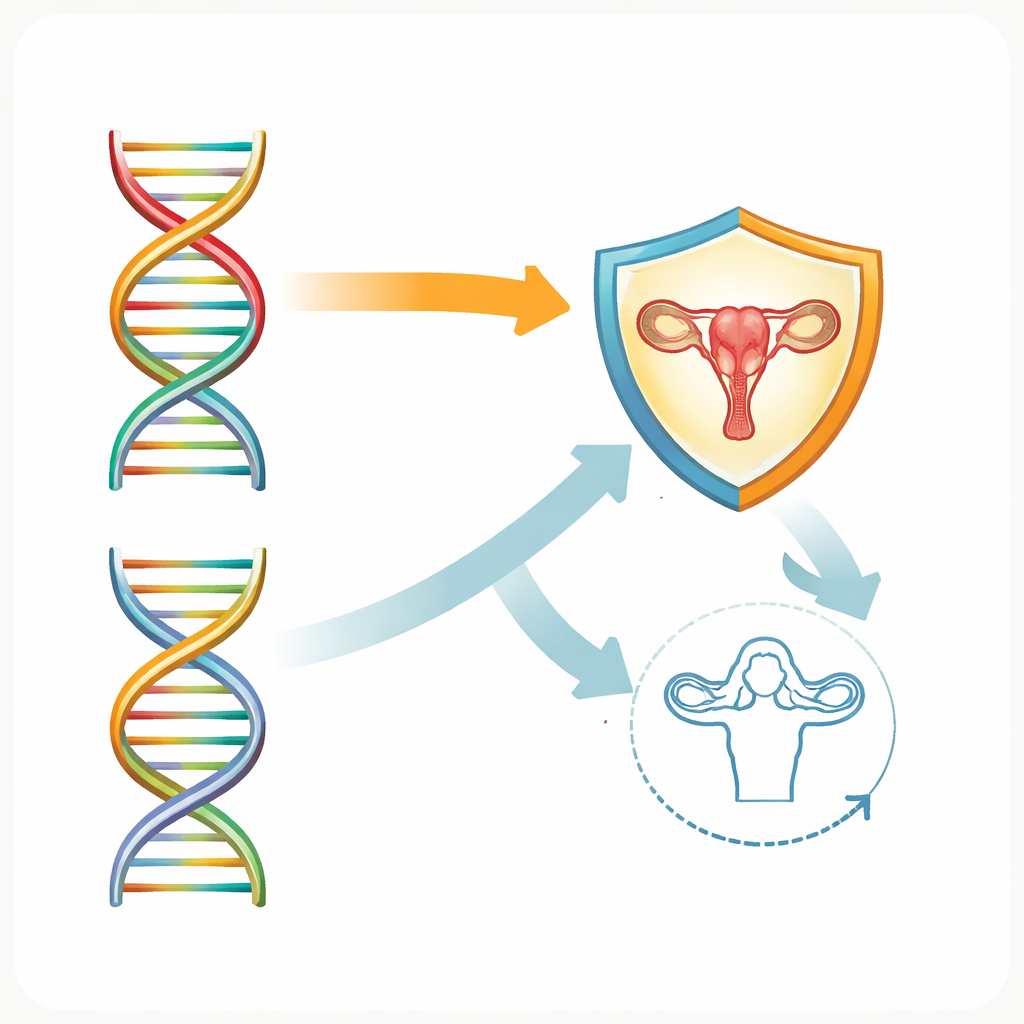
Genetic results were not the only drivers of decisions. Women who had already had breast or ovarian cancer were more likely to want preventive removal of their ovaries and fallopian tubes than women who had never had cancer, even though this surgery can trigger early menopause and its symptoms. A strong wish to have risk‑reducing breast surgery, such as mastectomy, was especially telling: women with this preference were dozens of times more likely to also intend ovary and tube removal, suggesting a subgroup that is strongly motivated to do everything possible to avoid another cancer. Younger, premenopausal women and those with more years of schooling were also more likely to lean toward surgery from the outset, perhaps reflecting greater access to information, stronger fear of cancer, or different expectations about future health.
Why counseling in public health settings is crucial
The study took place in Brazil’s public health system, where access to genetic tests is still limited. In such settings, many women must weigh major surgical choices without the clarity of a genetic report. The findings show that once objective test results and thorough counseling are available, intentions shift in ways that generally mirror each woman’s actual level of risk: many lower‑risk women step back from surgery, while higher‑risk women move toward it. This indicates that counseling grounded in solid genetic evidence can reduce unnecessary procedures while supporting those who stand to gain the most.
What this means for women and families
For women at inherited risk of breast and ovarian cancer, the decision to remove healthy organs is never simple. This study shows that clear genetic information, combined with thoughtful discussion of benefits, side effects, and personal values, helps align intentions with real danger levels. The authors conclude that broad access to genetic testing and specialized counseling is essential so that preventive surgeries are chosen not out of generalized fear, but as informed, individualized steps that fit each woman’s true risk and life circumstances.
Citation: Duarte, B.N., de Sá Bittencourt Câmara e Silva, D.I., Gaspar, T. et al. Determinants of intention to undergo risk-reducing salpingo-oophorectomy among high-risk women for breast and ovarian cancer. Sci Rep 16, 8515 (2026). https://doi.org/10.1038/s41598-026-40036-1
Keywords: genetic testing, ovarian cancer prevention, BRCA mutations, risk-reducing surgery, women’s health decisions