Clear Sky Science · en
NTM-host matched infection models for the classification of drug efficacy against rapid and slow growing nontuberculous mycobacteria species
Why stubborn lung infections matter
Nontuberculous mycobacteria are a group of environmental germs that can cause chronic lung disease, especially in older adults and people with underlying lung problems. These infections are notoriously hard to cure, often requiring years of treatment with multiple antibiotics that still may not work. One major roadblock to better therapies is surprisingly basic: researchers have lacked simple, reliable animal tests that can quickly show which drugs are truly effective against different types of these bacteria. This study introduces a practical, standardized way to do just that.
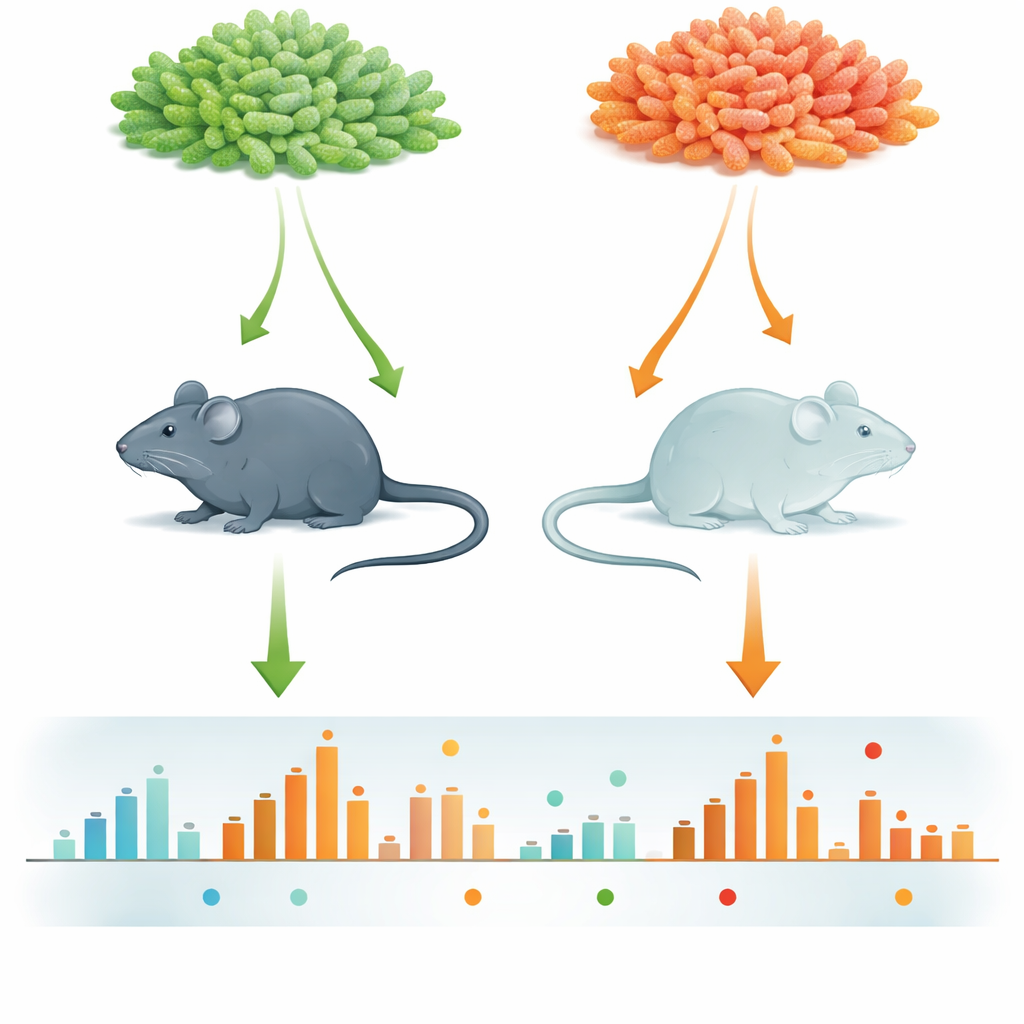
Two kinds of germs, two kinds of mice
The authors focused on two major culprits in nontuberculous mycobacterial lung disease. One, Mycobacterium avium, grows slowly but tends to respond better to existing drugs. The other, Mycobacterium abscessus, grows rapidly and is famous for resisting treatment. To mimic real-world disease more faithfully, the team used different mouse strains tailored to each germ: normal immune-competent mice for the slow grower, and immune-deficient mice for the fast grower, which otherwise clears too easily. This “species–host matching” is key, because it lets each infection reach and maintain a high, stable level in the lungs long enough to test drugs in a controlled way.
Starting every test from the same place
A recurring problem in past research has been inconsistency: if each experiment begins with a different number of bacteria, it becomes hard to compare results. Here, the team solved that by using a specialized device to count only intact, viable bacterial cells in real time before infecting the mice. They adjusted each bacterial suspension to a set concentration and then delivered a precise dose directly into the nose, seeding the lungs with a reliably high burden of germs. This approach produced lung infection levels clustered tightly around the same value in both models, avoiding the accidental under- or over-infections that can blur drug effects.
Short, sharp treatment windows
Instead of long, complex experiments, the researchers designed brief two-week treatment periods tuned to each infection. After giving the bacteria time to establish a stable presence in the lungs, they treated the animals once daily with individual antibiotics. They selected several drugs from different classes that are already used or considered for these infections, including macrolides, rifamycins, fluoroquinolones, and bedaquiline. By using both full and lower doses, they could see how sensitive the system was to subtle differences in drug strength. In both models, the infections stayed steady in untreated mice yet showed clear, graded reductions under active treatments, demonstrating that the setup could pick up meaningful changes within a short time.
Turning raw counts into clear rankings
Counting bacteria in the lungs is useful, but raw numbers alone can be misleading when comparing across different germs and hosts. The authors therefore built an analytical toolkit to translate those counts into standardized measures. They combined the absolute drop in bacterial load with an effect-size calculation that reflects how large and reliable the difference is between treated and untreated animals. They also sorted results into simple “good,” “moderate,” or “poor” performance tiers based on where each treatment’s outcome fell within the overall distribution. Finally, they introduced a “MIC-adjusted clearance index,” which divides the in-animal bacterial reduction by how potent the drug is in a lab dish. This creates a potency-normalized score that shows how much real-world benefit a drug delivers relative to its basic strength.
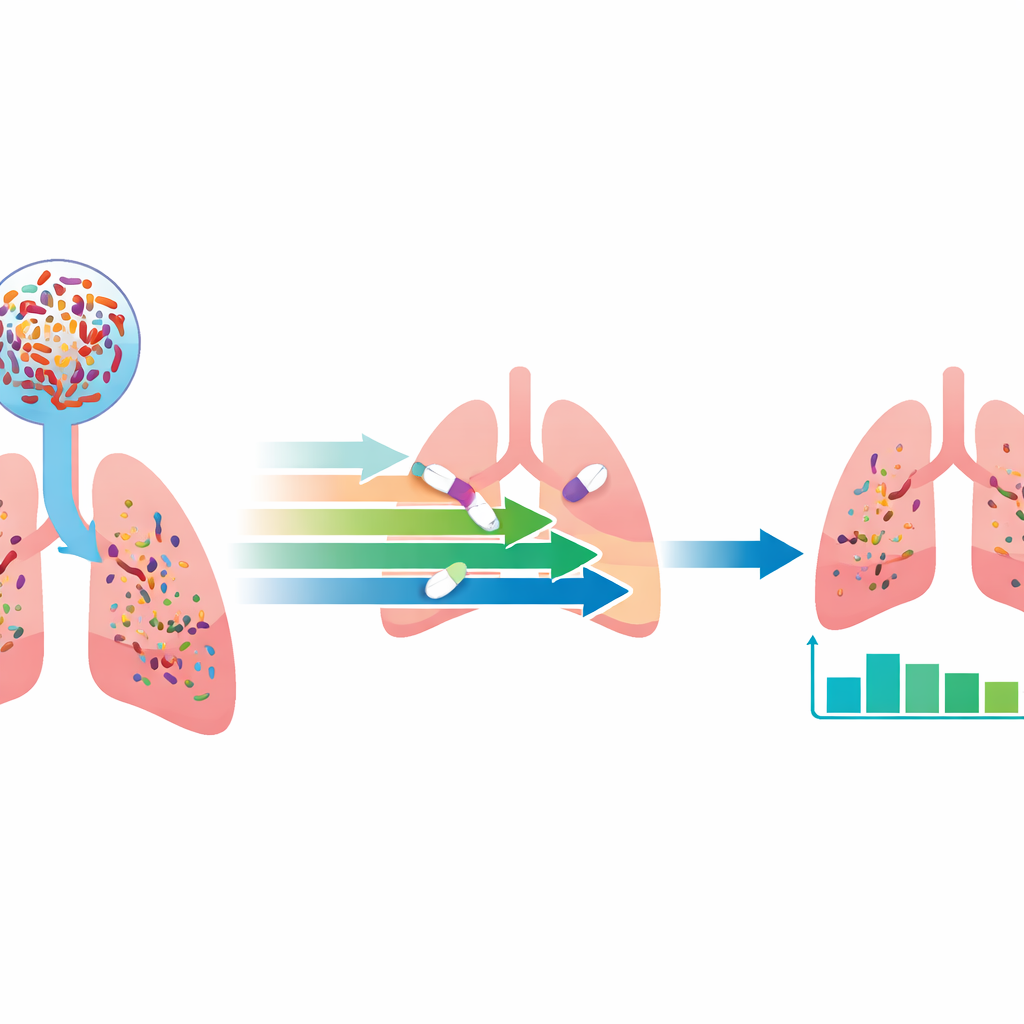
What the new models reveal
When they applied this framework, clear patterns emerged. Bedaquiline stood out as the strongest performer in both models, particularly against M. avium, where high doses nearly cleared the lungs. Other drugs, such as clarithromycin and rifabutin, showed intermediate benefits, while some doses of common agents had little effect. Importantly, the potency-adjusted scores were consistently higher in the M. avium model than in the M. abscessus model, mirroring clinical experience that the latter is much harder to treat. The models were sensitive enough to distinguish good from mediocre regimens and reproducible across repeated experiments, indicating they can serve as dependable benchmarks for new candidates.
How this helps patients in the long run
For people living with chronic nontuberculous mycobacterial lung disease, this work does not offer an immediate new cure, but it strengthens the pipeline that leads to one. By providing a matched pair of infection models and a common, quantitative scoring system, the study gives drug developers a faster and more reliable way to decide which antibiotics and combinations deserve to move forward into longer, more complex studies. Because the framework respects the biological differences between slow- and fast-growing species while still allowing fair comparison within each, it should help reduce wasted effort and focus attention on the most promising options. Over time, this standardized approach may shorten the path from lab experiments to better, more tolerable treatments for stubborn mycobacterial lung infections.
Citation: Guglielmi, V.E., Cummings, J.E., Whittel, N.J. et al. NTM-host matched infection models for the classification of drug efficacy against rapid and slow growing nontuberculous mycobacteria species. Sci Rep 16, 8762 (2026). https://doi.org/10.1038/s41598-026-40034-3
Keywords: nontuberculous mycobacteria, lung infection models, antibiotic efficacy, Mycobacterium avium, Mycobacterium abscessus