Clear Sky Science · en
Evolutionary history and climate-driven dynamics of transposable elements has shaped genome evolution in the Coffea genus
Why coffee genes matter to our daily brew
Behind every cup of coffee lies a hidden story written in DNA. Wild coffee species spread across Africa and nearby islands carry genomes that vary almost twofold in size, even though they all look like "coffee trees" to us. This study asks a deceptively simple question: what makes some coffee genomes big and others small, and how is this tied to the climates where these plants grow? By tracking mobile DNA sequences and past climate conditions across the coffee family tree, the authors reveal how tiny jumping pieces of DNA have helped shape the diversity and environmental tolerance of Coffea species.
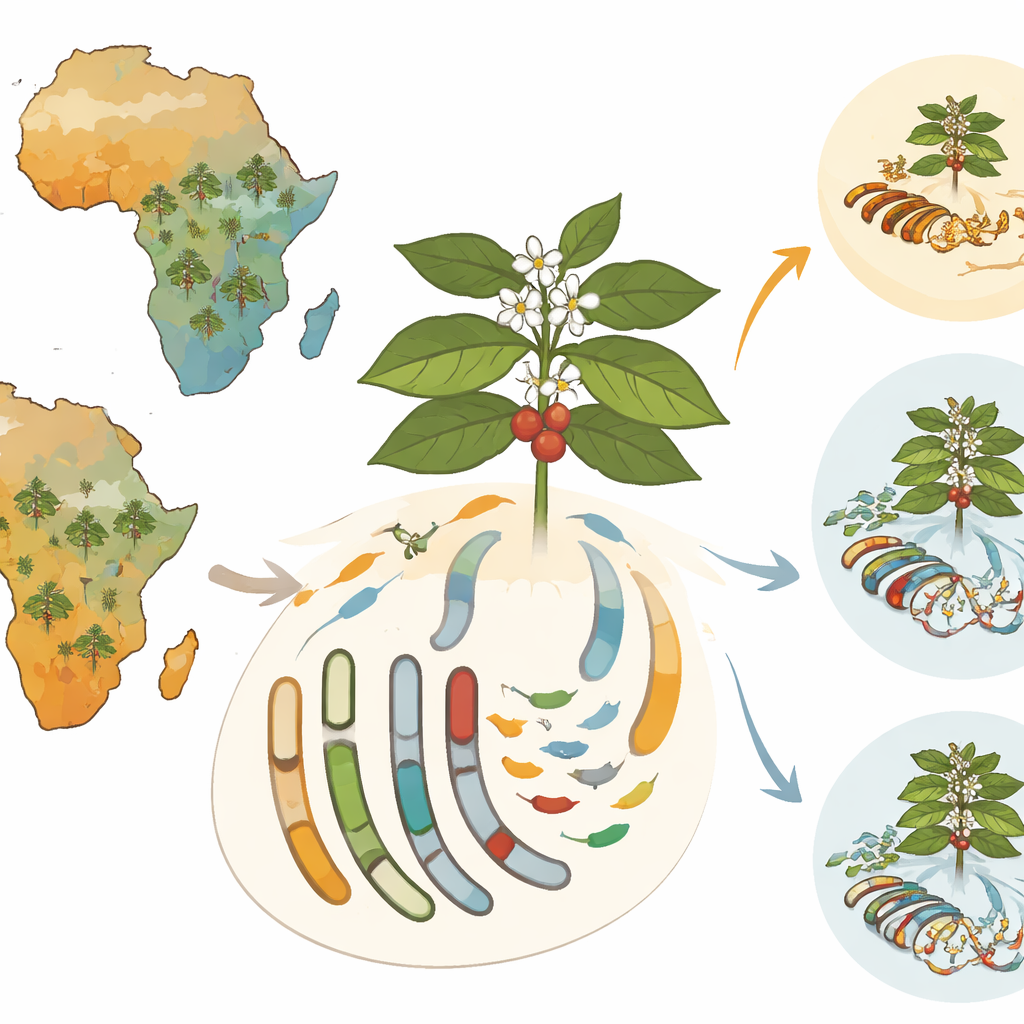
Hidden passengers in plant DNA
Plant genomes are not just made of genes; a large fraction consists of repeated pieces of DNA that can copy and move around. These mobile segments, called transposable elements, behave a bit like molecular stowaways, inserting new copies of themselves throughout the genome. In many plants they are the main reason some species carry much more DNA than others. In coffee, earlier work hinted that particular groups of such elements—especially a type known as LTR retrotransposons—might be responsible for big differences in genome size, but the data were too coarse to see exactly how this played out across the genus.
Reading genomes across the coffee family tree
The researchers assembled a genomic portrait of 22 Coffea species (plus one close relative) representing all major geographic groups: lowland and highland species from West, Central, and East Africa, the richly diverse species of Madagascar and nearby islands, and relatives from Asia once placed in a separate genus. They combined short-read DNA sequencing, a well-resolved evolutionary tree built from tens of thousands of genetic markers, and measurements of genome size from previous studies. They then focused on the “repeatome”—all the repetitive DNA—using specialized software to estimate how much of each genome is made of different families of transposable elements.
How jumping DNA reshaped coffee genomes
The analysis showed that genome size in coffee is partly inherited along evolutionary lines, but also strongly influenced by the activity of specific mobile DNA families. Some West and Central African lowland species, such as Coffea humilis, have among the largest genomes and are packed with particular LTR retrotransposon lineages called TAT and SIRE, as well as a related group known as Tekay. In contrast, species from Madagascar and the Indian Ocean islands often have smaller genomes and almost lack some of these element families. Comparing detailed repeat profiles and protein fragments from these elements revealed that certain lineages have expanded dramatically in some species but not in their close relatives, pointing to bursts of activity that occurred over a few million years and helped enlarge some genomes while leaving others compact.
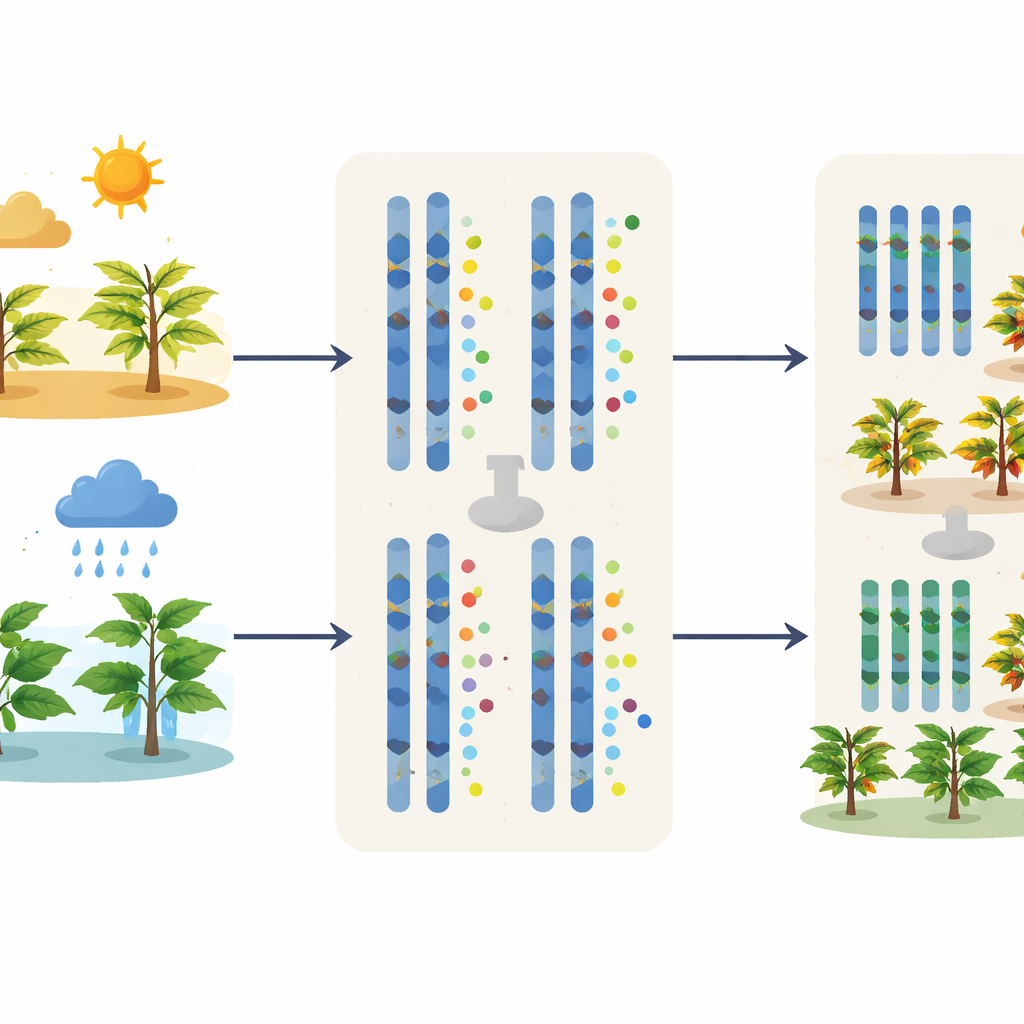
Climate as a silent sculptor of DNA
To ask whether environment helps steer these genomic changes, the team linked DNA data with hundreds of field observations and high-resolution climate records. They found that larger genomes tend to occur in regions with stable temperatures and plentiful rainfall, while more strongly seasonal climates are associated with smaller genomes. Specific transposable element families showed distinct relationships with climate: some, including SIRE, Tekay, and certain DNA transposons, are more common where temperatures and humidity fluctuate less, whereas others thrive where temperature or rainfall swings more sharply. Elevation also left a recognizable imprint on which repeat families were most abundant.
What this means for coffee’s past and future
Together, these findings paint coffee genomes as products of both ancestry and environment. Mobile DNA families such as TAT, SIRE, and Tekay have repeatedly expanded in particular lineages, helping to distinguish geographic groups and potentially contributing to the formation of new species. At the same time, climate appears to modulate how far these elements can spread, favoring more compact genomes in harsher, more seasonal settings and allowing larger genomes to persist where conditions are milder and wetter. For coffee researchers and breeders, this work highlights a rich, climate-sensitive layer of genomic variation in wild Coffea species—a reservoir of traits that could be important for adapting cultivated coffee to a warming and increasingly unpredictable world.
Citation: Dupeyron, M., Gonzalez-Garcia, L., Orozco-Arias, S. et al. Evolutionary history and climate-driven dynamics of transposable elements has shaped genome evolution in the Coffea genus. Sci Rep 16, 9760 (2026). https://doi.org/10.1038/s41598-026-40031-6
Keywords: coffee genomes, transposable elements, climate adaptation, plant evolution, genome size