Clear Sky Science · en
Lung function trajectories and exacerbation risks in preserved ratio impaired spirometry (PRISm) patients
Why this matters for everyday breathing
Many people feel short of breath yet are told their lungs are “not bad enough” to be called chronic obstructive pulmonary disease (COPD). This grey zone, known as preserved ratio impaired spirometry (PRISm), has often been overlooked. This study follows people with PRISm over time to see how their lung function changes and how often they suffer sudden flare‑ups of breathing problems, offering clues for catching serious lung disease earlier and preventing hospital visits.
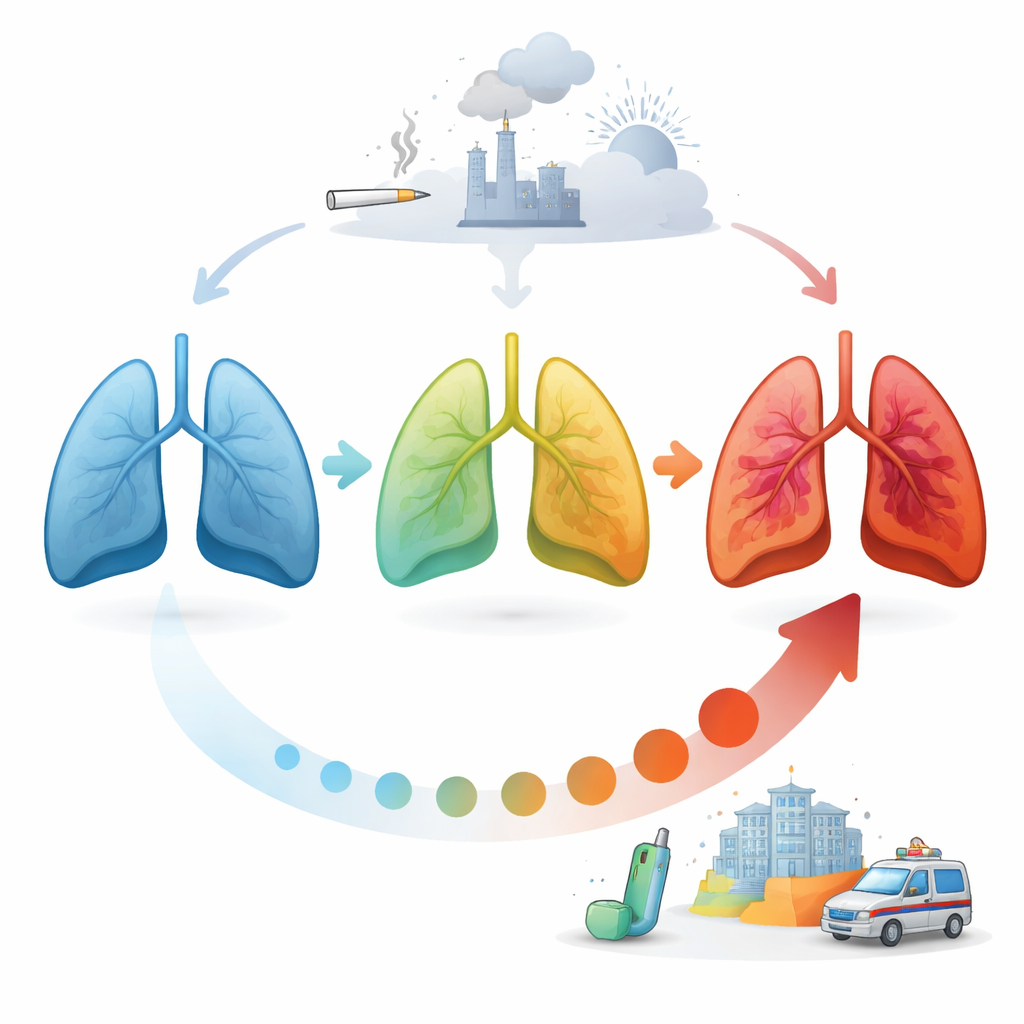
A hidden middle ground between healthy lungs and COPD
PRISm is defined by weaker lung performance on breathing tests, even though a key ratio used to diagnose COPD still looks “normal.” The authors recruited 204 adults with PRISm and compared them with 501 adults whose lung tests were fully normal. The two groups were similar in age, sex, and body weight, but people with PRISm were more likely to smoke and had more other health problems, including heart disease, asthma, emphysema, and scarring in the lungs. They also reported far more day‑to‑day breathing symptoms, such as cough and breathlessness, showing that PRISm is not a harmless label.
Following lung health over a year
The research team tracked the PRISm group for one year, repeating lung tests and recording flare‑ups—episodes when breathing worsened enough to require extra medicines, an emergency visit, or a hospital stay. Based on how their lung tests changed, participants fell into three paths or “trajectories.” Some people’s lungs improved to normal levels (PRISm‑normal). Most stayed in the same state (persistent PRISm). A smaller group’s lungs worsened enough to meet criteria for COPD and ongoing symptoms (PRISm‑COPD). These three paths allowed the researchers to link patterns of change in lung function to real‑world outcomes like flare‑ups.
Flare‑ups: who is at greatest risk?
Compared with people who started with normal lungs, those with PRISm had many more moderate and severe flare‑ups and were almost three times as likely to have frequent attacks within a year. The risk was not the same for everyone. People who progressed from PRISm to COPD had the highest danger: their rates of moderate and severe flare‑ups were roughly four to six times higher than in the normal group, and they were nearly eight times more likely to have repeated attacks. In contrast, those whose lung function returned to normal actually had fewer flare‑ups than the other PRISm subgroups, hinting that recovery of lung capacity can protect against future crises.
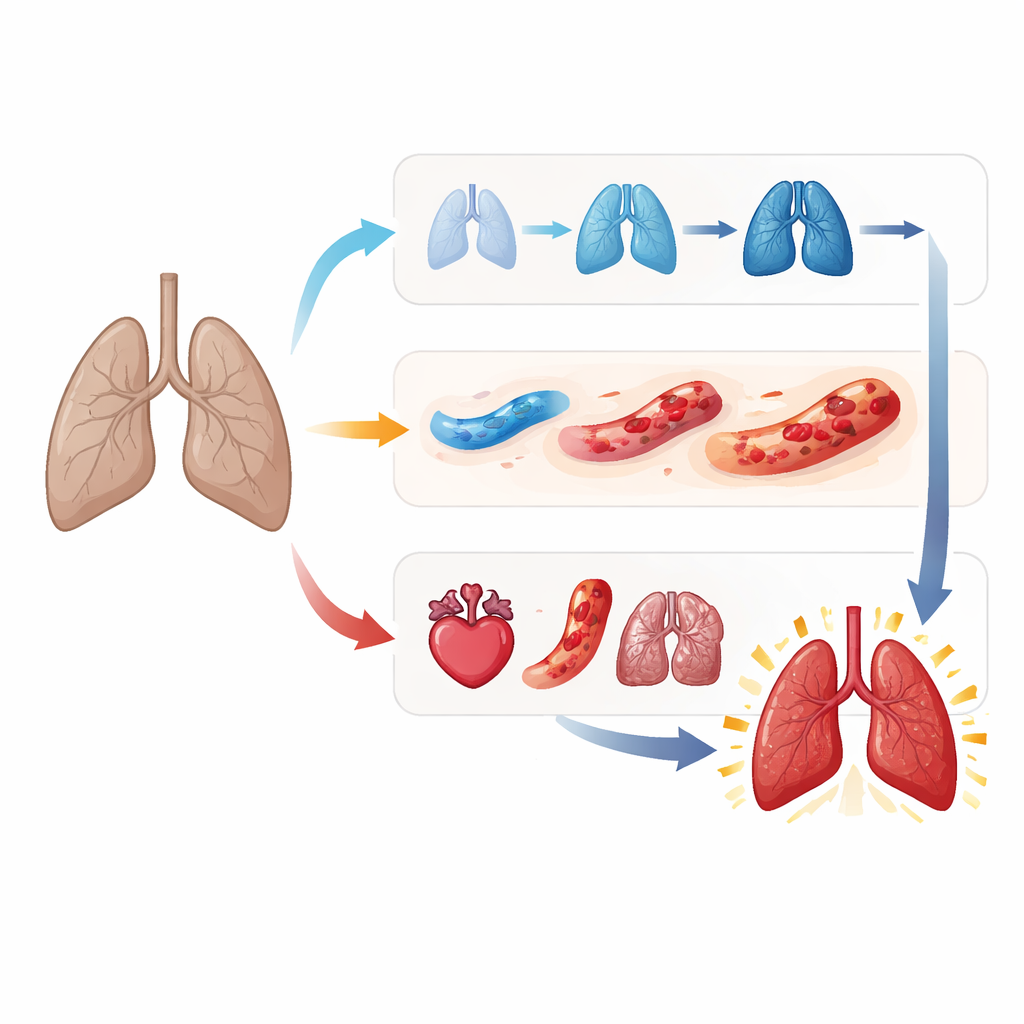
What drives worsening lungs and attacks?
By analyzing test results and medical histories together, the authors identified several key warning signs. People whose breathing capacity (measured by the amount of air exhaled in one second and total lung volume) fell faster over the year were more likely to suffer flare‑ups. Higher levels of C‑reactive protein, a blood marker of whole‑body inflammation, also went hand in hand with more severe and frequent attacks. Additional risk came from overlapping conditions such as asthma and interstitial lung disease, which seemed to amplify inflammation and strain on the lungs. Even after accounting for smoking and other factors, moving from PRISm into COPD stood out as an independent marker of rapid lung decline and repeated crises.
Turning early warning into early action
To a layperson, the message is that PRISm is an early warning stage on a sliding scale from healthy lungs toward COPD, not a benign quirk of testing. People in this grey zone already have weaker lungs, heavier symptom burdens, more other illnesses, and more dangerous flare‑ups. Those whose lungs worsen or who show signs of high inflammation and overlapping lung diseases need especially close follow‑up and timely treatment. On the positive side, the study also shows that some people can move from PRISm back to normal lung function and enjoy fewer attacks, suggesting that with early detection, smoking cessation, control of asthma and lung scarring, and targeted anti‑inflammatory care, it may be possible to change the course of disease before permanent damage sets in.
Citation: Cheng, X., Zhao, X., Yu, Y. et al. Lung function trajectories and exacerbation risks in preserved ratio impaired spirometry (PRISm) patients. Sci Rep 16, 8603 (2026). https://doi.org/10.1038/s41598-026-40025-4
Keywords: PRISm, early COPD, lung function decline, respiratory exacerbations, systemic inflammation