Clear Sky Science · en
Characterization of conserved residues in the mammarenavirus matrix protein Z using novel Lassa virus life cycle modelling assays
Why this research matters
Lassa fever is a deadly viral disease that sickens hundreds of thousands of people each year in West Africa, yet basic details of how the virus multiplies inside our cells have remained surprisingly murky. Working with the live virus requires extreme safety measures, which slows research and drug discovery. This study unveils new safe-to-use laboratory systems that mimic the full life cycle of Lassa virus and uses them to pinpoint tiny building blocks in one viral protein that are crucial for the virus to copy its genetic material and assemble new particles. Understanding these weak spots opens doors to smarter antiviral strategies.
Building a safe stand‑in for a dangerous virus
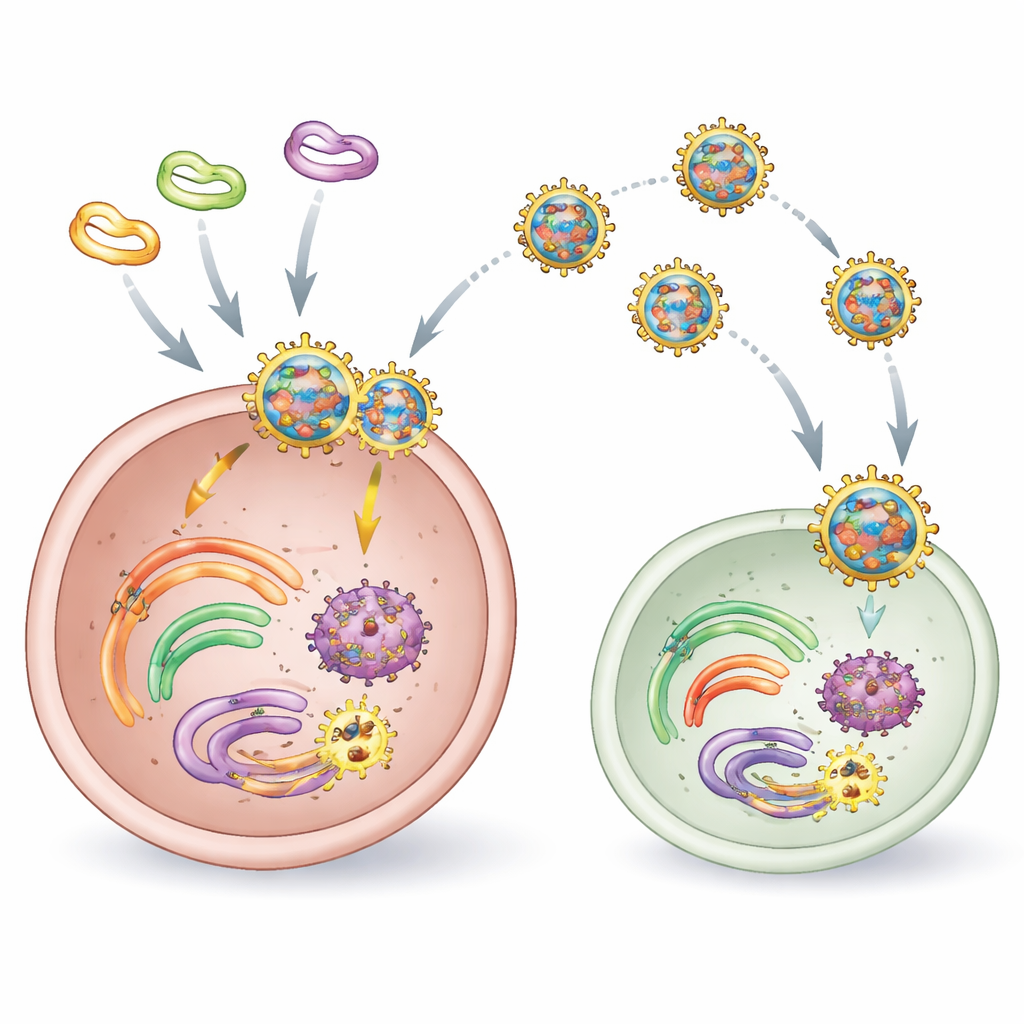
The authors set out to recreate the essential steps of the Lassa virus life cycle without handling the genuine pathogen. Lassa virus carries its genetic blueprint in two strands of RNA and depends on a small set of proteins to copy this RNA, package it, and bud from the cell. Instead of using the full viral genome, the team engineered shortened “minigenomes” that keep the control regions needed for copying but replace the disease‑causing genes with a harmless light‑producing reporter. When cells receive these minigenomes together with the viral nucleoprotein and polymerase, they start to glow in proportion to how well the virus’s copying machinery is working, providing a sensitive readout of RNA synthesis.
Fine‑tuning a miniature virus factory
To make this stand‑in system reliable, the researchers compared several cell types and adjusted the amounts of viral proteins produced. Human liver‑derived Huh7 cells gave the strongest and cleanest signal. They then reduced stray background light by inserting genetic “decoy” segments that soak up unintended transcription from the plasmid backbone. These changes expanded the dynamic range of the assay thousands‑fold, allowing them to detect even subtle changes in viral RNA production. With this optimized setup, they created a more advanced version called a transcription‑ and replication‑competent virus‑like particle (trVLP) system. Here, the minigenome also encodes the virus’s surface glycoprotein and the matrix protein Z, enabling the production of infectious but non‑hazardous particles that can infect fresh cells and repeat the cycle.
The matrix protein as a multitasking control hub
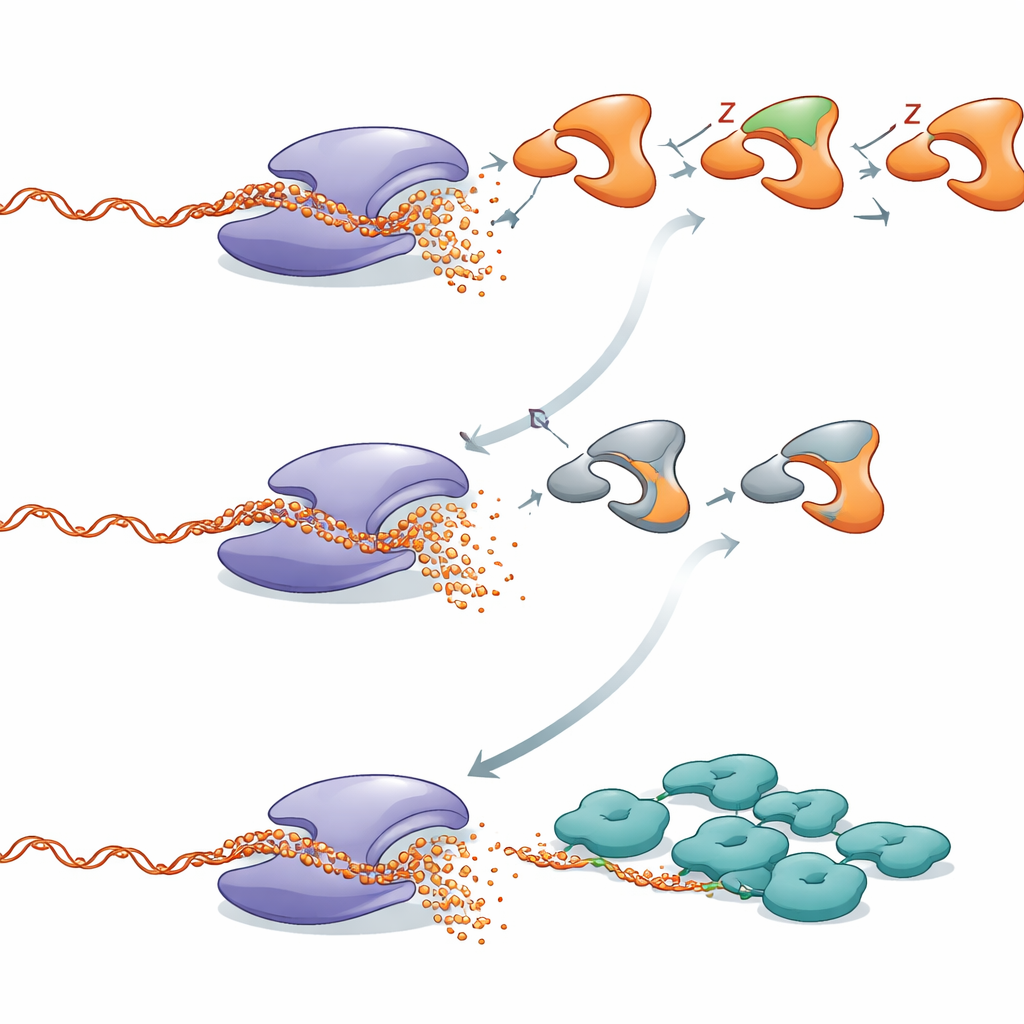
With their life‑cycle models in place, the team focused on Z, a small protein that sits beneath the viral membrane and orchestrates budding, interacts with other viral proteins, and can shut down RNA synthesis. By aligning Z sequences from many related mammarenaviruses, they highlighted amino acid positions that are strongly conserved across species, hinting at important roles. They individually changed ten such residues to alanine and tested how each mutant behaved. Several changes, especially at positions labeled L71 and P72 in the protein chain, almost abolished Z’s ability to suppress RNA synthesis, while others (R16, D22, K68 and T73) weakened this inhibitory effect. These tests showed that specific stretches of Z act as key switches for turning viral RNA production down.
From particle budding to recruiting the genome
The trVLP system allowed the researchers to ask a broader question: do these same residues control the formation of new particles and the packaging of the viral genome? One well‑known site, G2, must be chemically modified to anchor Z to cell membranes; mutating it eliminated the release of virus‑like particles, confirming its central role in budding. Surprisingly, most other mutants still budded efficiently, yet some produced particles that were far less able to infect new cells. Co‑immunoprecipitation experiments, in which Z is pulled down from cell extracts and its binding partners are measured, revealed why: mutations at G2 and at the cluster L71–T73 sharply reduced Z’s interaction with the nucleoprotein, which wraps the viral RNA. Without this handshake, particles lack the ribonucleoprotein core and are essentially empty shells.
Unanswered questions and future targets
Not all conserved residues yielded straightforward answers. Changes at D22 and K68 hampered the ability of virus‑like particles to propagate in fresh cells, yet did not clearly affect budding or the direct binding between Z and nucleoprotein. These positions may influence how viral components fit together during particle assembly or how the incoming particle uncoats after entry—steps that are harder to probe with current tools. Nonetheless, taken together, the new life‑cycle models and mutational map show that a handful of tiny residues in the Z protein govern whether Lassa virus can correctly shut off RNA synthesis, recruit its genome, and build infectious particles. For non‑specialists, the takeaway is that researchers can now safely dissect the virus’s inner workings in detail and have identified precise molecular sites that could be targeted by future drugs or vaccines to blunt this often‑lethal infection.
Citation: Bastl, C., Posch, B., Kudla, M. et al. Characterization of conserved residues in the mammarenavirus matrix protein Z using novel Lassa virus life cycle modelling assays. Sci Rep 16, 9520 (2026). https://doi.org/10.1038/s41598-026-40023-6
Keywords: Lassa virus, matrix protein Z, virus-like particles, RNA replication, antiviral targets