Clear Sky Science · en
Midlife modulation of task switching brain activity reveals age specific neural adaptation
Why midlife brain changes matter
Many people notice that multitasking feels harder with age—juggling email, conversations, and decisions can become more tiring or error-prone. This study asks what happens in the brain during this everyday skill, known as task switching, and whether midlife may be a turning point. By scanning the brains of young, middle-aged, and older adults while they switched between simple number judgments, the researchers show that people in their 50s and early 60s may still call on flexible brain strategies that help keep performance sharp, even as aging accelerates.
How the study looked inside the working brain
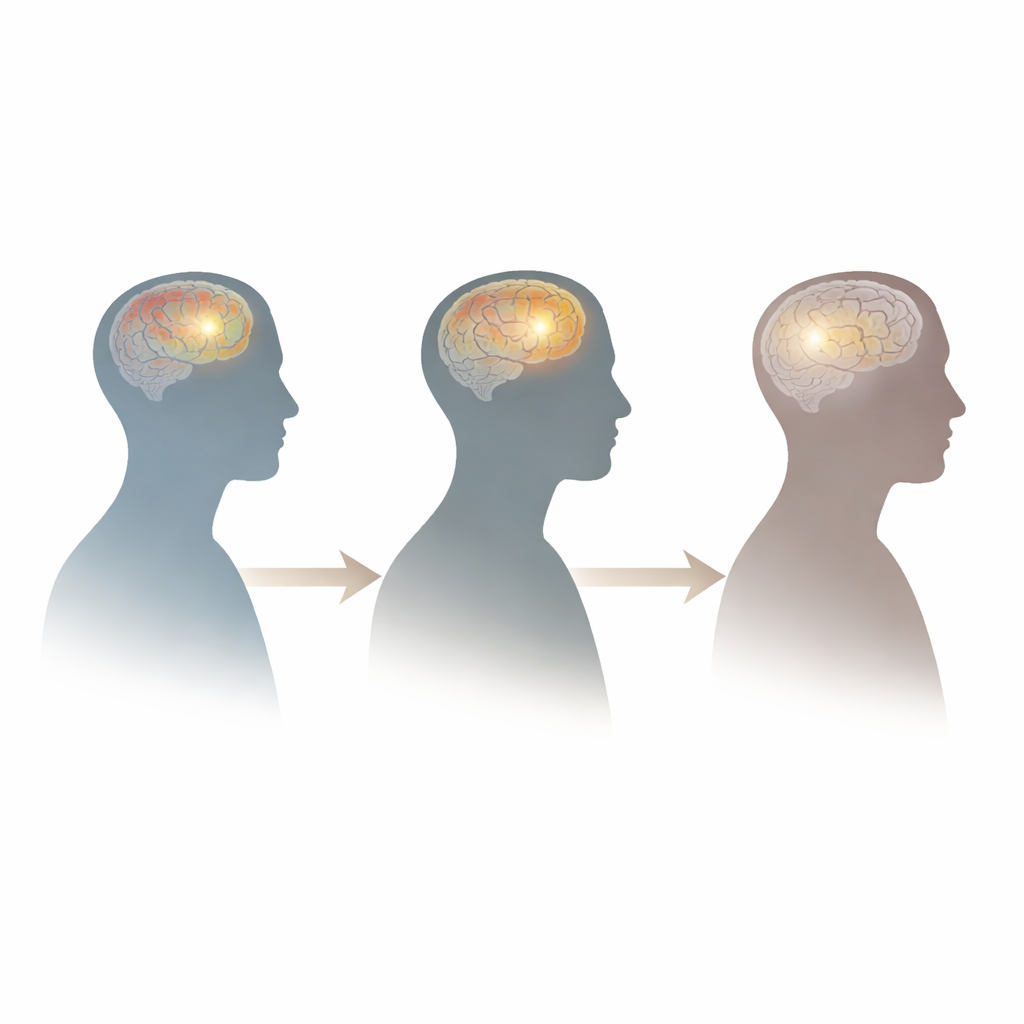
The researchers recruited 90 healthy adults: young (20–34), middle-aged (50–64), and older (65–80). While in a brain scanner, participants performed a modified Stroop-like task that required choosing the larger of two numbers. Sometimes they judged physical size; other times, numerical value. Colored cues signaled which rule to follow. In some blocks, the rule stayed the same (non-switch); in others, it changed from trial to trial (switch), forcing the brain to rapidly reconfigure what mattered. The team measured how often people made mistakes, how fast they responded, and how much activity changed in front and parietal brain regions known to support attention and control.
What changed in performance with age
As expected, older adults were slower and made more errors than the other groups, whether or not they had to switch between tasks. Young adults were fastest and most accurate. Middle-aged adults fell in between on speed, but crucially, their increase in errors when switching—called the error “switch cost”—was lower than in older adults and similar to the young group. This pattern suggests that, despite some slowing, people in midlife can still preserve accuracy when juggling competing demands, rather than simply trading speed for correctness.
How brain activity patterns differed by age
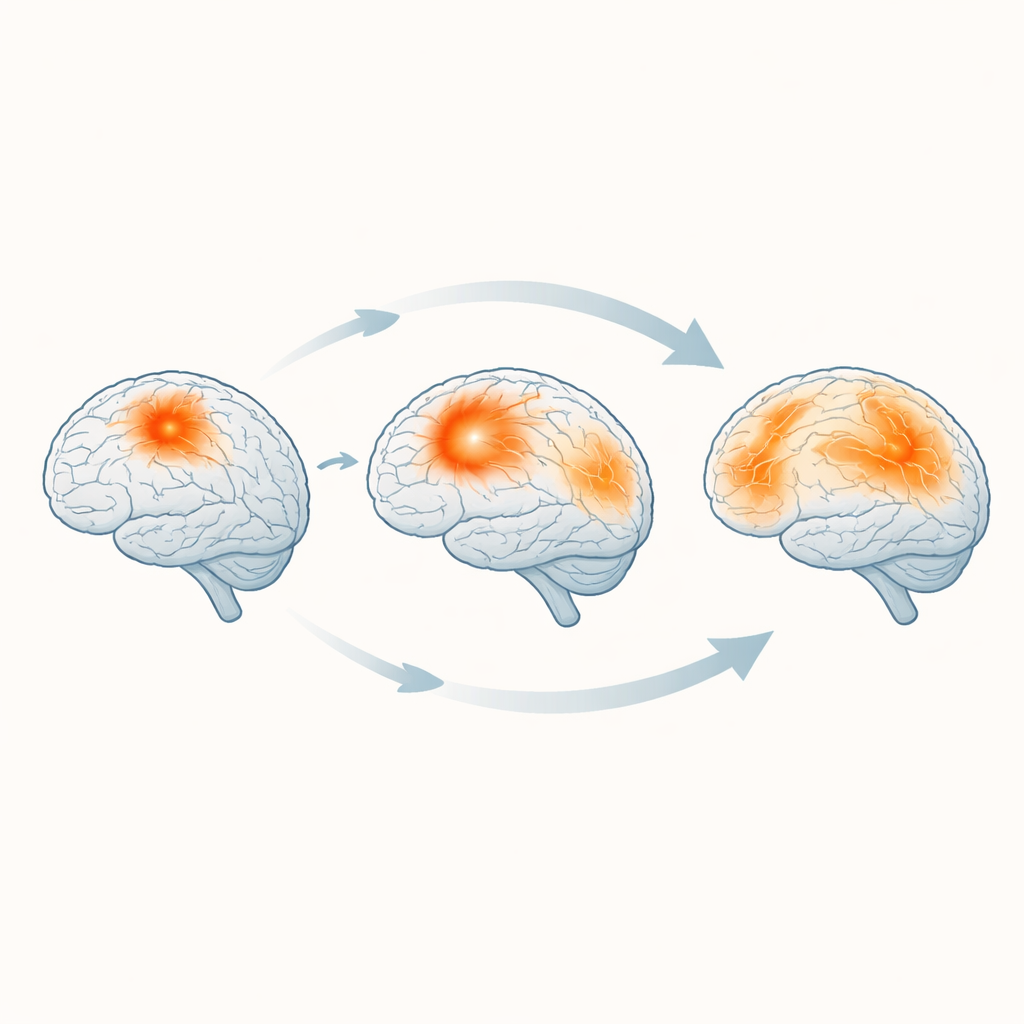
Brain scans revealed that all three age groups engaged a network in the front and parietal lobes more strongly during switch than non-switch blocks. However, the way this “control network” ramped up with task difficulty differed by age. Young adults mainly showed increased activity in left frontal regions when switching. Middle-aged adults showed pronounced increases not only in frontal areas but also in both parietal lobes, especially on the right. Older adults, by contrast, already had relatively high activation even in the easier, non-switch condition and showed the least additional increase when switching. This fits with the idea that in later life the brain may operate closer to its capacity even on simpler tasks, leaving less room to adapt when demands rise.
Midlife compensation: helpful focus versus wasted effort
The key question was whether these changes in brain activity actually helped performance. In middle-aged adults, the answer was mixed but revealing. Greater upshifts in activity in a specific left frontal region were linked to fewer mistakes during switching, even after correcting for multiple comparisons. In other words, people whose left frontal areas could flexibly “turn up the volume” when rules changed tended to stay more accurate. By contrast, stronger modulation in right parietal regions was not tied to better performance, suggesting this extra effort might be inefficient or even a sign of struggling. In older adults, no clear link emerged between how much these regions responded and how well they switched, hinting that some compensatory strategies may no longer pay off.
What this means for aging and everyday thinking
Taken together, the findings point to midlife as a critical window when the brain is still capable of adaptively boosting activity in key frontal control regions to maintain task-switching accuracy, even as structural and functional changes begin to accelerate. The results also suggest that not all extra brain activity is beneficial: focused ramping-up in left frontal areas appears helpful, whereas broad increases in parietal regions may reflect less effective compensation. For lay readers, the takeaway is hopeful: in our 50s and early 60s, the brain still has room to adjust its internal “control knobs,” and lifestyle or training interventions that support healthy frontal function during this period could help buffer against later-life declines in multitasking and flexible thinking.
Citation: Wu, MT., Goh, J.O., Chou, TL. et al. Midlife modulation of task switching brain activity reveals age specific neural adaptation. Sci Rep 16, 9735 (2026). https://doi.org/10.1038/s41598-026-39996-1
Keywords: cognitive aging, task switching, midlife brain, functional MRI, cognitive flexibility