Clear Sky Science · en
Gene expression changes in lymphocytes and monocytes from patients with traumatic brain injury
Why brain injuries can weaken the body’s defenses
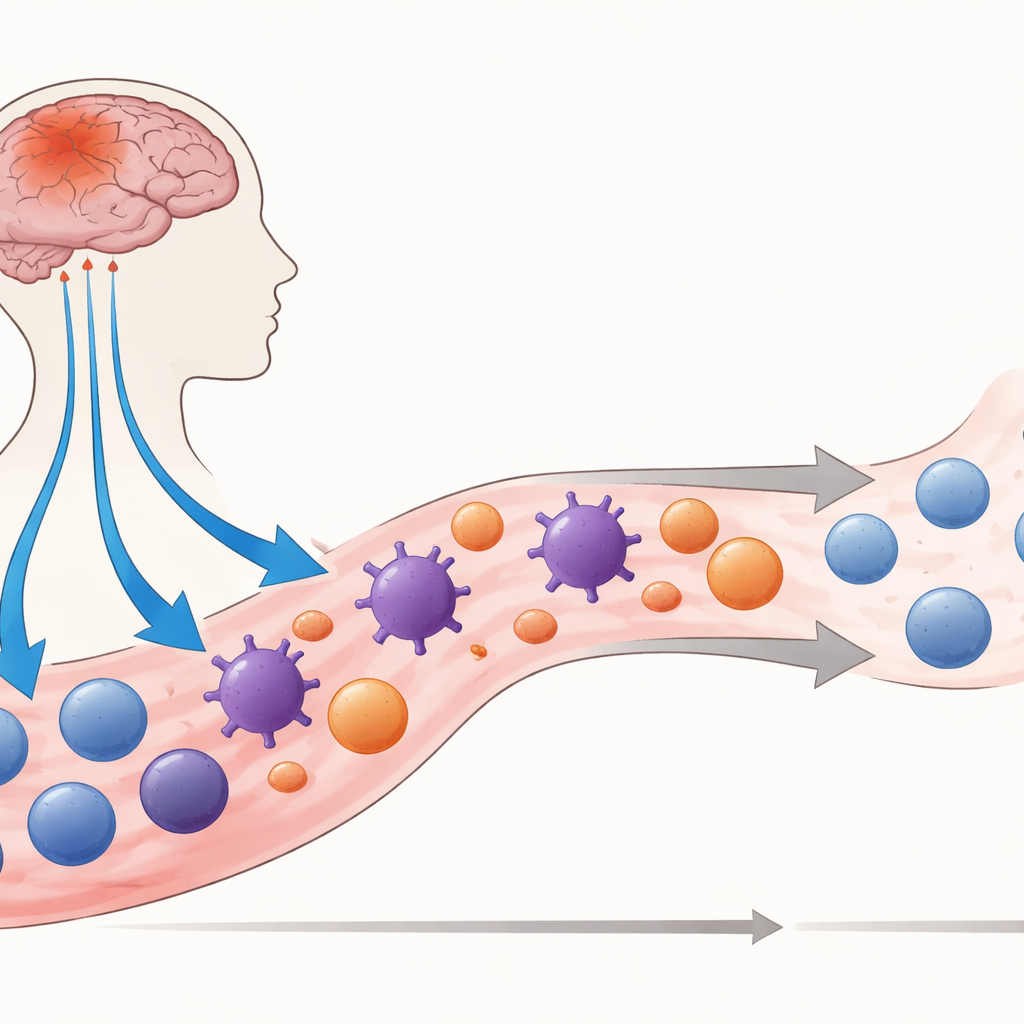
When someone suffers a serious blow to the head, doctors focus first on saving the brain. But many patients with traumatic brain injury later develop dangerous infections such as pneumonia, even in the controlled environment of an intensive care unit. This study asks a simple but important question: what happens, at the molecular level, to key immune cells in the days after a severe head injury, and could those hidden changes help explain why patients become so vulnerable to infection?
Looking closely at the body’s frontline cells
The researchers followed three older adults who had severe traumatic brain injury caused by acute subdural hematoma and required emergency brain surgery. To limit differences between patients, they only included cases with this same type of bleeding under the skull and no major injuries elsewhere in the body. Blood was drawn soon after arrival in the hospital and again about a week later, and the team compared these samples with blood from two healthy volunteers of similar age. Rather than just counting cells, they isolated three key types—helper T cells (CD4), killer T cells (CD8), and monocytes—and read out which genes were switched on or off inside each group using comprehensive RNA sequencing.
A surge of activity, then a fading response
Gene activity patterns in patients on the first day after injury actually resembled those of healthy people more than those seen a week later. Early after trauma, all three cell types showed signs of high internal energy use and growth: pathways linked to cellular “power plants,” nutrient use, and cell division were strongly engaged. This picture fits with an intense, whole-body alarm reaction in which immune cells rapidly gear up to deal with damage signals coming from the injured brain and other tissues. At the same time, cell counts showed that monocytes were abundant shortly after injury, while CD4 and especially CD8 T cells were already less common than in healthy volunteers.
Sliding toward a muted immune state
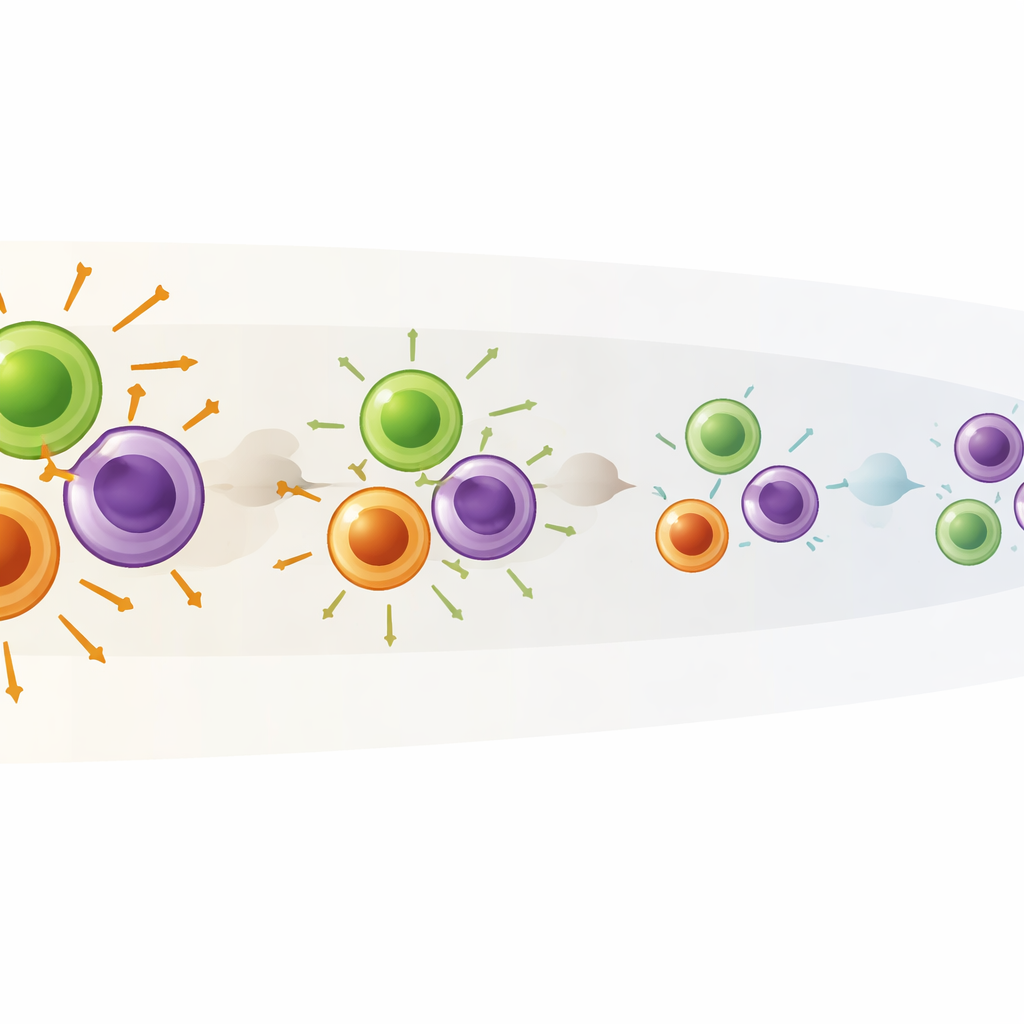
By day seven, the gene expression picture had shifted. In CD4 and CD8 T cells and in monocytes, many of the pathways responsible for energy production, growth, stress handling, and antiviral defense were dialed down compared with day one. In CD4 T cells and monocytes, genes that drive the cell cycle and division were also quieter, suggesting that these cells were no longer multiplying vigorously. This broad slowdown is consistent with a move from an active, “on guard” immune state toward one that is blunted and less responsive—a state sometimes called immunoparalysis, which can leave patients exposed to secondary infections. Supporting this idea, all three patients developed pneumonia during their hospital stay.
Shifting from attack to repair
The study also hints that not all immune cells follow the same script. In CD4 T cells, some gene programs tied to tissue remodeling and repair became more active over the week, suggesting a gradual switch from driving inflammation to helping resolve it and supporting healing. Meanwhile, blood measurements of signaling proteins showed a complex pattern: markers of inflammation such as one well-known cytokine rose and stayed high, while some molecules that calm and regulate immune responses were low right after injury but crept back up toward normal by day seven. Together, these trends paint a picture of the body juggling persistent inflammation with emerging signals that encourage it to stand down.
What these early clues may mean for patients
This was a very small, exploratory study, so its findings cannot yet change how traumatic brain injury is treated. Still, it offers a rare, detailed look inside human immune cells in the crucial first week after a severe head injury. The results suggest that, soon after trauma, immune cells mount an energetic response, but within days many of the gene programs that support their function and growth are dampened, even as infections begin to appear. Understanding this time-dependent switch—from activation to exhaustion and repair—could eventually help doctors identify which patients are at highest risk for infection and design treatments that bolster immunity without worsening brain damage. Larger studies, and more refined methods that can track individual cell subtypes, will be needed to turn these molecular snapshots into practical therapies.
Citation: Ito, H., Ishikawa, M., Matsumoto, H. et al. Gene expression changes in lymphocytes and monocytes from patients with traumatic brain injury. Sci Rep 16, 9150 (2026). https://doi.org/10.1038/s41598-026-39991-6
Keywords: traumatic brain injury, immune suppression, T cells, monocytes, transcriptomics