Clear Sky Science · en
Prolonged expiratory time constant and risk of moderate-to-severe exacerbations in stable COPD
Why breathing troubles matter
For people living with chronic obstructive pulmonary disease (COPD), flare‑ups that suddenly worsen breathing can send them to the emergency room, damage their lungs, and shorten their lives. Doctors try to predict who is at highest risk for these dangerous episodes, but standard breathing tests only tell part of the story. This study explores a more time‑based way of looking at how lungs empty air and asks whether that simple idea can flag patients who are quietly heading toward trouble, even when their usual test results and scan findings do not look especially severe.
A new way to time the breath out
When you blow out into a spirometer, the machine usually reports how much air you can force out in one second and in total. Those numbers are useful, but they do not fully capture how evenly or how quickly different parts of the lung empty. The researchers focused instead on the "expiratory time constant"—essentially, how long it takes for a lung to empty about two‑thirds of its air. This measure depends on both how stiff the lung tissue is and how narrow the airways are, and it is especially sensitive to tiny airways deep inside the lungs that are hard to assess in other ways.
Following patients over many years
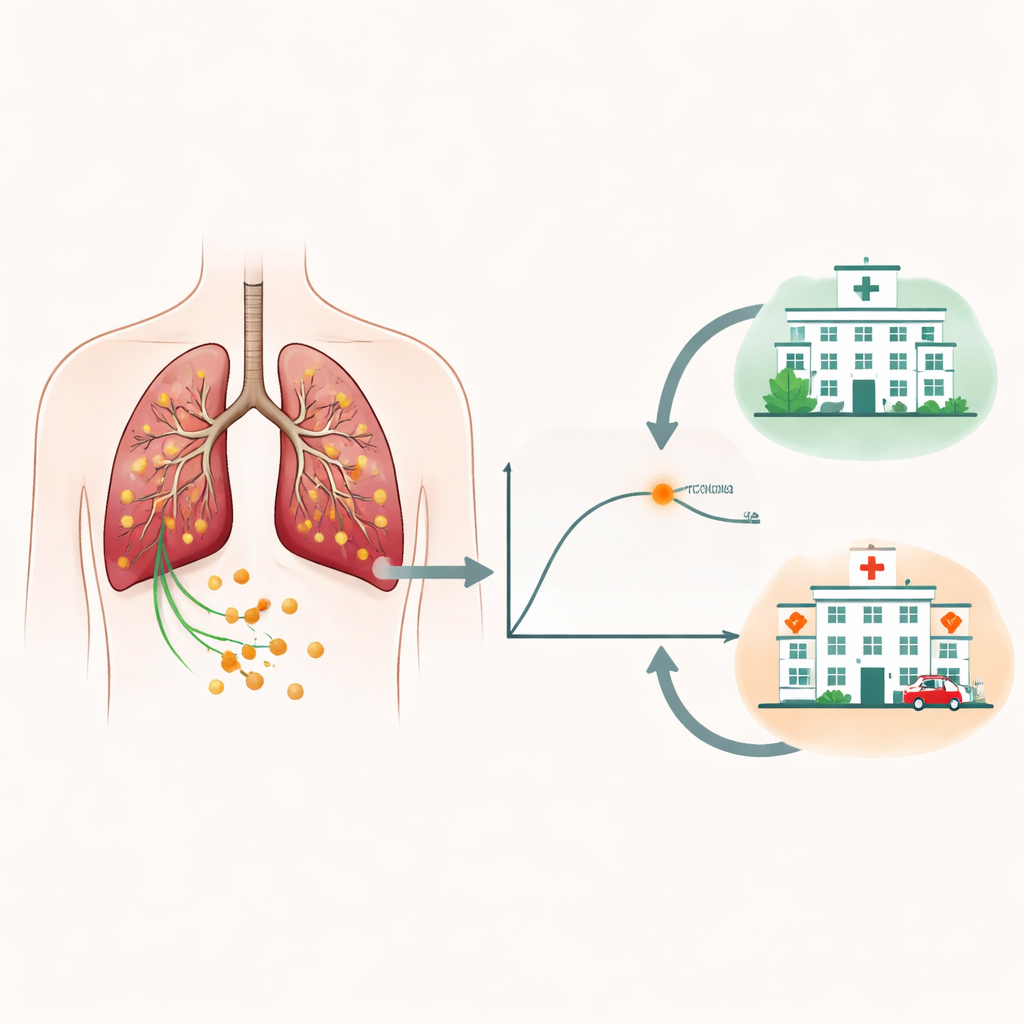
The team analyzed medical records from 1,479 Korean adults with stable COPD who were treated at two large hospitals between 2014 and 2023. All had chest CT scans and high‑quality spirometry at the start and were followed for at least five years. Using an automated image‑processing method, the researchers extracted the expiratory time constant from the printed breathing curves, then watched to see who went on to have moderate or severe flare‑ups—episodes bad enough to need steroid pills, antibiotics, or hospital care. They also recorded smoking history, breathlessness, blood markers, standard lung function numbers, and CT measures of emphysema and airway thickening.
Longer emptying time, higher risk
Patients whose lungs took longer to empty were more likely to experience serious COPD flare‑ups during follow‑up. After accounting for age, smoking, baseline lung function, previous flare‑ups, and CT findings, each extra second of expiratory time constant still raised the risk of a first moderate‑to‑severe exacerbation. By examining the risk curve in detail, the researchers identified a practical threshold: when the expiratory time constant was longer than about 1.14 seconds, the chance of future flare‑ups rose noticeably. People above this mark not only had a higher probability of having at least one serious episode, they also averaged roughly three times as many such events per year as those with shorter emptying times.
Hidden vulnerability in certain patients
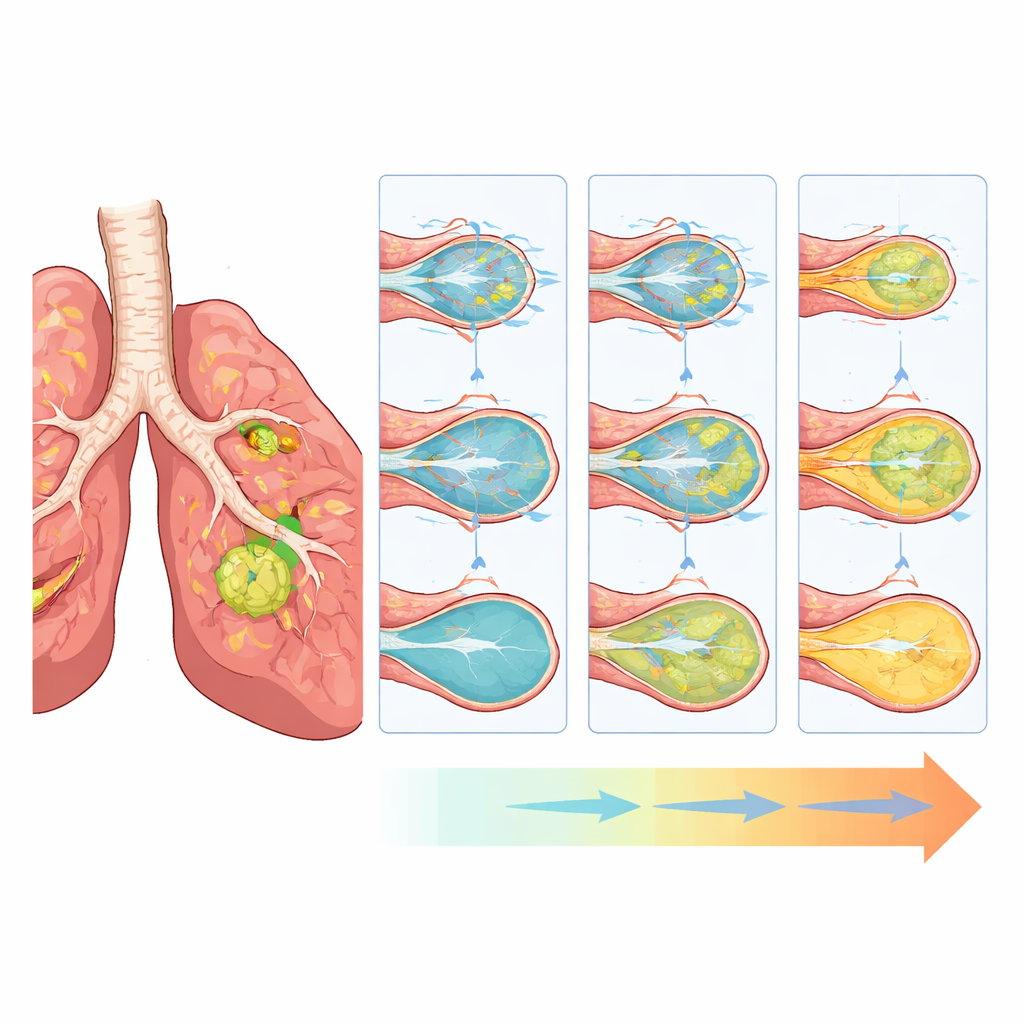
The link between prolonged emptying and future flare‑ups was especially clear in patients who were already quite breathless but did not yet have a history of frequent exacerbations. It also stood out in people whose CT scans suggested that their disease mainly affected the airways rather than destroying large areas of lung tissue: they tended to have thicker airway walls, relatively preserved gas‑exchange capacity, and less emphysema. In these individuals, standard spirometry measures sometimes failed to show a strong connection with later flare‑ups, while the time‑based measure still did. This pattern suggests that slow, uneven emptying of air from many small airways—possibly worsened by mucus plugs and subtle blockages—creates a kind of mechanical fragility that conventional numbers can miss.
What this could mean for care
Although the study has limits—it is retrospective, relies on image‑derived measurements, and includes only Korean patients—it offers an appealing concept: by timing how fast the lungs let go of air, doctors may gain an extra window into who is at risk before severe damage appears. The expiratory time constant is not meant to replace existing tests, but to complement them by focusing on small‑airway behavior. If confirmed in future studies and made easier to measure in routine practice, this simple timing measure could help clinicians identify high‑risk COPD patients earlier, tailor treatment more precisely, and potentially prevent some of the dangerous flare‑ups that so often drive the course of the disease.
Citation: Jeon, ET., Kim, D.H., Park, H. et al. Prolonged expiratory time constant and risk of moderate-to-severe exacerbations in stable COPD. Sci Rep 16, 9149 (2026). https://doi.org/10.1038/s41598-026-39987-2
Keywords: COPD exacerbations, small airway dysfunction, spirometry, risk prediction, lung mechanics