Clear Sky Science · en
Elective thoracic oncologic resections in selected patients appear safe beyond four weeks after COVID-19 infection
Why the Timing of Surgery After COVID-19 Matters
For people facing surgery for lung or chest cancers, the lingering shadow of COVID-19 raises a worrying question: how long should they wait after infection before it is safe to go under the knife? Delaying surgery too long can allow a tumor to grow, but operating too soon could stress lungs still recovering from the virus. This study takes a close look at that dilemma and offers reassuring evidence that, for many patients, waiting at least four weeks after COVID-19 may be enough to keep lung-related surgical risks in check.
Balancing Cancer Care and Infection Recovery
At the height of the pandemic, doctors often postponed elective operations, especially for people whose lungs had recently battled the coronavirus. Early reports suggested that patients who had surgery while infected, or shortly afterward, faced a high chance of serious breathing problems, including pneumonia and respiratory failure. Yet for patients with cancers in the chest, long delays are also dangerous. The authors set out to clarify whether operations performed several weeks after a COVID-19 infection truly carry extra lung risk, or whether some of those delays might be safely shortened.
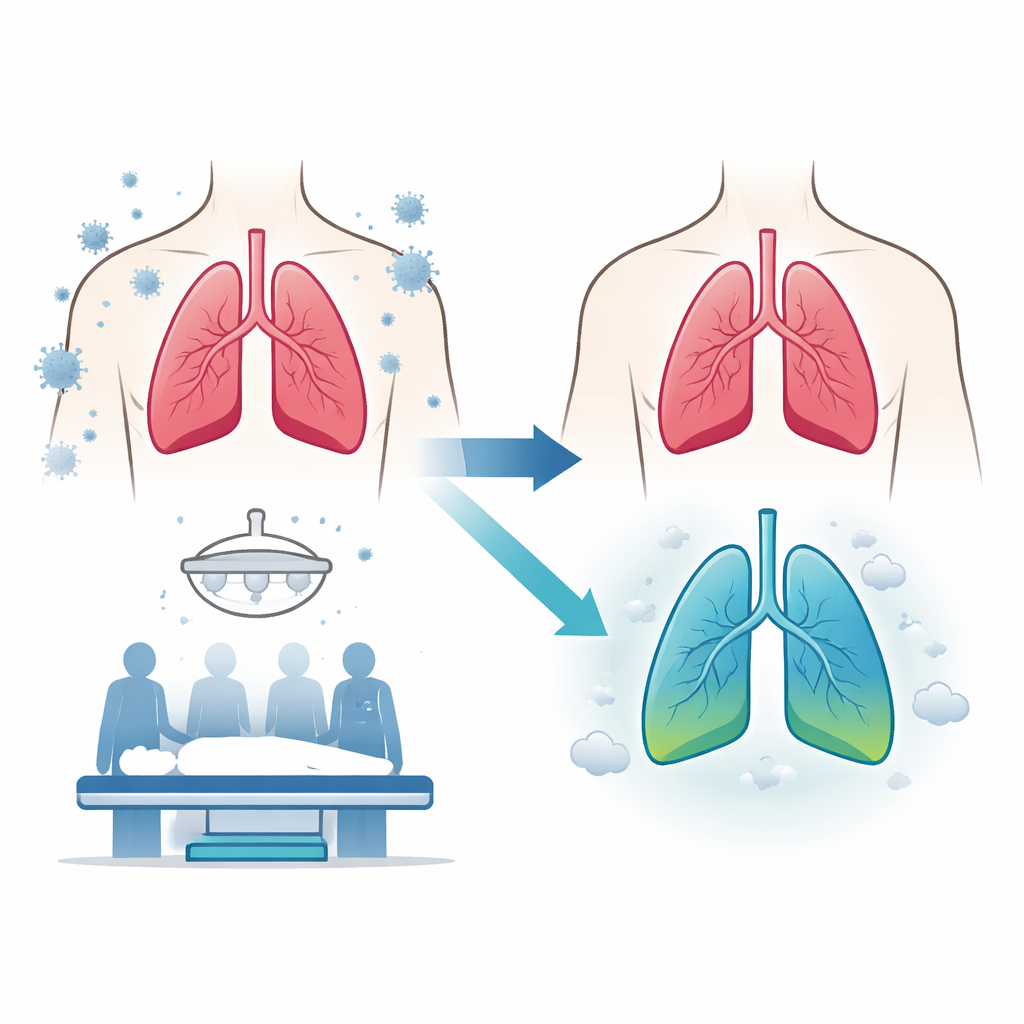
Comparing Patients Before and After the Pandemic
The research team examined records from three hospitals in China, focusing on adults who had minimally invasive surgery for cancers in the lungs, esophagus, or mediastinum during one month in 2023. All of these patients had tested positive for COVID-19 between four and twelve weeks before their operation. To judge whether their outcomes were different from usual, the team compared them with a similar group of patients who had the same kinds of operations in February 2019, before the coronavirus emerged. Using statistical methods to closely match people by age, sex, overall health, smoking, and type of surgery, they aimed to isolate the effect of prior infection on lung-related complications.
What Happened to Patients’ Lungs After Surgery
The main yardstick was how often patients developed breathing problems in the first week after surgery. These included pneumonia, fluid around the lungs, lung collapse, or a new air leak on the non-operated side. Across 846 patients in total, about three in ten experienced at least one such problem—a rate similar to what is typically seen after major chest operations. Crucially, once the groups were carefully balanced, patients who had recovered from COVID-19 did not have more lung complications than those who had never been infected. This held true whether surgery happened four to six weeks, six to eight weeks, or eight to twelve weeks after the positive test.
Hidden Signs of Inflammation and the Role of Smoking
Although overall lung outcomes were similar, the study did uncover subtle differences beneath the surface. Patients with a prior COVID-19 infection showed higher white blood cell counts and lower lymphocyte counts the day after surgery—blood patterns that point to a lingering, heightened immune response. Yet this extra immune activity did not translate into more breathing problems. Other aspects of recovery, such as time with a chest drain and days in the hospital, were actually shorter in the post-COVID group, likely reflecting careful selection of lower-risk cases. One risk factor clearly did stand out: people with a history of smoking were more than twice as likely to develop postoperative lung complications, reinforcing long-standing advice to quit well before surgery.
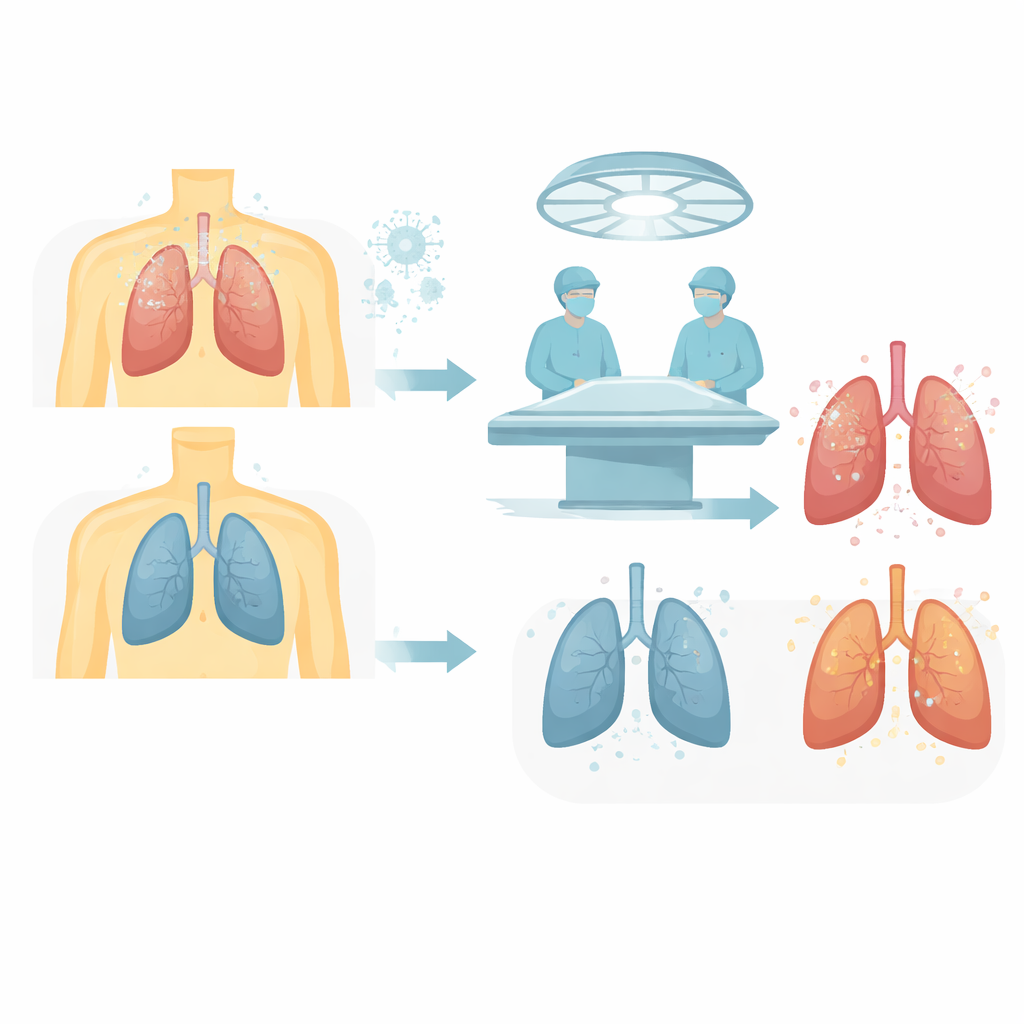
What This Means for Patients and Doctors
For patients with chest cancers who have recovered from mostly mild COVID-19, this study suggests that having surgery at least four weeks after infection is generally no more dangerous for the lungs than operating in the pre-pandemic era, provided they are otherwise carefully chosen and optimized. The virus may leave behind traces in the immune system, but these did not show up as extra lung trouble in the first week after surgery. However, the study included very few people operated on sooner than four weeks or after severe illness, so it cannot guarantee safety in those situations. Going forward, larger forward-looking studies will be needed, but for many patients and their surgeons, these findings support moving ahead with necessary cancer surgery without excessively long, and potentially harmful, delays.
Citation: Zhang, Y., Liu, Y., Xu, H. et al. Elective thoracic oncologic resections in selected patients appear safe beyond four weeks after COVID-19 infection. Sci Rep 16, 9699 (2026). https://doi.org/10.1038/s41598-026-39978-3
Keywords: thoracic cancer surgery, COVID-19 recovery, postoperative lung complications, surgical timing, smoking and surgery risk