Clear Sky Science · en
Fetal sex-specific differences in the placental transcriptome of gestational diabetes
Why this matters for mothers and babies
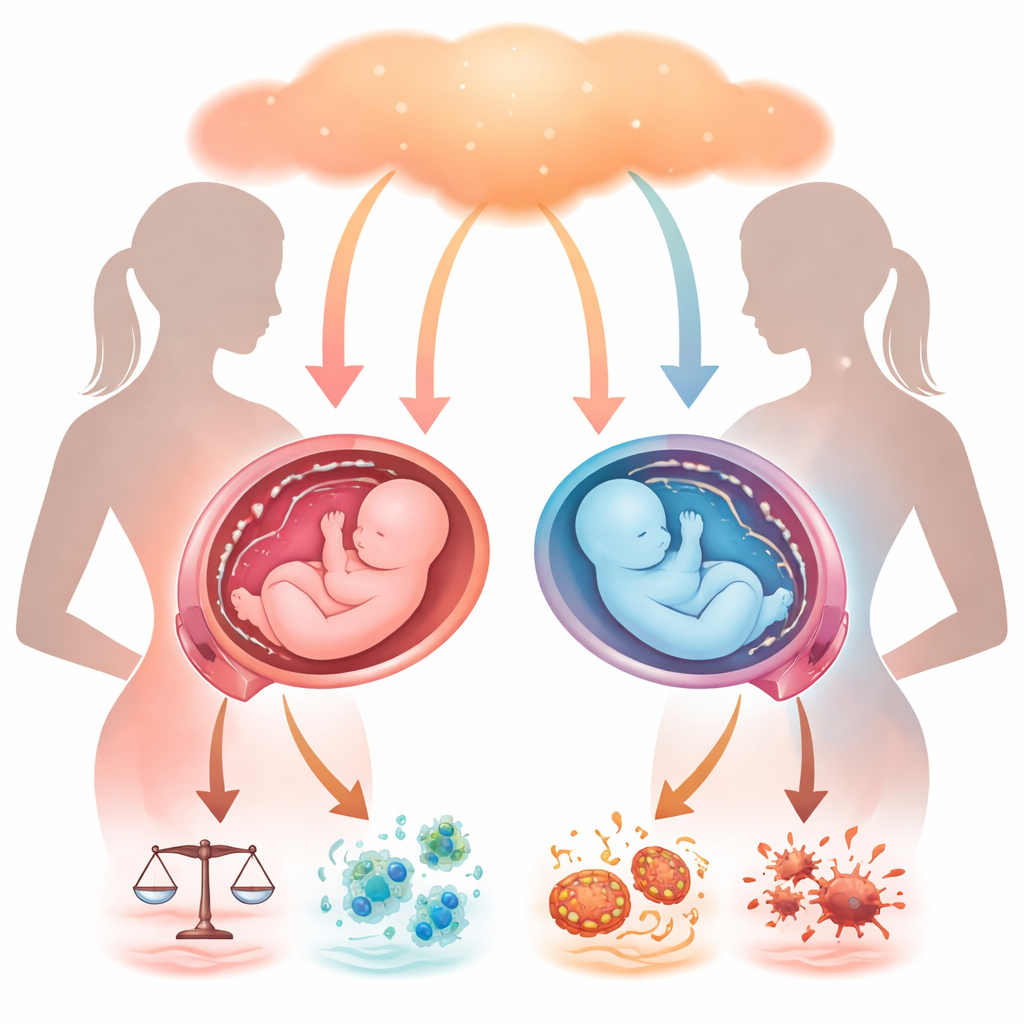
Gestational diabetes, a form of high blood sugar that appears during pregnancy, is becoming more common worldwide and can raise long-term health risks for both mothers and children. Yet doctors have long noticed that baby boys and girls do not respond to pregnancy complications in exactly the same way. This study asks a simple but powerful question: when a pregnant person develops gestational diabetes, does the placenta—the lifeline between parent and fetus—react differently depending on whether the fetus is male or female?
The placenta as a traffic controller
The placenta does far more than move oxygen and nutrients to the growing fetus. It also helps control how the mother’s body handles sugar and insulin during pregnancy. The researchers reasoned that if gestational diabetes changes this control system, the placenta’s activity might look different in pregnancies with male versus female fetuses. To test this, they examined placental samples from two groups of pregnant individuals: a smaller hospital-based group in Boston and a larger population-based study in Canada. Across both groups, they focused on which genes were turned up or down in the placenta and whether these patterns depended on fetal sex.
Targeted look at key signals
In the Boston group, the team measured the activity of eight specific genes already linked to blood sugar control and immune responses. They found a striking “see-saw” pattern for several genes involved in glucose handling and inflammation. In gestational diabetes, placentas from pregnancies with baby girls showed higher levels of four genes tied to metabolism and hormone signaling, while placentas from pregnancies with baby boys showed lower levels of those same genes compared with healthy controls. One of these genes, IGFBP1, is known to reflect how sensitive the mother is to insulin and may help dampen inflammation. The team also measured immune messengers in umbilical cord blood and saw early hints that baby boys exposed to gestational diabetes had higher levels of certain inflammatory signals, whereas baby girls tended to have lower levels.
Big-picture scan of placental activity
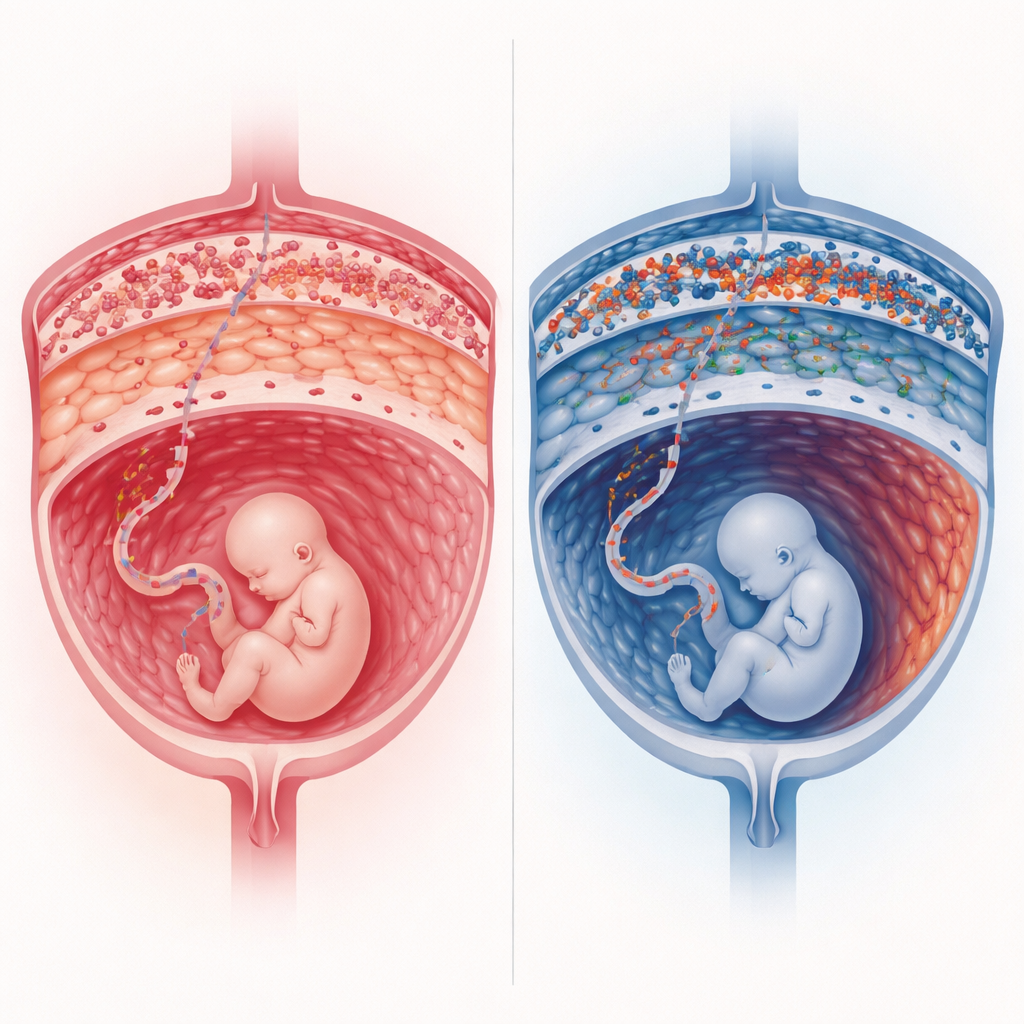
Next, the researchers zoomed out with a genome-wide scan of gene activity in more than 400 placentas from the Canadian cohort. They compared placentas from gestational diabetes pregnancies to those from unaffected pregnancies, analyzing male and female fetuses separately. Hundreds of genes differed in each sex, with only a small set overlapping. In male placentas from gestational diabetes pregnancies, the strongest changes pointed toward ramped-up inflammatory and energy-burning pathways and disrupted handling of vitamin A–related molecules that influence metabolism and development. Female placentas, in contrast, showed more signals related to cell growth, tissue remodeling, and mechanisms that rein in immune responses, hinting at a more controlled or protective adjustment to the high-sugar environment.
Shared threads and sex-specific twists
Although the two sexes showed many differences, the study also uncovered shared features. In both male and female gestational diabetes placentas, certain genes that normally support healthy insulin sensitivity were dialed down, and pathways related to the placenta’s structural scaffolding were more active. At the same time, several genes and pathways shifted in opposite directions in male versus female placentas, especially those tied to inflammation, vitamin A signaling, and hormone processing. This pattern suggests that baby boys and girls may experience the same high-sugar environment through very different biological routes, potentially helping to explain why their later risks for obesity, diabetes, and neurodevelopmental issues do not match.
What this means for future care
For non-specialists, the core message is that gestational diabetes does not affect all pregnancies in a uniform way. The placenta “reads” the baby’s sex and mounts distinct molecular responses, especially in immune and metabolic pathways. Male placentas appear to react with stronger inflammatory and metabolic changes, while female placentas lean toward growth and immune regulation. Recognizing these sex-specific patterns could eventually help doctors better predict which children are at highest risk for long-term health problems after exposure to gestational diabetes and design prevention or treatment strategies tailored for boys and girls. The work highlights an emerging idea in medicine: even before birth, sex is a key factor shaping how our bodies respond to stress and disease.
Citation: Shook, L.L., White, F., Acharya, K.D. et al. Fetal sex-specific differences in the placental transcriptome of gestational diabetes. Sci Rep 16, 9288 (2026). https://doi.org/10.1038/s41598-026-39975-6
Keywords: gestational diabetes, placenta, fetal sex differences, pregnancy metabolism, offspring health