Clear Sky Science · en
Ethnobotanical heritage and conservation priorities of medicinal flora in a remote Himalayan border region of Azad Kashmir, Pakistan
Healing Plants on a Mountain Frontier
High in the western Himalayas, along the tense border between Pakistan and India, villages in Abbaspur rely on the plants around them as their first line of healthcare. With few clinics and no nearby hospital, people turn to leaves, roots and fruits to treat everything from stomach upsets to infections. This study lifts the curtain on that little‑known herbal world, showing which plants are used, who holds the knowledge, and why some of these species are now in danger of disappearing.
Life in a Remote Mountain Community
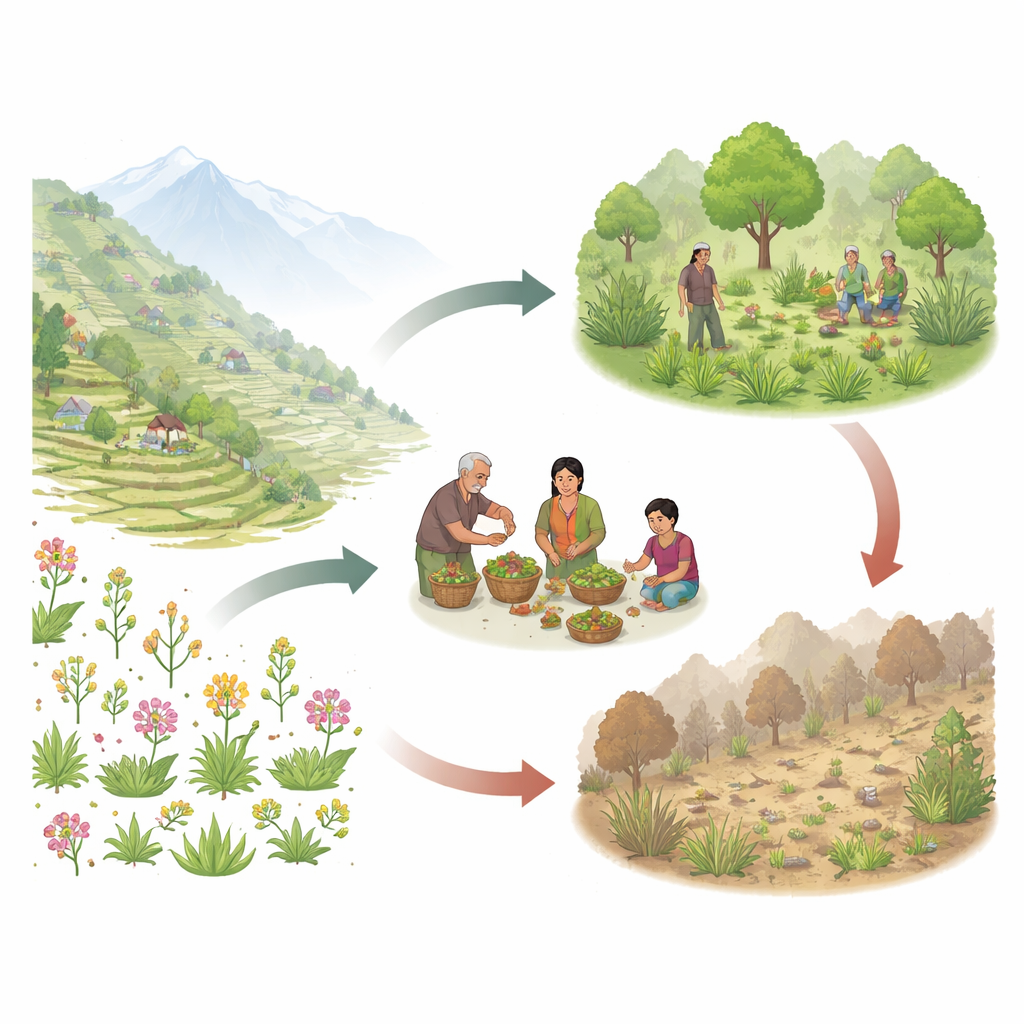
Abbaspur is a rugged landscape of oak and pine forests, meadows and scattered farms. Roads are poor, money is scarce, and modern medicine is hard to reach, so home remedies remain essential. Researchers spent two years visiting households, talking with 62 villagers in their own language, and asking them to point out the plants they use when someone falls ill. They carefully collected plant samples, identified them with botanical experts, and recorded how remedies are prepared and given. This approach allowed them to map not only nature’s pharmacy in Abbaspur, but also the social fabric that keeps this knowledge alive.
Who Keeps the Knowledge Alive
The interviews revealed that herbal know‑how is unevenly shared. Older villagers—especially women and traditional healers—knew far more species and remedies than younger people. Women, who manage households and care for children, could name more plants and more uses than men. Illiterate participants often knew more than those with formal schooling, who tend to prefer modern pills and injections. This pattern suggests that as education and lifestyles change, centuries of plant wisdom risk fading away, because it is still passed on mainly by word of mouth from elders to the next generation.
The Village Medicine Chest
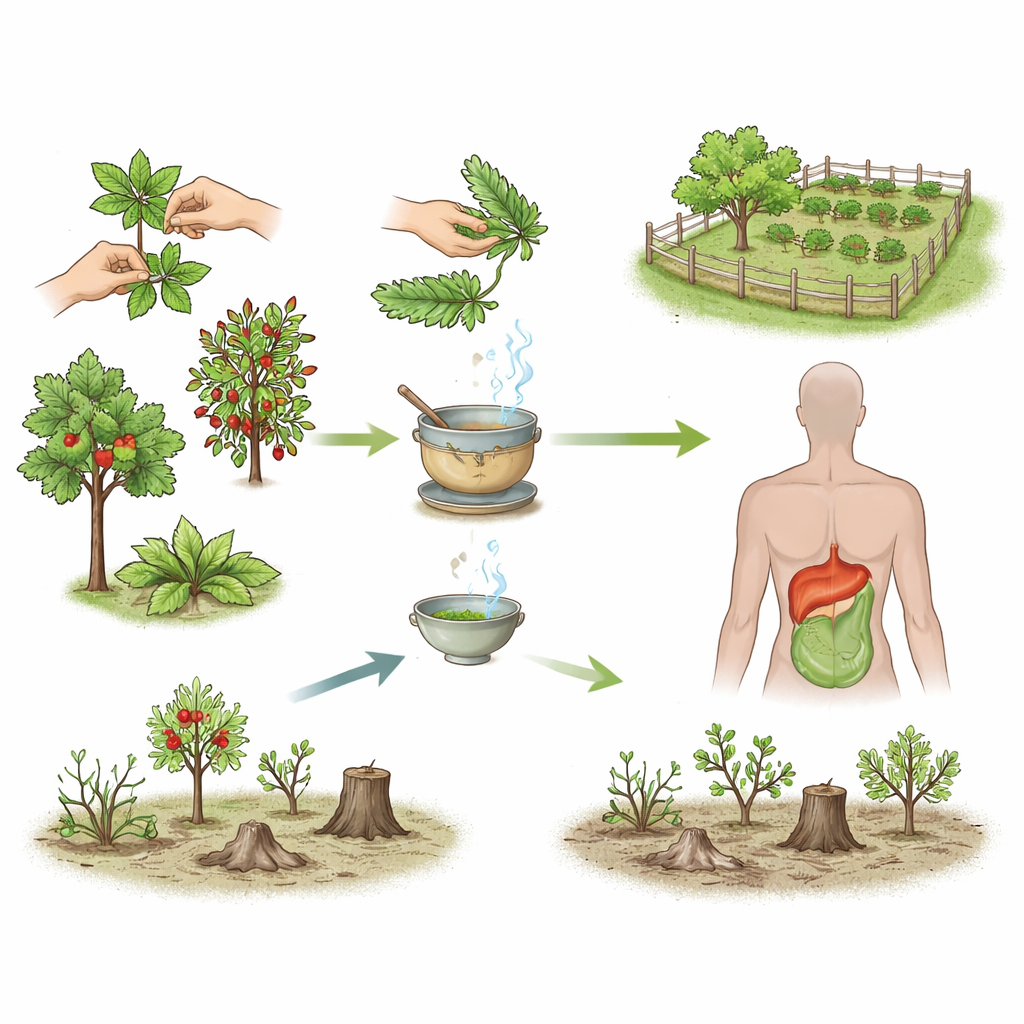
Altogether, the team documented 125 medicinal plant species from 61 families. Many are common herbs, with leaves as the part most often used, usually crushed into extracts or dried as powders. People depend heavily on these plants for stomach and liver troubles, problems that are widespread in the area due to unsafe water and poor sanitation. Certain species stand out: wild mint (Mentha longifolia and Mentha arvensis), barberry (Berberis lycium), wild strawberry (Fragaria vesca), and apple (Malus domestica) were cited again and again for digestive issues, weakness and liver problems. Some plants were reported with entirely new uses, such as a fern used for snakebite and a shrub used for high blood pressure, hinting at untapped potential for future medicines.
Warning Signs for Wild Medicines
By comparing how often each plant was mentioned and what ailments it treated, the researchers could see which species are most central to local health. Ironically, these same favorites are also among the most threatened. Field walks and talks with plant collectors showed that more than a quarter of the recorded species are already considered vulnerable, and several, including Ajuga bracteosa, Achillea millefolium, Angelica glauca, Melia azedarach, Myrsine africana, Viola odorata and Zanthoxylum armatum, are classed as endangered in the area. Overharvesting, deforestation, overgrazing, military activity and forest fires are shrinking plant populations faster than they can recover, particularly when whole plants or roots are dug up.
Why This Matters Beyond One Valley
To see how unique Abbaspur’s knowledge is, the scientists compared their list with studies from nearby regions and other countries. They found both overlaps and striking differences, shaped by shared history, travel and the plants that actually grow in each landscape. The new uses reported for seven species underscore how much remains to be learned, both about local cultures and about the chemistry hidden in these plants. At the same time, the loss of interest among young people and the physical loss of plant habitats mean that this living library is under real threat.
Protecting Nature’s Local Pharmacy
For lay readers, the message is clear: in places like Abbaspur, wild plants are not a wellness trend but a lifeline. The study shows that a small number of key species carry a heavy load in treating common illnesses, especially digestive and liver problems. Because those same plants are being harvested faster than they can regrow, the community faces a future where its most trusted remedies may vanish. Safeguarding these species through better harvesting practices, local protection efforts and scientific study could help preserve both biodiversity and an irreplaceable strand of human heritage.
Citation: Ayoub, A., Kanwal, S., Binish, Z. et al. Ethnobotanical heritage and conservation priorities of medicinal flora in a remote Himalayan border region of Azad Kashmir, Pakistan. Sci Rep 16, 9063 (2026). https://doi.org/10.1038/s41598-026-39964-9
Keywords: ethnobotany, medicinal plants, Himalayan communities, traditional medicine, plant conservation