Clear Sky Science · en
Stacked ensemble learning and in-silico profiling reveal dual DPP-IV and SGLT2 inhibitors from Moringa oleifera metabolites
Plants, Computers, and a New Way to Tackle Diabetes
Diabetes is rising rapidly around the world, and many people, especially in low‑income regions, cannot easily afford modern medicines. This study explores whether a common medicinal tree, Moringa oleifera, might yield new, more accessible treatments. By combining traditional plant knowledge with powerful computer models, the researchers searched for plant molecules that could hit two important diabetes targets at once, potentially improving blood sugar control with fewer side effects.
Why Controlling Sugar Is So Hard
Our bodies keep blood sugar in balance using a web of hormones, transporters, and enzymes. In type 2 diabetes, this balance breaks down: cells respond poorly to insulin, and sugar builds up in the blood. Two key players in this story are proteins called DPP‑IV and SGLT2. One helps switch off hormones that stimulate insulin release, and the other helps the kidneys pull sugar back into the bloodstream. Blocking DPP‑IV boosts natural insulin‑releasing signals, while blocking SGLT2 makes the kidneys send more sugar out in the urine. Drugs that target each protein already exist, but they can be expensive and may cause side effects, prompting interest in safer, plant‑based alternatives that might block both targets together.
Teaching Computers to Recognize Helpful Molecules
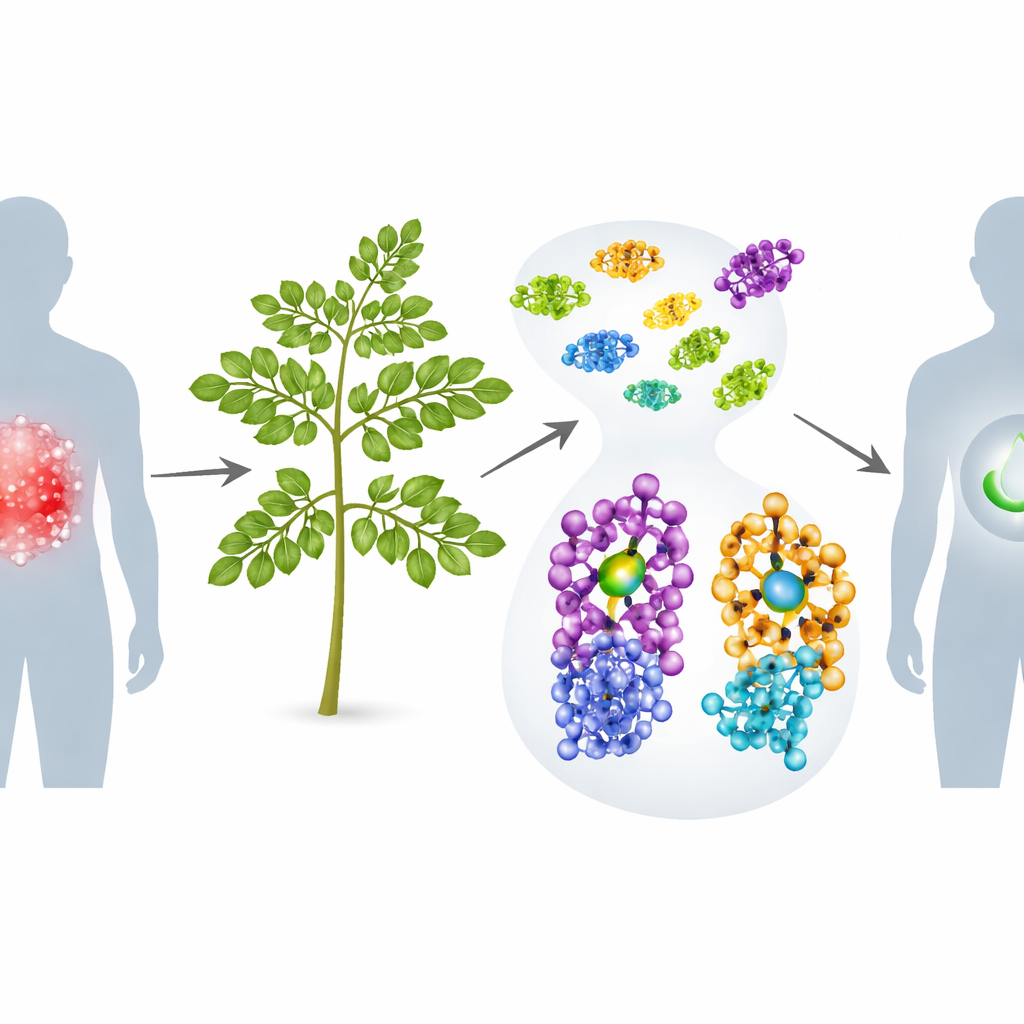
Rather than testing thousands of substances in the lab, the team used “in silico” tools—research done entirely by computer. They first gathered large collections of known chemicals, some active and some inactive against DPP‑IV and SGLT2, and described each one using numerical fingerprints that capture its size, shape, and chemical features. They then trained many different machine‑learning models to distinguish helpful from unhelpful molecules. Finally, they combined the best of these models into a “stacked” ensemble, where multiple algorithms vote together and a final layer learns how to weigh their opinions. This layered approach achieved very high accuracy on both training and independent test sets and correctly identified all eight existing diabetes drugs in an external check, suggesting that the models could reliably spot promising new compounds.
Mining the Moringa Tree for Dual‑Action Compounds
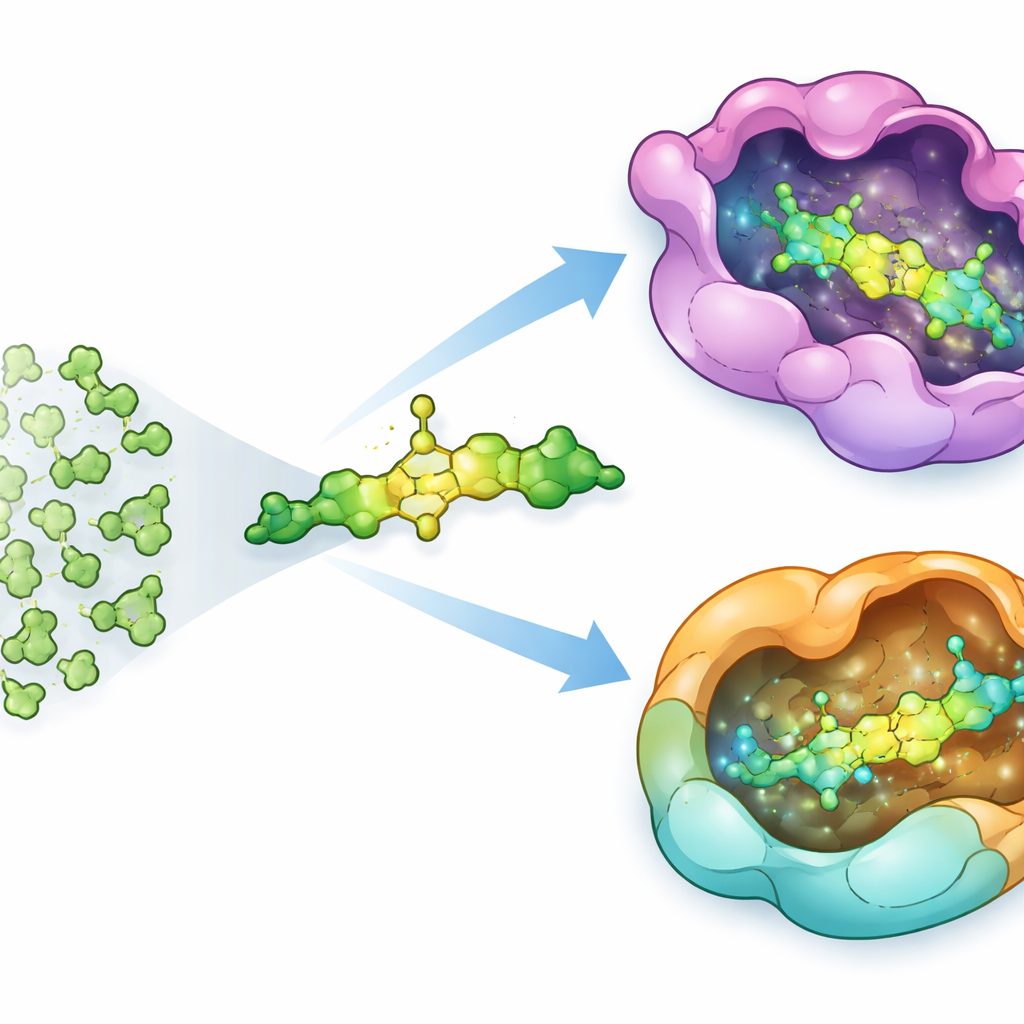
Next, the researchers turned to extracts from Moringa oleifera leaves. Using high‑resolution mass spectrometry, they catalogued 44 different natural compounds, including flavonoids, lignans, and alkaloids. These structures were fed into the trained models, which flagged several as likely blockers of SGLT2 and highlighted one, called N,α‑L‑rhamnopyranosyl vincosamide, as active against both SGLT2 and DPP‑IV. The team then used detailed computer simulations to see how these molecules might sit inside the two protein targets. Compared with reference drugs, several plant compounds formed strong, well‑positioned contacts in the binding pockets, and the dual‑acting vincosamide molecule showed especially stable, long‑lasting interactions.
Watching Molecular Interactions in Motion
To move beyond static snapshots, the scientists ran long molecular dynamics simulations—virtual movies that track how proteins and molecules dance in water over time. These simulations confirmed that the plant‑derived candidates, particularly vincosamide, stayed snugly bound inside both DPP‑IV and SGLT2 without disturbing the overall shape of the proteins. Calculations of binding energy suggested that vincosamide could grip SGLT2 even more strongly than an approved drug in the same class. The team also predicted how these molecules might behave in the body, assessing features like absorption, circulation, breakdown, and potential toxicity. Here, vincosamide again stood out with a favorable profile, while some of the larger, more polar flavonoids appeared safe but poorly absorbed by the gut.
From Computer Hits to Future Medicines
Taken together, the results suggest that Moringa oleifera harbors natural compounds that could, in principle, nudge blood sugar down through two complementary mechanisms at once: enhancing hormone‑driven insulin release and encouraging the kidneys to spill excess sugar. Among these, N,α‑L‑rhamnopyranosyl vincosamide emerges as a particularly strong dual‑target candidate. The work does not claim to have discovered a ready‑to‑use drug; all findings are predictive and still need rigorous laboratory and animal testing. But it shows how blending modern machine learning with traditional medicinal plants can rapidly narrow the search for affordable, multitarget diabetes treatments that might one day benefit patients who currently lack access to cutting‑edge therapies.
Citation: Letuku, M.K., Mohlala, M.G., Appiah-Kubi, P. et al. Stacked ensemble learning and in-silico profiling reveal dual DPP-IV and SGLT2 inhibitors from Moringa oleifera metabolites. Sci Rep 16, 9772 (2026). https://doi.org/10.1038/s41598-026-39960-z
Keywords: type 2 diabetes, Moringa oleifera, dual inhibitors, machine learning drug discovery, natural product metabolites