Clear Sky Science · en
Habitat preferences and genetic diversity of the amphipod Gammarus roeselii across the Eastern Alps and western Pannonian Basin
Why this small creature matters
Hidden under stones and leaves in streams and lakes lives a tiny crustacean, Gammarus roeselii, that quietly helps keep freshwater ecosystems running by shredding dead plants and feeding fish. This study follows its spread across Austria and the neighboring Pannonian lowlands and asks two big questions: where does this animal thrive today, and how are climate change and human-altered rivers reshaping its future? The answers reveal not only how one species is on the move, but also how warming waters and dams may reorder entire freshwater communities.
Where the amphipod likes to live
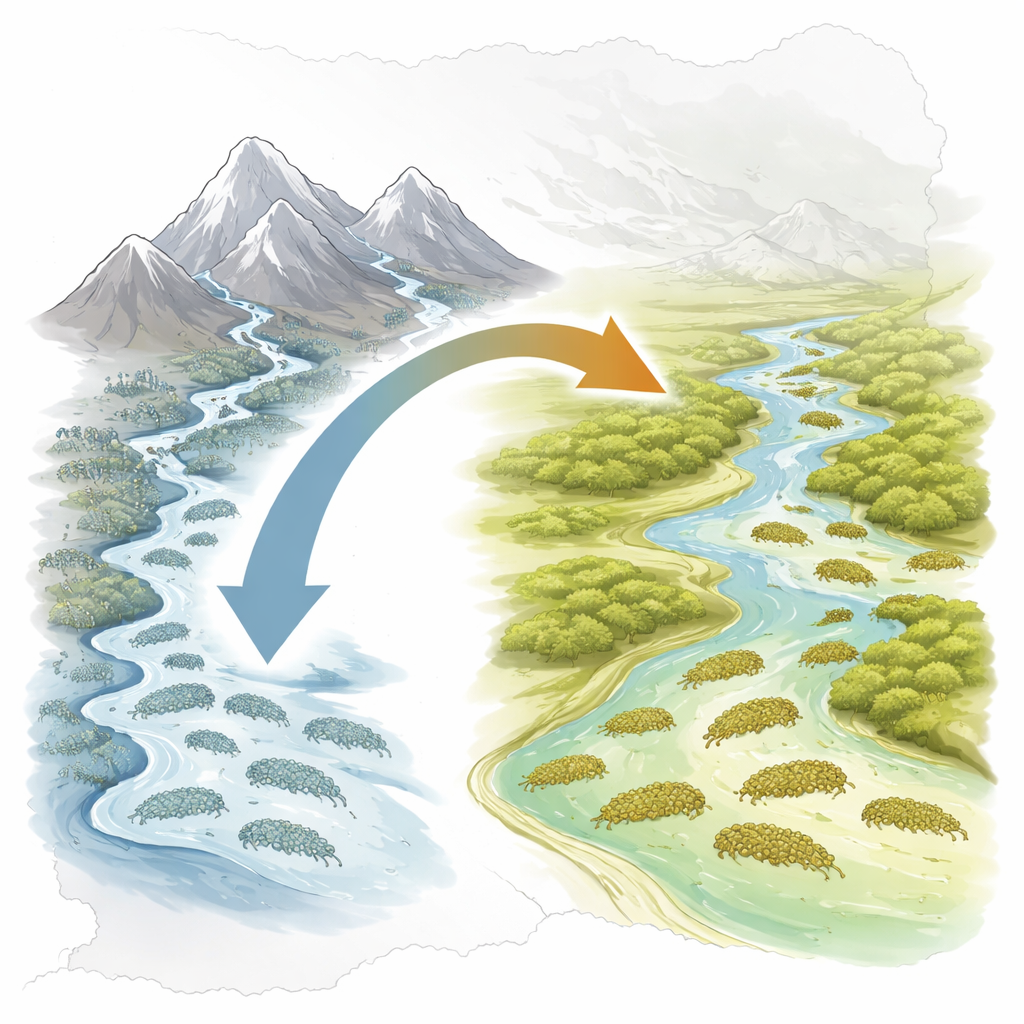
The researchers sampled more than a thousand rivers, streams and lakes from the Eastern Alps down into the lowland plains. They compared sites where Gammarus roeselii was present with sites dominated by its close relative Gammarus fossarum or with no amphipods at all. G. roeselii turned out to favor low elevations, warmer summer temperatures, and gently sloping, slow‑flowing channels. It was common in broad rivers and in small streams that meandered lazily through valleys, and almost absent from icy headwaters and steep mountain torrents. By contrast, G. fossarum was far more at home in cool, fast‑running waters, from springs to higher‑order rivers.
Warming rivers and changing rivals
Because these two amphipods have different temperature sweet spots, climate change tilts the playing field. Using species distribution models that combine current occurrence data with climate projections for late this century, the team estimated how suitable habitat for G. roeselii will shift. Under all but the most optimistic emissions scenario, warm lowlands and inner‑alpine valleys become increasingly favorable, and the species is predicted to expand into many places now dominated by G. fossarum. At the same time, dams and river engineering create slower, lake‑like stretches that further benefit G. roeselii, while often stressing cold‑adapted natives.
Genetic clues to an ancient refuge
To understand how this expansion fits into the species’ deeper history, the scientists sequenced a standard DNA barcode from more than 500 individuals and compared these data with existing records from across Europe. All Austrian and nearby samples belonged to one major genetic lineage that colonized Central and Western Europe after the last ice age, but within that lineage they found distinct groups of related DNA types, or haplotypes. The greatest richness of these haplotypes occurred in the western Pannonian Basin, where several groups co‑occurred, pointing to this lowland region as a long‑term refuge where the species persisted during glacial periods and from which it later spread.
Recent arrivals and human fingerprints
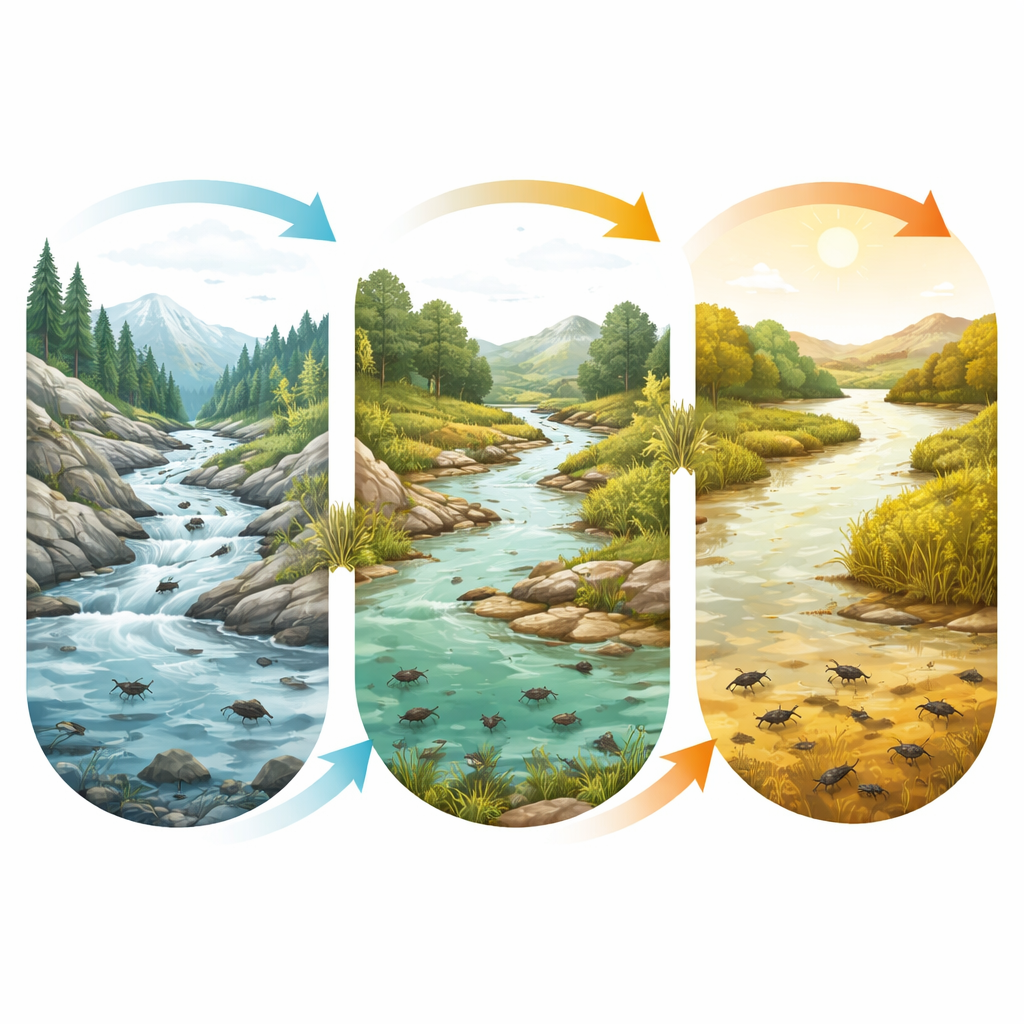
Not all populations were equally diverse. In a dammed middle stretch of the Mur River and in parts of the Drava Basin, G. roeselii showed strikingly low genetic variation, often represented by just one or a few widespread haplotypes. This pattern suggests very recent colonization, likely helped along by human activities such as hydropower development, altered flow regimes, or even unintentional transport with stocked fish. Elsewhere, more diverse genetic patterns fit a slower, post‑glacial expansion from Pannonian source regions into the Alpine forelands and beyond.
What this means for future rivers
For non‑specialists, the main message is that a small invertebrate can serve as an early indicator of how climate and engineering are reshaping freshwater life. Gammarus roeselii is naturally native across much of the study area and is well suited to warmer, slower, and more disturbed waters, giving it an edge over its cooler‑loving cousin G. fossarum. Yet even this hardy native now faces competition from aggressive amphipod invaders that thrive in heavily modified rivers. The study shows that today’s environmental changes are not simply adding one new species to another’s range; they are rearranging a complex web of winners and losers. Protecting cool, fast‑flowing, and structurally diverse streams will be crucial to safeguard native freshwater communities as conditions continue to warm.
Citation: Di Batista Borko, Š., Grimm, J., Hahn, C. et al. Habitat preferences and genetic diversity of the amphipod Gammarus roeselii across the Eastern Alps and western Pannonian Basin. Sci Rep 16, 8607 (2026). https://doi.org/10.1038/s41598-026-39958-7
Keywords: freshwater amphipods, climate change, river ecosystems, genetic diversity, species range shifts