Clear Sky Science · en
AI readiness, STEM education, economic growth, and climate transition in China: a long-run systems analysis
Why this story matters
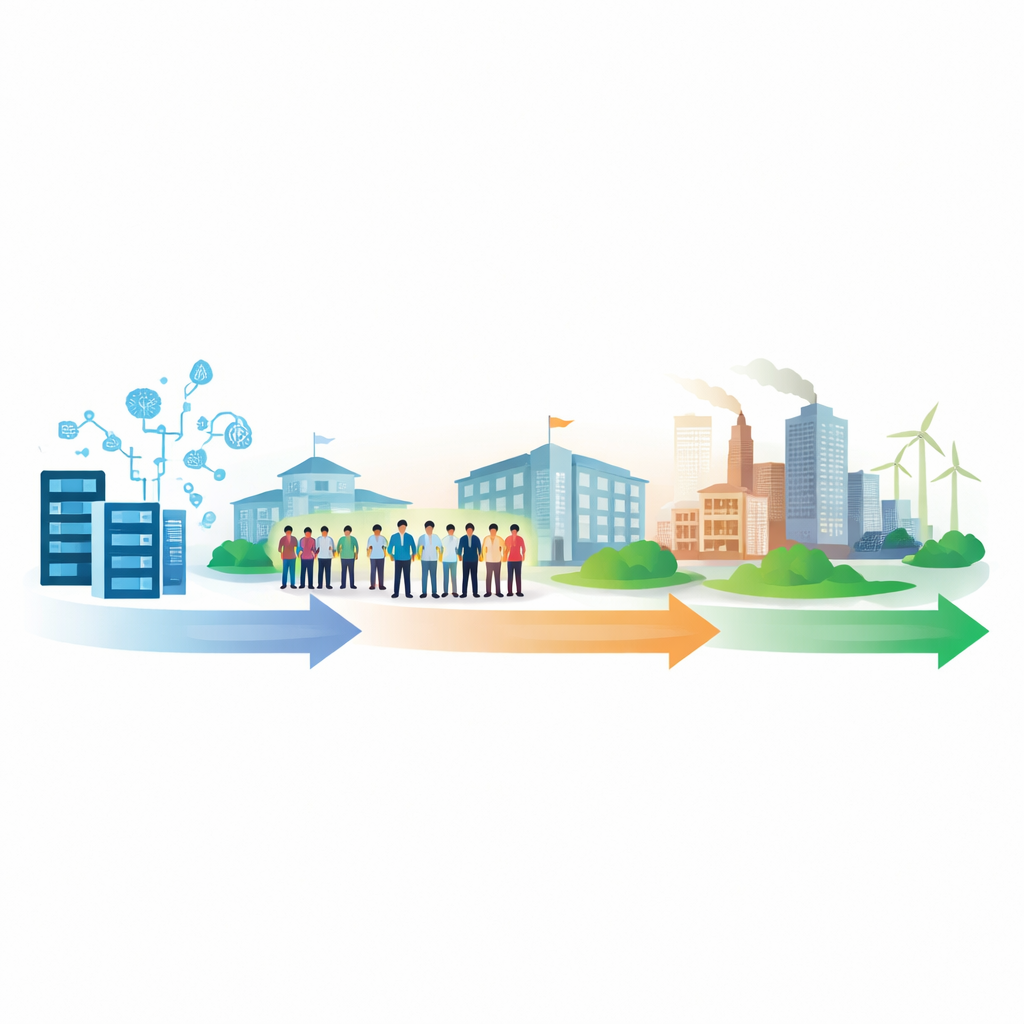
China is racing to become a leader in artificial intelligence, science, and clean energy all at once. This paper asks a big-picture question with real-world consequences: as the country builds powerful AI tools for education and innovation, does this push its economy forward without pushing the planet over the edge? By tracking more than four decades of data, the authors explore how digital readiness, STEM education, economic growth, and the shift toward cleaner energy move together—and sometimes pull against each other.
Measuring the digital learning engine
Instead of looking at test scores or classroom experiments, the study zooms out to the national scale. The authors treat AI-driven personalized learning systems as a symbol of a broader capability: the ability of a country to build and use AI-powered education and innovation infrastructure. They build composite scores that capture four pillars of China’s development from 1980 to 2024: how ready the country is for AI (including digital networks, research funding, patents, and government quality), how strong its STEM education and research pipeline is, how the overall economy is performing, and how quickly the country is moving toward a lower-carbon energy system. These scores compress dozens of statistics—from university enrollment to renewable power—into a few easy-to-track indicators.
How the four pillars move together
With these indicators in hand, the authors use long-run time-series methods to see how the four pillars co-evolve. They find that AI readiness, STEM capacity, and economic performance are tightly bound over the long term: when digital infrastructure, research investment, and institutional quality improve, STEM education and knowledge production tend to rise, and the economy modernizes. STEM gains, in turn, help support innovation and, over time, contribute to cleaner technologies. The data show that these domains do not move independently; instead, they form a linked system in which shocks and policy shifts reverberate across education, technology, and growth.
Hidden costs of the digital surge
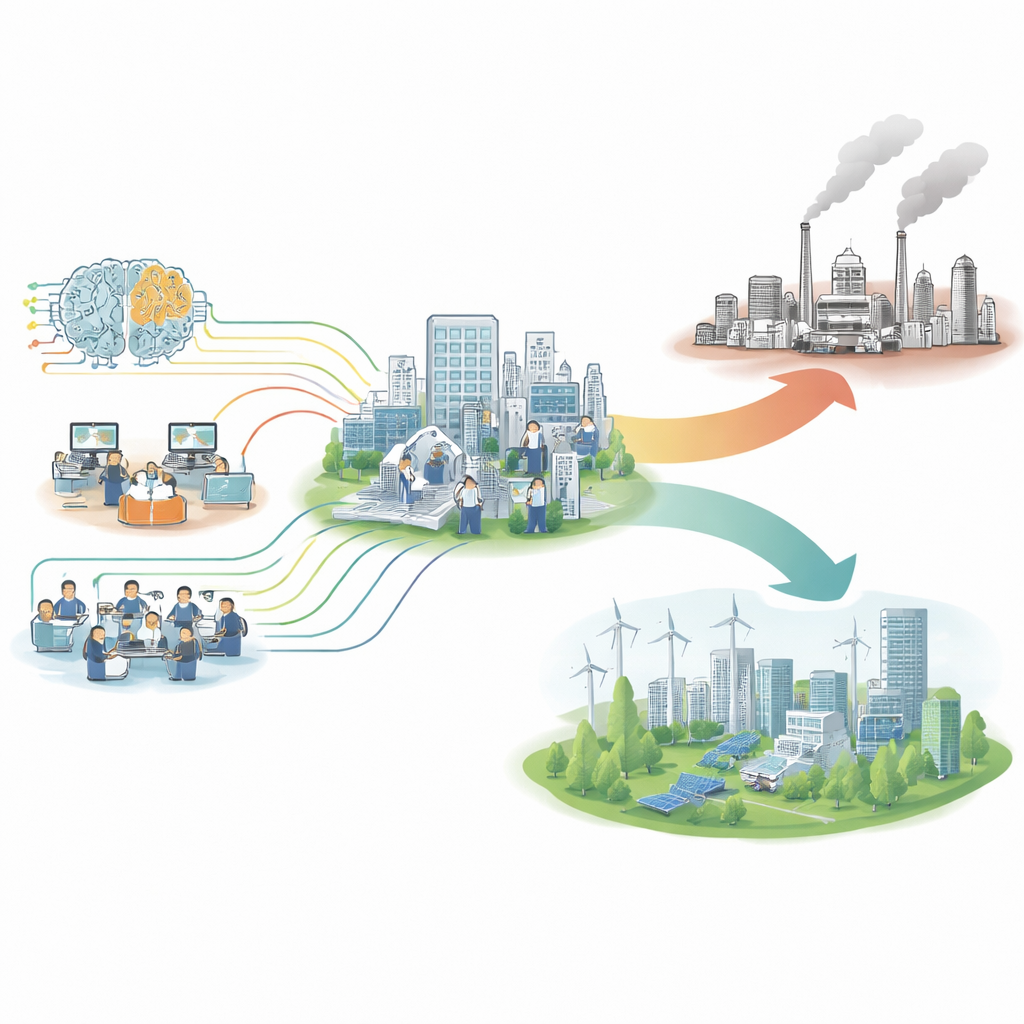
The story is more complicated when the environment enters the picture. The study finds that, in the long run, higher AI readiness is associated with slower progress on climate transition. The authors argue this does not mean classroom learning technologies are bad for the environment. Rather, AI readiness in China is closely tied to rapid digitalization and industrial upgrading across the whole economy, which raise energy demand and emissions when the power system is still heavily fueled by coal. At the same time, the climate transition indicator responds sluggishly to changes in other areas, reflecting how hard it is to overhaul energy systems once factories, grids, and cities are built around fossil fuels.
Where education supports a greener path
STEM education tells a more hopeful story. The study finds that stronger STEM outcomes are linked, over the long run, with better climate transition performance. As more students enter science and engineering, and as research output expands, the country’s capacity to develop and adopt green technologies improves. However, these benefits do not appear instantly; education systems adjust slowly, and it takes time for trained engineers and researchers to reshape industries. The results suggest that human capital is a crucial ingredient in making growth cleaner, but it must be paired with energy and industrial policies that steer innovation toward low-carbon solutions rather than more efficient fossil-fuel use.
Balancing growth, digital power, and the planet
Taken together, the findings paint a nuanced picture. Building AI-ready institutions and expanding STEM education can help power economic growth and technological leadership in China. Yet, unless these advances are deliberately aligned with strong energy, climate, and governance policies, they may also lock in more energy-hungry infrastructure and delay deep emission cuts. For a lay reader, the key message is straightforward: smarter machines and better training can boost prosperity, but they do not automatically deliver a healthier planet. To realize the full promise of AI-enabled learning, countries need integrated strategies that connect digital expansion and STEM investment with a clear, sustained push toward cleaner energy and more sustainable development pathways.
Citation: Liu, S., Xu, M. & Xiang, X. AI readiness, STEM education, economic growth, and climate transition in China: a long-run systems analysis. Sci Rep 16, 9729 (2026). https://doi.org/10.1038/s41598-026-39949-8
Keywords: artificial intelligence in education, STEM human capital, China economic development, climate and energy transition, digitalization and sustainability