Clear Sky Science · en
Proteomic insights into a M. tuberculosis clinical isolate with an increased propensity to form viable but non-replicating subpopulations during acid stress
Why this matters for tuberculosis treatment
Tuberculosis remains one of the world’s deadliest infectious diseases, and treating it takes many months of antibiotics. One important reason is that some tuberculosis bacteria can slip into a quiet state where they stay alive but stop multiplying, making them hard to kill with standard drugs. This study explores how a real patient strain of Mycobacterium tuberculosis responds to acidic conditions like those inside immune cells, and how that response may help the bacteria survive treatment.
A stress test for patient-derived bacteria
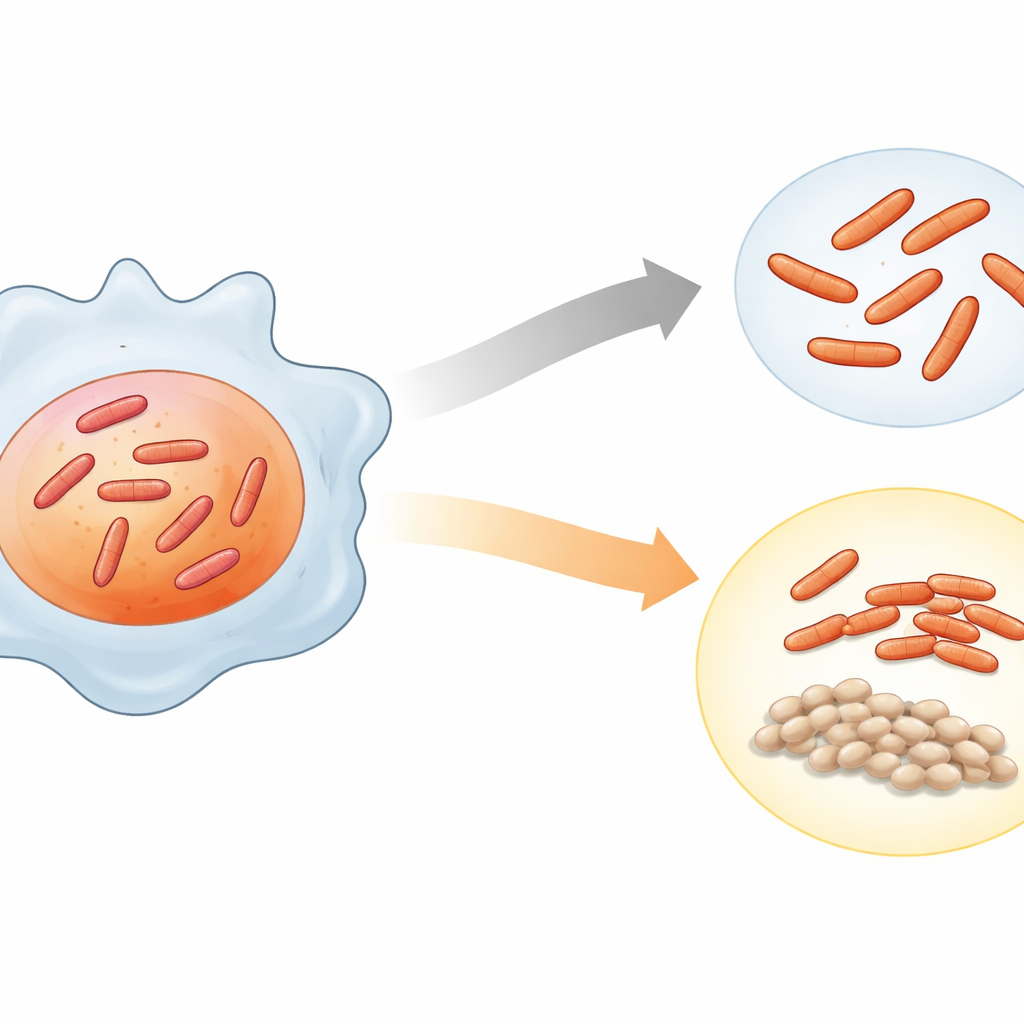
The researchers focused on a clinical strain called S169, taken from a patient who stayed culture-positive even after the usual six-month course of therapy, despite the strain being drug-sensitive. Earlier work showed that this strain is especially prone to forming “viable but non-replicating” (VBNR) subpopulations—bacteria that are alive but not actively dividing. To mimic the harsh conditions inside immune cells, the team exposed the bacteria to an acidic environment in the lab, shifting them from near-neutral pH 6.5 to a more acidic pH 4.5 for two days.
Watching bacteria slow down without dying
To see which bacteria kept dividing and which slipped into a quiet state, the team used a clever dual-color reporter system built into the microbe. One fluorescent signal showed that cells were alive; the other faded with each round of division. Under normal conditions, the red signal diluted as bacteria multiplied. Under acid stress, however, a sizeable fraction of cells retained strong red fluorescence even while remaining viable, indicating that about one in six cells had become VBNR. This confirmed that acidity alone can push this clinical strain into a drug-tolerant, slow or non-growing state similar to what is seen during infection.
Taking a protein-level snapshot inside stressed cells
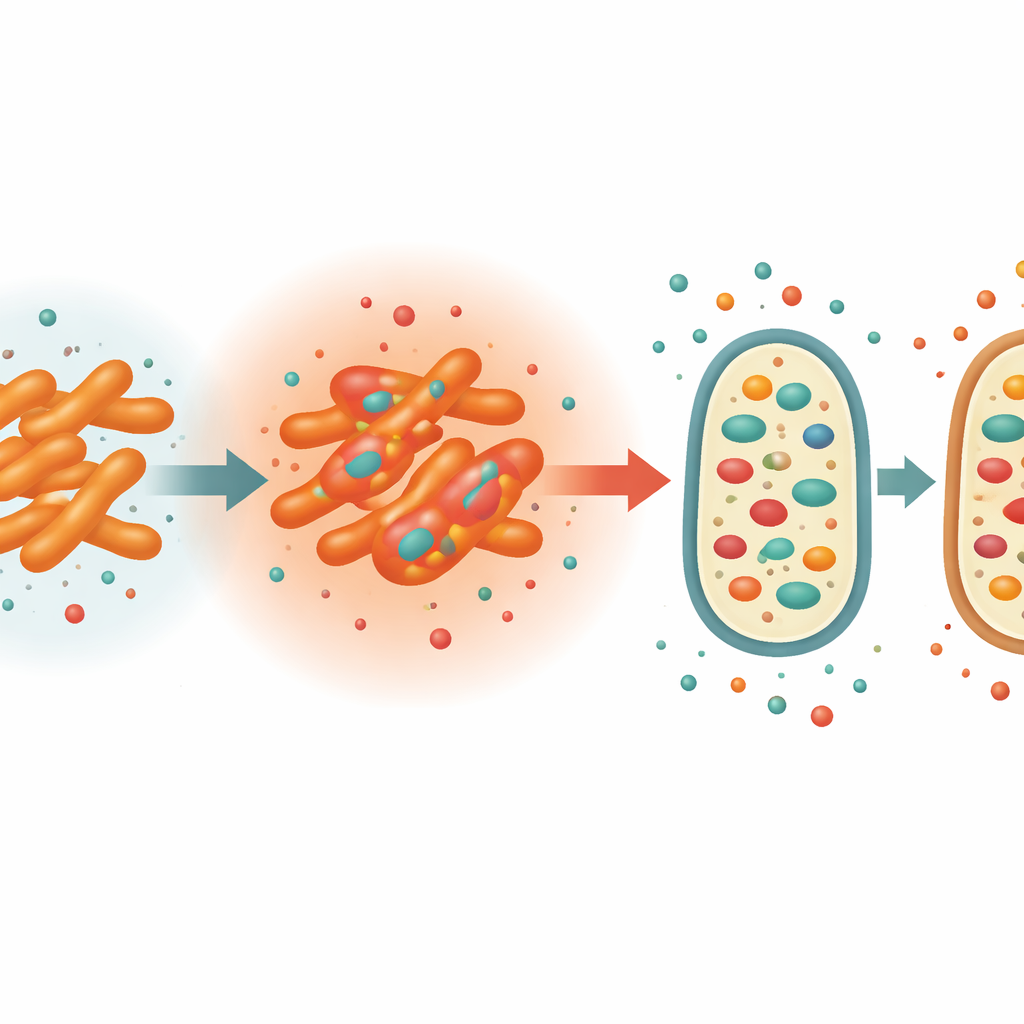
The scientists then examined thousands of proteins inside the bacteria to see how the acid environment reshaped their internal machinery. Some classic stress-response systems were turned up, including a regulator called TcrX and methyltransferase enzymes previously linked to acid and other hostile conditions. At the same time, many proteins usually associated with dormancy and stress—particularly those controlled by a master switch known as the DosR regulon—were actually less abundant than in bacteria grown at neutral pH. Proteins involved in DNA replication, repair, and cell division were also reduced, consistent with the observed slowdown in bacterial growth. This pattern suggests that this clinical strain handles stress differently from the standard lab strain, relying on a distinct protein program to endure acidic conditions.
What the bacteria choose to release
Next, the team looked at proteins that ended up outside the cells in the culture fluid, using a sample preparation method designed to capture even low-abundance secreted molecules. They detected just over a thousand proteins and found nearly 600 whose levels differed between normal and acidic conditions. Under acid stress, fewer types of proteins appeared overall, and many metabolic enzymes became less abundant outside the cell, reflecting a general slowdown. In contrast, several lipoproteins and protein-cutting enzymes (proteases) were more abundant, including ones known to help bacteria withstand acid and to shape interactions with the host’s immune system. They also detected multiple toxin–antitoxin proteins and a secreted enzyme, chorismate mutase, that has been linked to helping mycobacteria prevent infected immune cells from dying.
What this means for patients and future research
Together, these findings show that under acidic stress, a drug-sensitive clinical tuberculosis strain can generate a notable pool of bacteria that are alive but barely replicating, while rewiring both its internal proteins and those it exports into its surroundings. Importantly, the patterns in this clinical isolate differ from those of the commonly used lab strain, especially in pathways traditionally associated with dormancy. For a lay audience, the key message is that not all tuberculosis bacteria behave the same way: some clinical strains may use alternative strategies to hunker down and weather antibiotic attack. Understanding these strain-specific survival tactics, and the secreted proteins that may influence the immune response, could help explain why some patients fail treatment and guide the development of shorter, more effective therapies and better vaccine targets.
Citation: Kriel, N.L., Coetzee, J., Mouton, J.M. et al. Proteomic insights into a M. tuberculosis clinical isolate with an increased propensity to form viable but non-replicating subpopulations during acid stress. Sci Rep 16, 8610 (2026). https://doi.org/10.1038/s41598-026-39941-2
Keywords: tuberculosis persistence, acid stress, viable but non-replicating cells, proteomics, clinical isolates