Clear Sky Science · en
Comparing the effect of mental fatigue-inducing models on selected cognitive and technical performance aspects in young soccer players
Why tired brains matter in youth soccer
Mistakes in soccer are often blamed on tired legs, but this study asks a different question: what happens when the brain is exhausted, not just the body? A team of researchers worked with teenage league players to see how different types of demanding drills drain mental energy and, in turn, affect thinking skills and the fine details of passing. Their findings hint at how coaches might deliberately train players to handle mental fatigue—but also warn that certain drill combinations can sharply worsen decision-making and ball control.
Four ways to tire the mind
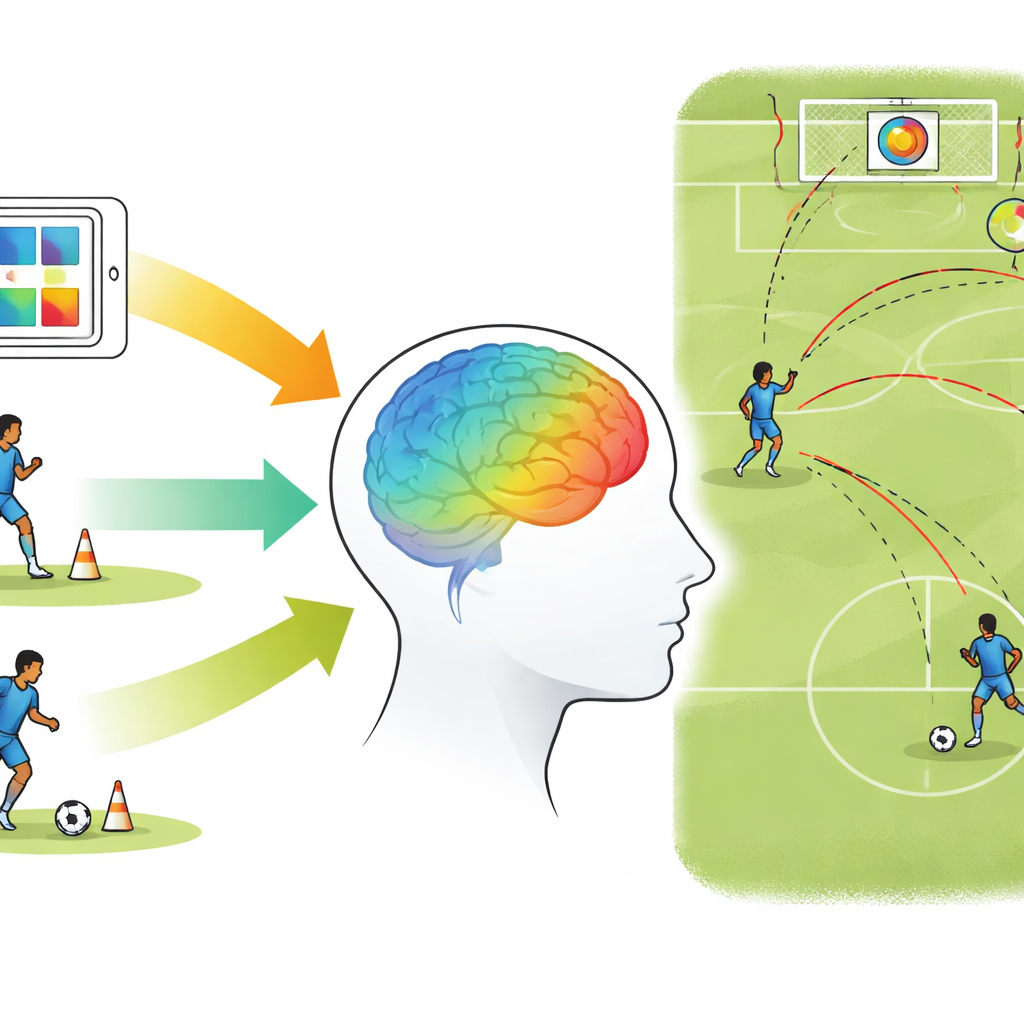
The researchers compared four training setups that are commonly used in labs and on the field. One was a purely mental task on a screen, where players repeatedly had to ignore misleading color cues and pick the correct response. A second drill, SAFT90, mimicked match running with bouts of jogging, sprinting, and changes of direction but contained no ball work or decision-making. A third, T-SAFT90, layered in realistic soccer actions like dribbling, passing, and shooting on top of this running. Finally, a combined drill merged T-SAFT90 with the demanding screen task, so players had to think hard and move hard at the same time. Each player completed every drill on separate days in random order.
Testing thinking and touch
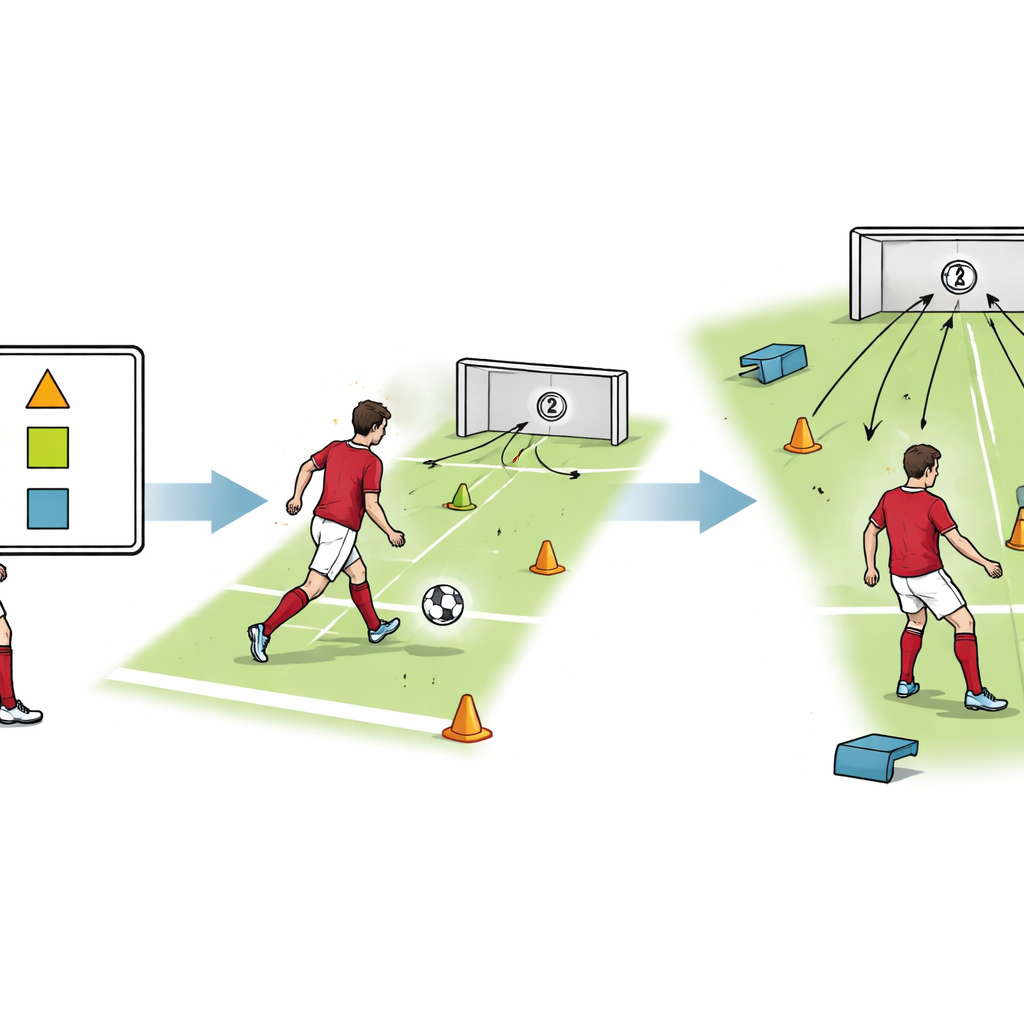
Before and after each 30-minute session, the players rated how mentally tired they felt on a simple line scale. They also took quick tests of attention, reaction speed, working memory, and how well they could spot patterns in sights and sounds. To capture game-like skills, they performed the Loughborough Soccer Passing Test, which times how fast a player can hit a series of targets while adding penalties for poor control or inaccurate passes. This mix of measures allowed the team to track both invisible changes inside the mind and visible changes in how the ball was handled.
Which drills tire the brain the most?
All four protocols left players feeling more mentally fatigued, but not equally so. The running-only drill raised mental tiredness the least, even though heart rates were high. The screen task and the technical running drill each produced much stronger feelings of mental strain. The clear winner—or loser, from the player’s viewpoint—was the combined drill. When hard thinking and soccer-specific movement were forced to happen together, self-reported mental fatigue jumped far more than in any other condition, suggesting that the brain struggles when it must solve attention-heavy problems and control a moving body at the same time.
How tired minds change play
As mental fatigue grew, thinking skills and technique slipped. After the mentally loaded drills, players became slower to respond and less accurate on attention tests; some also showed weaker visual scanning and working memory. On the pitch-style passing test, penalty times and movement times rose, meaning passes took longer and involved more small mistakes. Passing accuracy dropped across most mentally demanding drills, with the combined drill again linked to some of the largest and most consistent declines. In contrast, the running-only drill, despite being physically taxing, had relatively small effects on these cognitive measures and preserved most technical performance.
What this means for training young players
For a general reader, the take-home message is straightforward: a tired brain can quietly erode soccer skills even when the body still seems capable. Drills that blend complex decisions with realistic movement are powerful tools for deliberately building “brain endurance,” but they also risk undercutting passing quality if used at the wrong moments. This study, carried out under carefully controlled conditions, suggests that combined cognitive–physical sessions are promising candidates for future brain-focused training programs. However, the authors stress that real matches are far more chaotic and emotional than any test they ran, so further work is needed on live pitches to confirm how these mental fatigue effects truly play out in competitive play.
Citation: Soltani, A., Memmert, D., Rezaie, R. et al. Comparing the effect of mental fatigue-inducing models on selected cognitive and technical performance aspects in young soccer players. Sci Rep 16, 8598 (2026). https://doi.org/10.1038/s41598-026-39936-z
Keywords: mental fatigue, youth soccer, cognitive training, passing performance, brain endurance