Clear Sky Science · en
Postoperative pain after emergency pulpectomy with or without photobiomodulation in symptomatic irreversible pulpitis A randomized clinical trial
Why this tooth-pain study matters
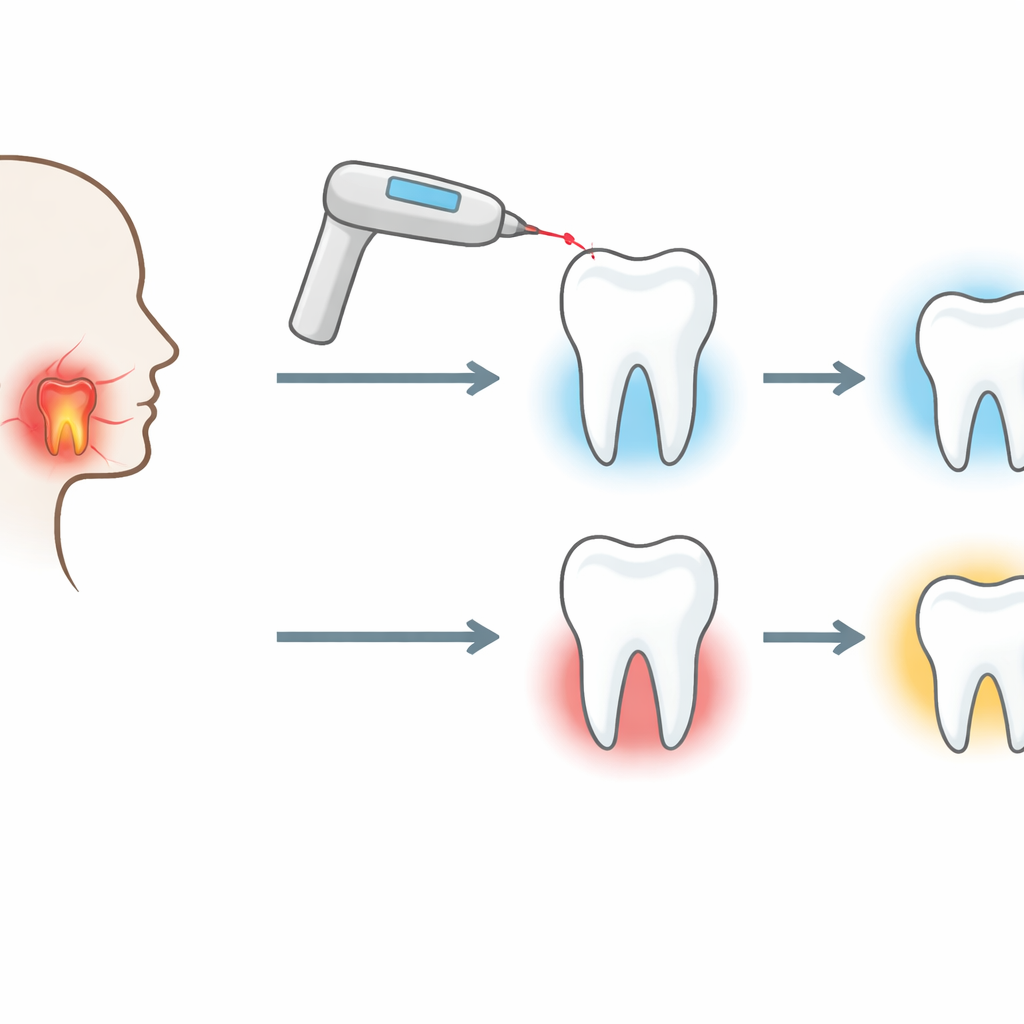
Anyone who has endured a pounding toothache knows how desperate the search for relief can be. Dentists sometimes clean out the inflamed nerve of the tooth in an emergency procedure called a pulpectomy, and some clinics now also offer low-level laser therapy as a “high-tech” add‑on that promises to ease pain. This study asked a simple, practical question: when people arrive with severe tooth pain from an inflamed nerve, does shining a therapeutic laser on the tooth after treatment actually make them feel better in the hours and days that follow?
The problem of pain after dental emergencies
Postoperative pain after root canal–type treatments is common, affecting up to two‑thirds of patients. The discomfort can be driven by mechanical irritation, strong cleaning solutions, and lingering bacteria, all of which stir up inflammation around the tip of the tooth’s root. Pain is particularly frequent when care is provided on an emergency basis, because the tooth is already highly inflamed and temporary fillings can allow small leaks that keep irritating the tissues. In this setting, dentists typically rely on anti‑inflammatory drugs such as ibuprofen, which work well for many people but do not always provide lasting relief and are not ideal for everyone.
A light-based hope for easing soreness
Low-level laser therapy—also called photobiomodulation—has been promoted as a gentler way to reduce pain. Instead of cutting or heating tissue, the laser delivers small doses of light that are thought to nudge cells into shifting their behavior. Laboratory and animal studies suggest that such light can boost local blood flow, help clear inflammatory chemicals, and dampen the activity of pain-sensing nerves. Earlier small dental trials hinted that this approach might reduce pain after root canal treatment, raising hopes that a quick pass with a laser at the end of an emergency procedure could spare patients some of the worst post‑treatment hours.
How the trial was carried out
To test this idea in real‑world emergency care, the researchers conducted a randomized clinical trial with 70 patients, ages 15 to 55, all of whom arrived with intense tooth pain from symptomatic irreversible pulpitis—a condition in which the soft tissue inside the tooth is so inflamed that it cannot recover. Every patient received standard emergency pulpectomy: local anesthesia, isolation of the tooth, careful removal of the inflamed pulp tissue, cleaning of the root canal with disinfecting solution, and a temporary filling with the bite adjusted. Then, by chance, half the patients received an additional step: a near‑infrared laser was applied to several spots on the tooth and along its root for up to one minute in total. The other half had the laser handpiece placed the same way, but the device stayed off. Neither patients nor the person collecting their pain reports knew who got the active light treatment.
Tracking pain and sensitivity over time
After leaving the clinic, patients rated their spontaneous pain at home using two standard tools: a simple 0–10 number scale and a visual line where they marked their pain level. They did this at 6, 12, 24, 48, and 72 hours after treatment. They also tested how much it hurt to gently bite on a small latex strip placed on the treated tooth. No routine painkillers were prescribed, but people were told they could take ibuprofen if their pain became moderate or worse, and any medication use was recorded. Statistical methods that account for repeated measurements over time were used to compare overall pain patterns between the laser group and the control group while considering age, sex, and tooth type.
What the results actually showed
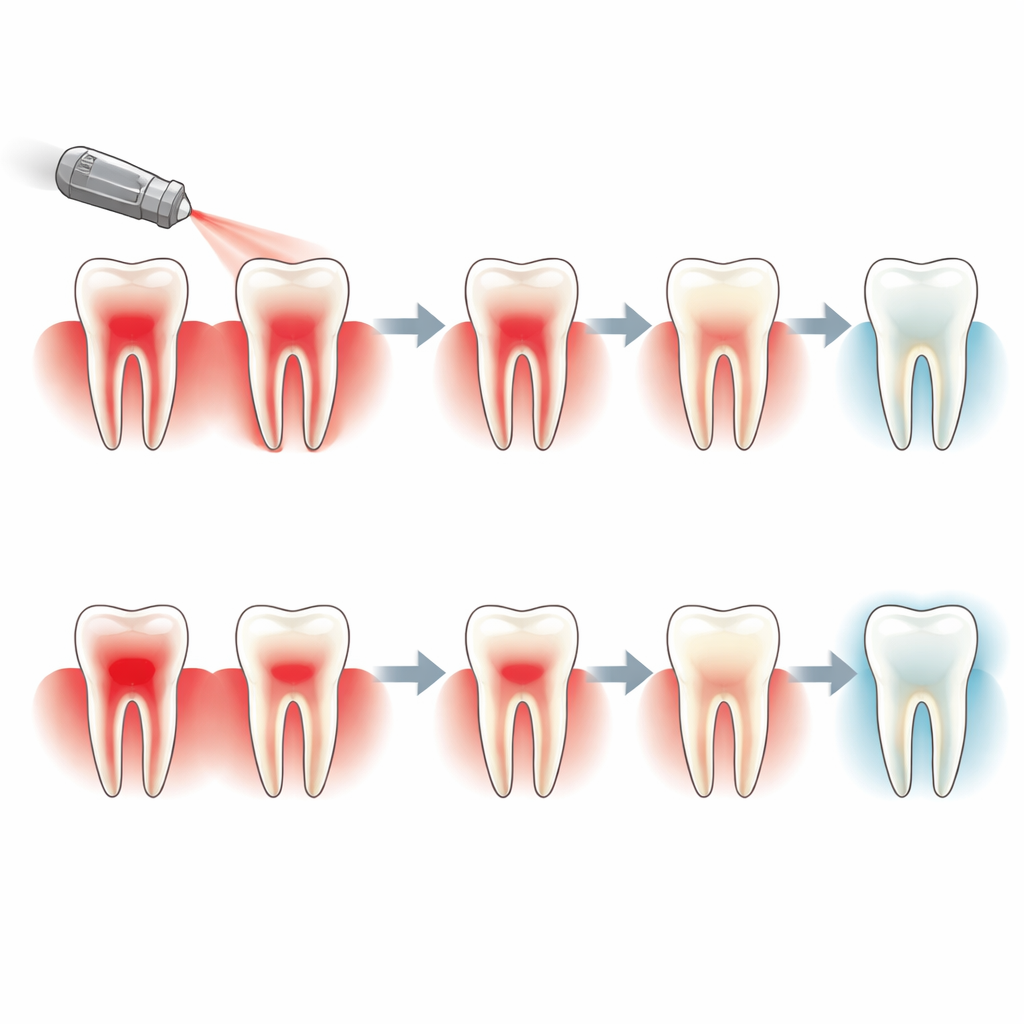
In both groups, pain dropped steadily over the three days after treatment, matching what earlier research has found: once the inflamed pulp is removed and the canal is cleaned, most patients improve quickly. Pain scores tended to be highest between 12 and 24 hours, then declined. At a few isolated time points, people who received the laser actually reported slightly higher pain ratings than those who did not, but these differences were small and did not add up to a meaningful advantage or disadvantage for the laser over the full follow‑up period. The amount of biting tenderness and the need for rescue ibuprofen were similar for both groups. Statistical analysis confirmed that the main factor shaping people’s experience was simply the passage of time after the procedure, not whether they had received light therapy.
What this means for patients and dentists
For patients facing emergency treatment of a badly inflamed tooth, this study offers a clear takeaway: adding low‑level laser therapy to a well‑performed pulpectomy did not provide extra pain relief in the crucial first three days. While light-based treatments may still hold promise in other dental situations, here they did not outperform careful conventional care plus as‑needed ibuprofen. The authors note that emergency cases are complex and that different laser settings or patient subgroups might yield other results, but under the conditions tested, the high‑tech add‑on did not live up to its promise. In practical terms, timely diagnosis, thorough cleaning of the tooth, and appropriate medication remain the cornerstones of easing severe toothache after this kind of emergency procedure.
Citation: Freitas-Júnior, S.A.G., Ferreira, M.C., Nogueira, A.P.A. et al. Postoperative pain after emergency pulpectomy with or without photobiomodulation in symptomatic irreversible pulpitis A randomized clinical trial. Sci Rep 16, 9014 (2026). https://doi.org/10.1038/s41598-026-39929-y
Keywords: toothache, root canal pain, low-level laser therapy, photobiomodulation, endodontic emergency