Clear Sky Science · en
Spectrofluorimetric determination of serum homovanillic acid using horseradish peroxidase and its association with autism spectrum disorder
Why brain chemistry in autism matters
Families, clinicians and researchers have long searched for simple blood tests that could reveal what is happening in the brains of children with autism spectrum disorder. This study explores whether a small breakdown product of the brain messenger dopamine, called homovanillic acid, can be measured in blood with a gentle light-based test and used to shed light on changes in brain signaling linked to autism.
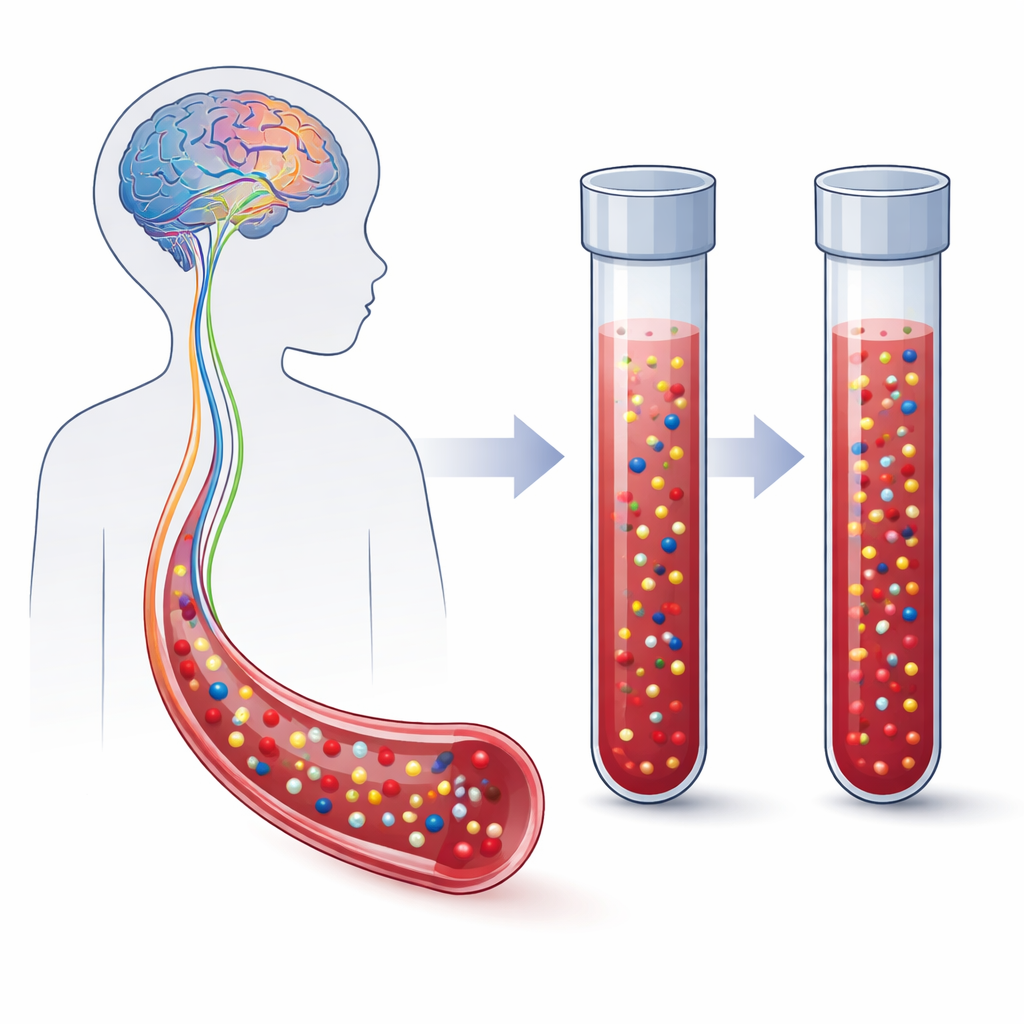
A chemical fingerprint of brain signals
Dopamine helps control movement, reward, attention and many other functions in the brain. When dopamine is used and cleared away, it is converted into homovanillic acid, which eventually seeps into body fluids such as spinal fluid, urine and blood. Measuring this breakdown product provides an indirect window into dopamine activity. Earlier studies mostly examined urine or spinal fluid and used large, complex instruments. Those studies often found higher levels of homovanillic acid in the urine of autistic children but mixed results in spinal fluid, leaving open questions about how dopamine is altered in autism.
A light-based test built around a plant enzyme
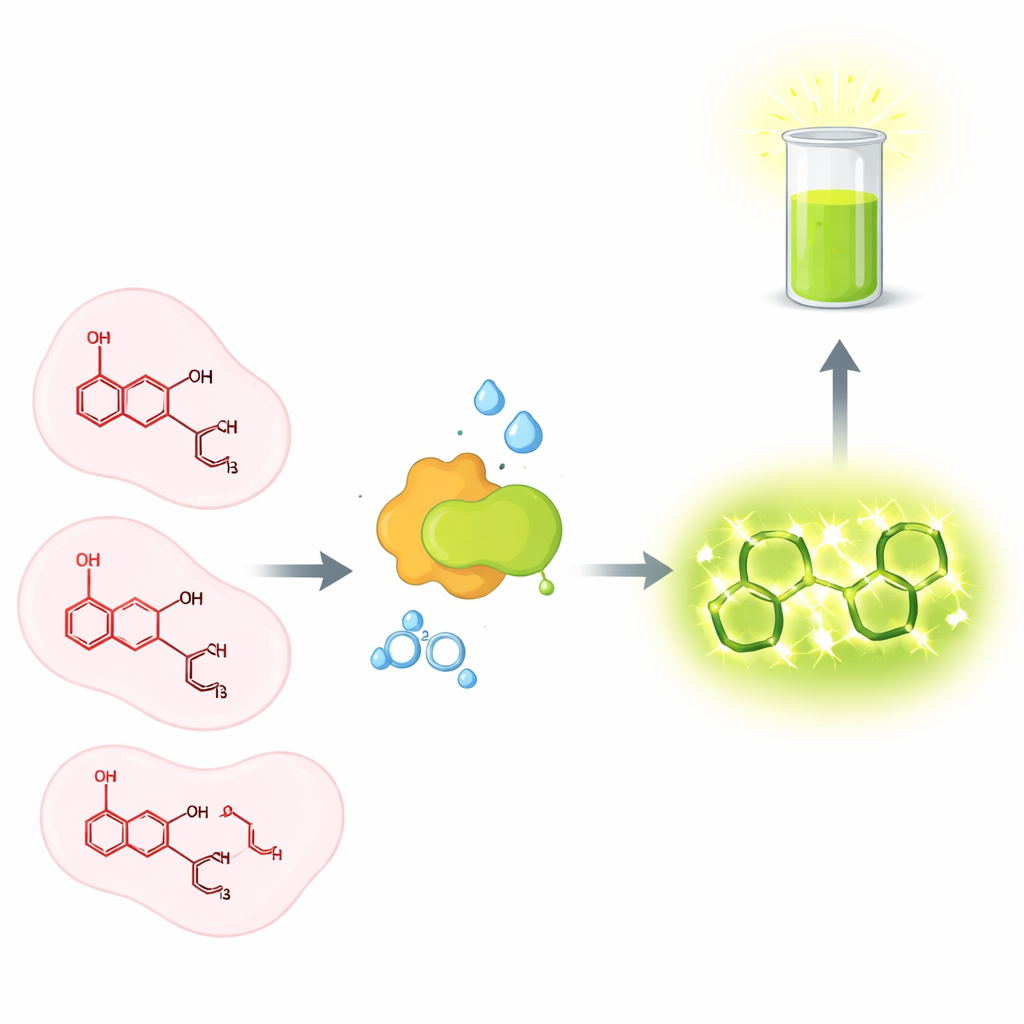
The researchers developed a new laboratory test that turns homovanillic acid in blood serum into a strongly glowing form. They used a plant enzyme called horseradish peroxidase together with hydrogen peroxide to gently oxidize the normally weakly visible molecules. During this reaction, two homovanillic acid molecules join to form a paired structure that emits bright light at a specific color when illuminated. By carefully tuning enzyme amount, hydrogen peroxide level, solution acidity and reaction time, the team maximized this glow so that even tiny amounts of the substance could be detected with a fluorescence instrument.
Making sure the measurement is trustworthy
Because homovanillic acid is already present in everyone’s blood, the authors used a standard addition approach: they split each serum sample into portions, added known extra amounts of homovanillic acid to some of them, and then measured the increase in glow. Plotting these signals allowed them to calculate how much of the substance was originally present in the unaltered serum. They thoroughly checked the method’s reliability, testing how accurate and repeatable the measurements were from day to day and determining the smallest concentration that could be measured with confidence. Their results showed that the method met international guidelines for bioanalytical tests.
Comparing autistic and non-autistic children
With the technique validated, the scientists measured serum homovanillic acid in two groups of children who were similar in age: 24 diagnosed with autism spectrum disorder and 15 healthy peers. None of the children were taking medicines that might distort dopamine metabolism. The analysis revealed clearly higher average homovanillic acid levels in the autism group than in the control group. Although the absolute numbers were higher than values reported by more traditional techniques, the authors explain that this likely reflects differences in what forms of the molecule are captured by the light-based test, including versions loosely attached to blood proteins, rather than a mistake in the measurements.
What the findings mean for families and science
In plain terms, this work shows that children with autism, on average, carry more of a dopamine breakdown product in their blood than typically developing children, as detected by a sensitive light-based assay. This supports the idea that dopamine signaling is altered in autism and demonstrates a relatively simple, environmentally friendly laboratory method for probing that biology in blood samples. While the test is not ready to serve as a stand-alone diagnostic tool, it may help future researchers track brain chemistry changes, evaluate treatments that target dopamine pathways, or combine biochemical markers with behavioral assessments to better understand the wide range of experiences within the autism spectrum.
Citation: Felemban, R.A., Bamaga, A.K., Alharbi, A. et al. Spectrofluorimetric determination of serum homovanillic acid using horseradish peroxidase and its association with autism spectrum disorder. Sci Rep 16, 8951 (2026). https://doi.org/10.1038/s41598-026-39921-6
Keywords: autism spectrum disorder, dopamine, homovanillic acid, biomarker, fluorescence assay