Clear Sky Science · en
A cognitive divide in active surveillance acceptance persists between surgeons and endocrinologists managing low-risk thyroid cancer
Why this story matters
Thyroid cancer is being found more often than ever, yet most people diagnosed with the common papillary type live long, healthy lives. That contrast has sparked a quiet revolution: instead of rushing every patient to the operating room, some doctors now offer careful monitoring, or “active surveillance.” This study looks at why many specialists still hesitate to recommend that less invasive approach, revealing a tug-of-war between medical evidence, fear of legal trouble, and concern about patient anxiety.
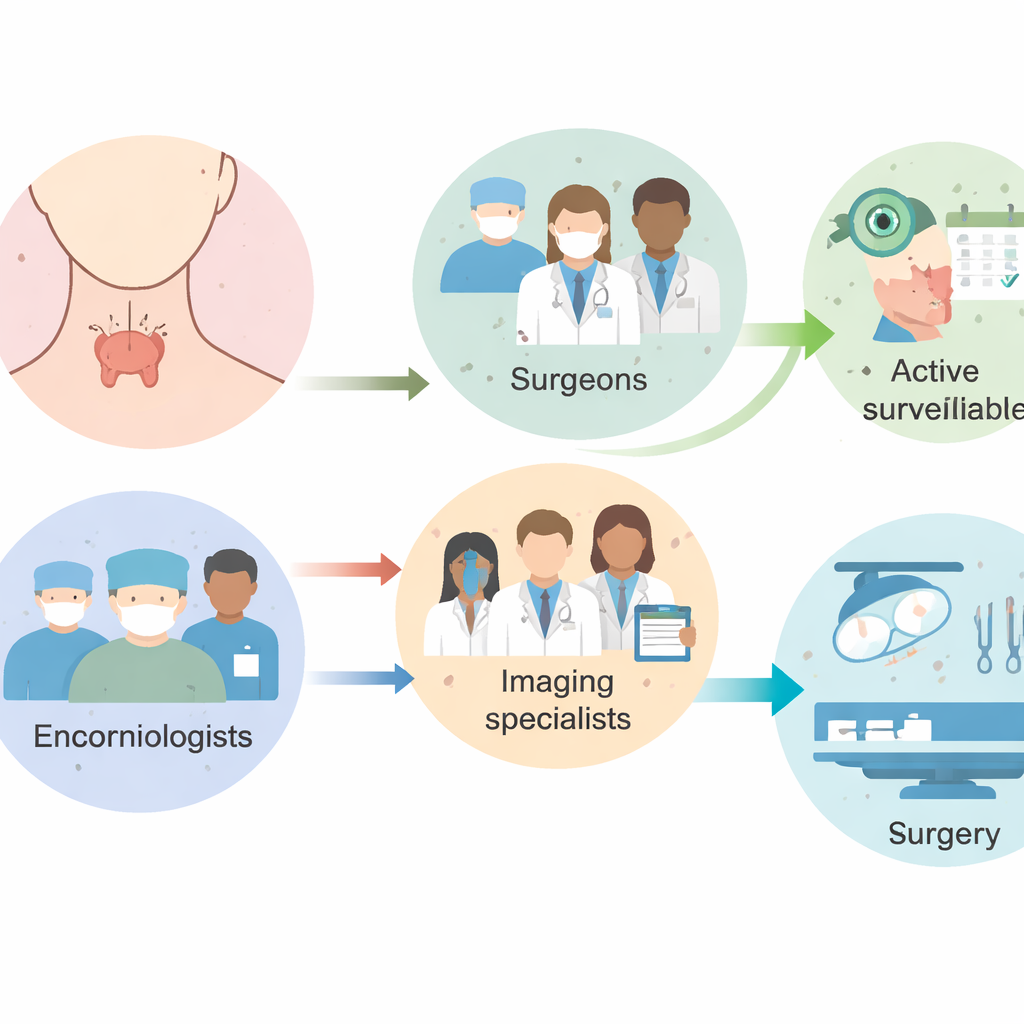
A cancer that rarely turns deadly
Worldwide data show that papillary thyroid cancer is widespread but usually slow-growing and rarely fatal. In response, researchers in Japan and elsewhere have spent decades testing active surveillance—regular checkups and scans with surgery only if the tumor clearly progresses. Those studies have shown that for carefully selected low-risk patients, watching and waiting can be just as safe as operating right away, and this option is now written into major treatment guidelines. Yet in everyday practice, the authors note, many patients still go straight to surgery, raising the question of what is holding doctors back.
Listening to the doctors in the trenches
To probe that gap, the team surveyed experienced clinicians at eight large hospitals in Jiangsu Province, China, all of which perform thousands of thyroid operations each year. They focused on specialists who regularly manage thyroid cancer: surgeons, endocrinologists, ultrasound experts, nuclear medicine physicians, and pathologists. The questionnaire asked how familiar they were with active-surveillance guidelines, whether they would recommend it in specific clinical scenarios, and what patient or professional factors most influenced their decisions. In all, 41 doctors with high case volumes and long experience completed the survey, providing a window into the thinking that shapes real-world care.
Guidelines known, but knives still drawn
Most respondents said they knew the guidelines supporting active surveillance, with an average familiarity of more than 80 percent. Despite this, more than half said they would still biopsy and then operate even when patients met clear criteria for monitoring. After a needle test confirmed papillary thyroid cancer, over 90 percent would schedule surgery within three months. Differences between specialties were striking. Radiologists, who follow tumors over time with ultrasound, tended to view surveillance more favorably. Surgeons, by contrast, were the most skeptical, especially senior surgeons. Endocrinologists—doctors who often manage long-term hormone issues—were more open to surveillance, but frequently changed course if patients appeared very anxious.
Fear, experience, and the weight of responsibility
The survey also highlighted how doctors’ roles and career stages color their choices. Surgeons reported strong worries about being sued if a watched tumor were later blamed for harm, even though surgery itself carries real risks such as voice changes and calcium problems. Those fears seemed to push them toward operating “just to be safe.” Younger attending physicians were actually more likely than professors to support active surveillance, perhaps reflecting newer training that emphasizes evidence, patient preferences, and avoiding unnecessary procedures. Meanwhile, radiologists focused on whether patients would reliably attend follow-up visits, and endocrinologists placed extra weight on education level, believing that more informed patients might better tolerate living with an untreated tumor.
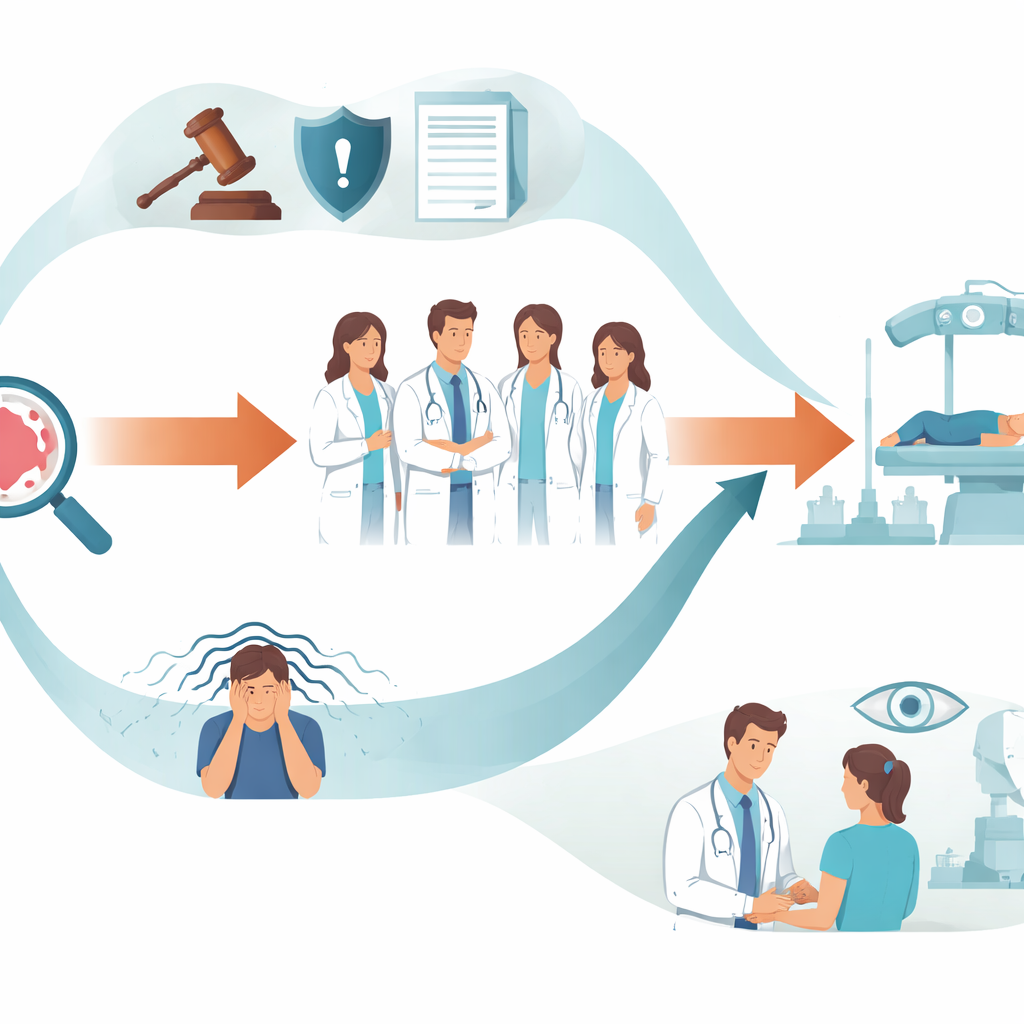
Tools to bridge the divide
Recognizing that simply publishing guidelines is not enough, the authors propose practical tools tailored to different specialists. They developed a visual decision aid—essentially a clear flowchart—that helps doctors quickly judge who is a good candidate for active surveillance or who should go straight to surgery. For endocrinologists, they suggest using a brief anxiety checklist to identify and support especially worried patients, rather than reflexively sending them to the operating room. They also recommend simple, picture-based materials that show patients what surgery and its possible complications really mean in daily life, versus the routine of regular checkups under surveillance.
What this means for patients
The study concludes that whether a person with low-risk thyroid cancer is offered active surveillance often depends less on the tumor itself and more on which type of doctor they see, how that doctor views legal risk, and how comfortable everyone is with uncertainty. By mapping these hidden influences, the authors argue, health systems can design smarter, specialty-specific supports that make it easier for doctors to trust surveillance when it is safe. For patients, that could translate into fewer unnecessary surgeries, more honest conversations about options, and care that better balances peace of mind with the risks of overtreatment.
Citation: Huang, Q., Tang, C., Sun, Z. et al. A cognitive divide in active surveillance acceptance persists between surgeons and endocrinologists managing low-risk thyroid cancer. Sci Rep 16, 8546 (2026). https://doi.org/10.1038/s41598-026-39919-0
Keywords: thyroid cancer, active surveillance, surgery decisions, physician attitudes, patient anxiety