Clear Sky Science · en
Integrating subjective perceptions and objective video analysis to identify challenges in laparoscopic suturing: a cross-sectional study to enhance surgical training
Why Tying Knots Through Tiny Holes Matters
For many patients, keyhole surgery means smaller scars, less pain, and a quicker return to normal life. But for the surgeons holding the instruments, operating through tiny cuts with long tools turns even simple acts—like passing a needle and tying a knot—into a demanding test of coordination. This study looks closely at why those tasks are so hard, even for seasoned surgeons, and how better training could make these operations safer and more reliable.
Working Through a Narrow Window
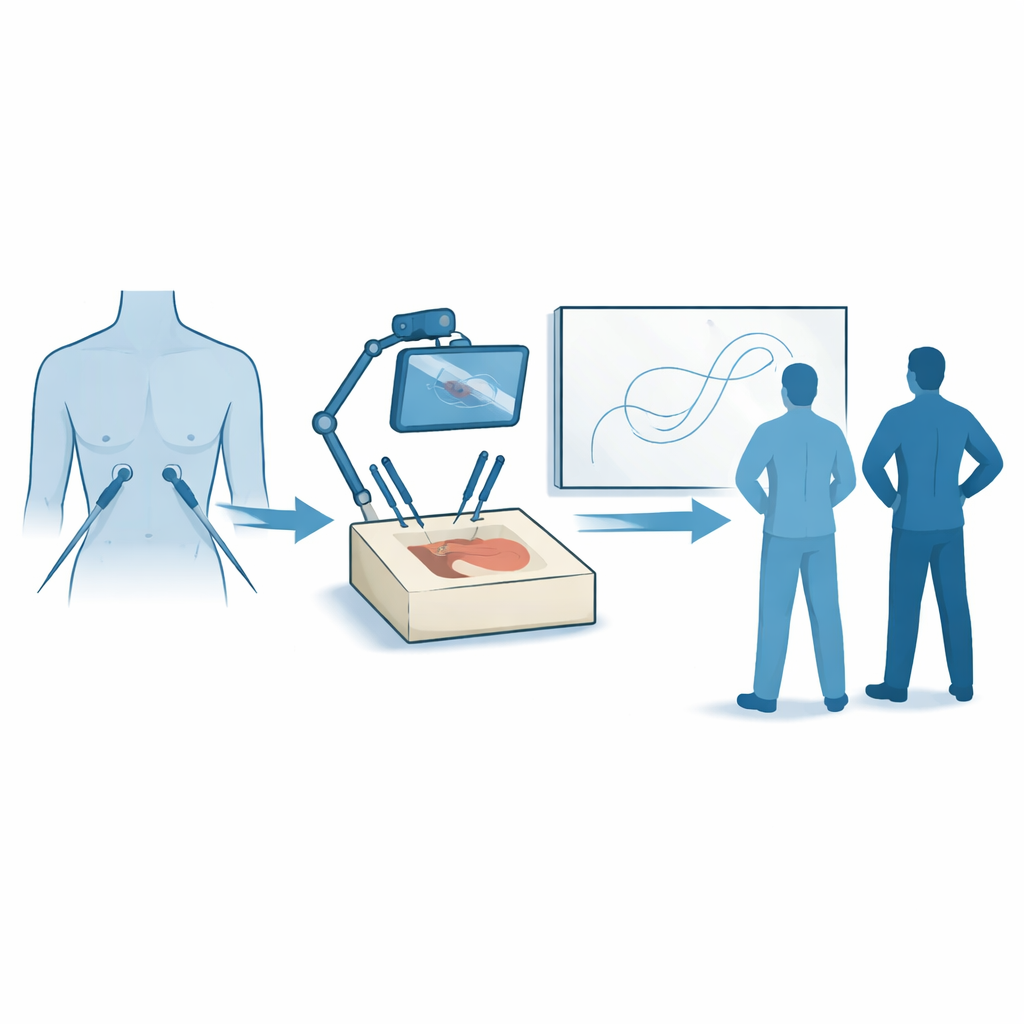
In keyhole, or laparoscopic, surgery, doctors guide long, rigid instruments through small openings while watching a flat video screen. They lose the direct touch and three‑dimensional view they have in open surgery. As a result, basic steps of stitching—picking up the needle, pushing it through tissue, pulling the thread tight, and tying a secure knot—become awkward and easy to get wrong. Mistakes can damage tissue, loosen stitches, or add precious minutes in a busy operating room.
Who Took Part and What They Did
The researchers recruited 33 surgeons who already used laparoscopy in their daily work. Twenty‑two were relatively early in their careers, while eleven had many years of practice and hundreds of keyhole procedures behind them. A panel of expert surgeons first broke laparoscopic stitching into a set of key steps, such as handling the needle, forming loops for knot tying, and keeping steady tension on the thread. Each participant then practiced stitching a small cut on animal bowel inside a training box that mimics an actual operation. Their hand movements were filmed and later rated with a standard scoring system that judges speed, control of the needle, quality of the knots, gentleness on tissue, and steadiness of thread tension.
What Surgeons Say Feels Hard
After the practice run, surgeons answered a detailed survey about which parts of stitching they found most difficult. Across all experience levels, the same problems came up. Tying knots topped the list, chosen by just over two in five participants. Handling the needle—getting it into the right position and passing it accurately through tissue—was the next most common struggle. Keeping a firm but not damaging pull on the thread also troubled many. Only one expert named moving the tissue itself as the main challenge, and a small minority of experts felt none of the listed tasks were particularly difficult. Notably, novices and experts did not differ much in what they described as hard, suggesting that some aspects of stitching remain tricky even after years of practice.
What the Videos Reveal
When the research team compared the survey answers with the video ratings, a clearer picture emerged. Expert surgeons finished the stitching task several minutes faster than novices and earned higher scores in every category. Their needle movements were more precise, their knots more secure, their handling of tissue gentler, and their control of thread tension steadier. Novices, by contrast, tended to move less efficiently and needed more time to complete the same job. Informal observations of the videos hinted that experienced surgeons moved more calmly and deliberately, while less experienced ones showed more pauses, corrections, and signs of strain, especially when pulling the thread tight.
Rethinking How Surgeons Learn
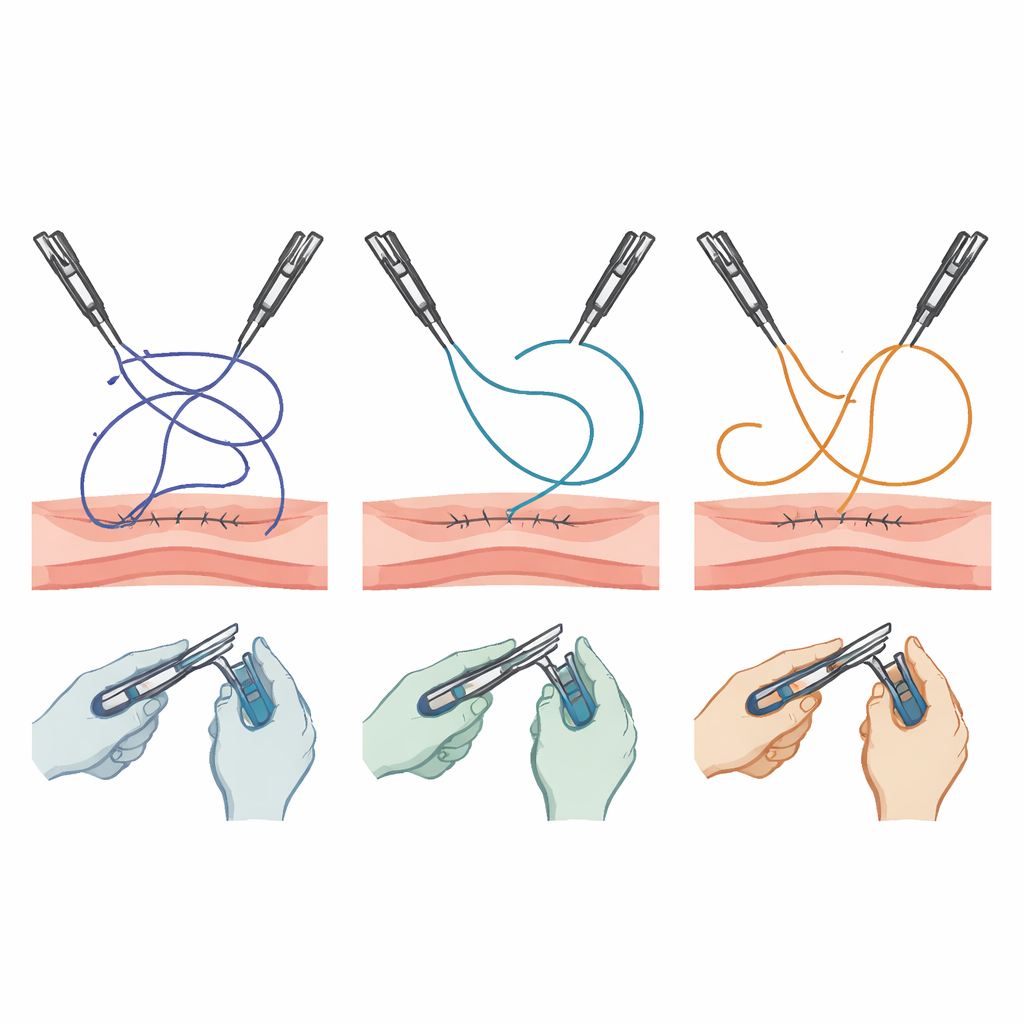
By pairing what surgeons feel with what they actually do on video, the study shows that certain fine‑motor skills—especially knot tying, needle handling, and tension control—are persistent sticking points in keyhole surgery. The authors argue that training should not stop at general laparoscopic drills, but should break stitching into tiny, repeatable actions: forming loops, rotating the wrist correctly, guiding the curved needle smoothly, and judging force on fragile tissue. Carefully designed practice in simulators, potentially guided by future artificial‑intelligence systems that analyze motion, could help surgeons of all levels sharpen these micro‑skills. For patients, that could translate into more reliable stitches, fewer complications, and even safer minimally invasive operations.
Citation: Ogbonnaya, C., Li, S., Tang, C. et al. Integrating subjective perceptions and objective video analysis to identify challenges in laparoscopic suturing: a cross-sectional study to enhance surgical training. Sci Rep 16, 9061 (2026). https://doi.org/10.1038/s41598-026-39914-5
Keywords: laparoscopic suturing, surgical training, simulation, knot tying, objective video analysis