Clear Sky Science · en
Probabilistic dietary exposure assessment of polycyclic aromatic hydrocarbons (PAHs) and its associated disease burden in Singapore
Why this study matters for everyday eaters
When we grill fish, spread peanut butter on toast, or drizzle soy sauce over rice, we rarely think about invisible chemicals that may come along for the ride. This study looks at a group of such chemicals, called polycyclic aromatic hydrocarbons (PAHs), which can form when food or fuel is burned. Because some PAHs are known to cause cancer in animals and are suspected to harm humans, governments need to know how much people actually consume in their diets. Using detailed data on what Singapore residents eat and advanced computer modeling, the researchers estimate how much PAH people take in from food and what that means for long‑term cancer risk and overall health.
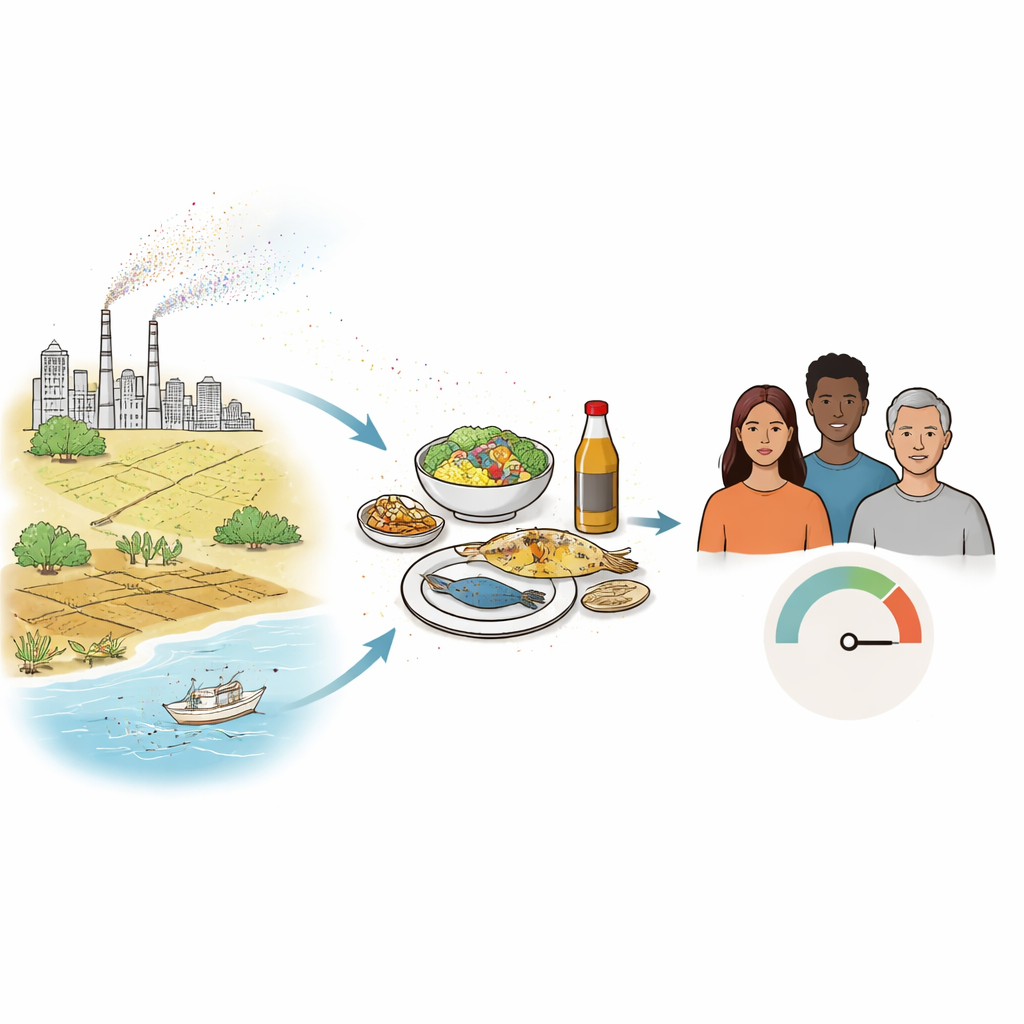
Tracing hidden chemicals from farm to plate
PAHs are produced whenever organic material, such as wood, oil, or fat, is burned incompletely. Once released, they can settle onto soil, water, and crops, or form during industrial food processing and home cooking at high temperatures. The team drew on Singapore’s Total Diet Study, a large nationwide effort that collected 480 composite food samples covering 264 commonly eaten foods in 21 categories, from grains and meat to fruits, vegetables, nuts, sauces, and seaweed. Each composite sample pooled multiple brands, sources, and purchase locations to mirror what consumers actually buy. In the lab, scientists measured four key PAHs that regulators often track together (grouped as “PAH4”) in these ready‑to‑eat foods.
What we eat and where PAHs show up
Survey data from 2,000 residents showed that sauces and condiments, grains and grain‑based products, and meat and meat products were the most frequently consumed categories in Singapore. However, the highest PAH levels did not always appear in the foods eaten most often. Instead, elevated PAH4 concentrations were found in nuts and seeds (especially peanut butter), sauces and condiments (such as pepper and chili products), fruiting vegetables like tomatoes and peppers, and fungi and seaweed (notably dried mushrooms). These patterns likely reflect both environmental pollution and high‑temperature steps such as roasting and drying during processing, which can generate or concentrate PAHs on food surfaces.
How cooking and computer simulations shape the risk picture
The researchers also examined whether everyday cooking methods change PAH levels in animal‑based foods. For meat products in this dataset, PAHs were not detected. For fish and seafood, stir‑frying produced higher average PAH4 levels than boiling or steaming, consistent with the idea that hotter, drier cooking over direct heat tends to form more PAHs than moist, gentler methods. To move from measurements in food to estimated intake in people, the team used Monte Carlo simulation, a probabilistic technique that repeatedly combines random draws of what foods people eat and how contaminated those foods are. Running this process 100,000 times produced a distribution of likely daily PAH intakes across the whole population.
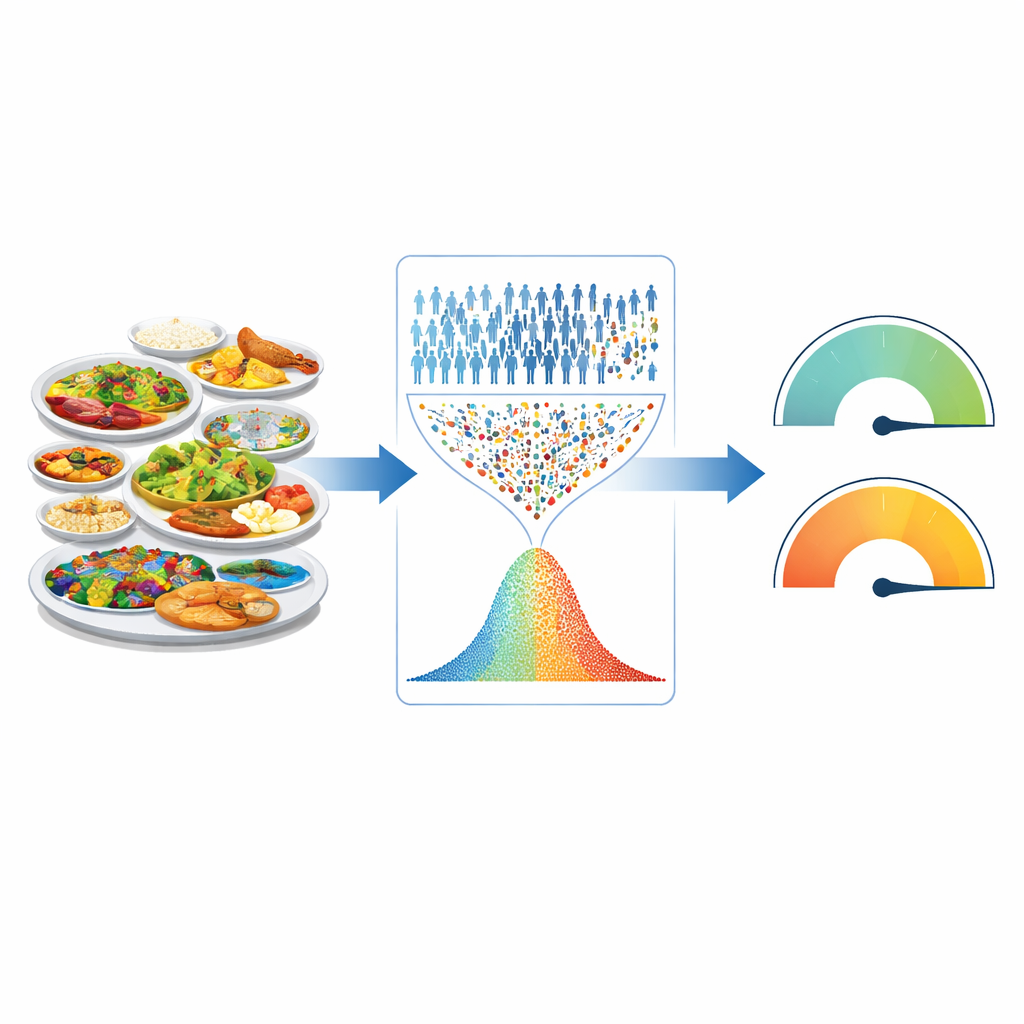
From exposure to cancer risk and disease burden
Because some PAHs are classified as human cancer‑causing agents, the authors translated dietary exposure into lifetime cancer risk. They modeled two scenarios: an “optimistic” one in which non‑detectable PAH values were treated as truly zero, and a “pessimistic” one in which those same non‑detects were set at the upper technical detection limit. Even under the pessimistic assumptions, estimated daily PAH intakes from food stayed below or near a proposed threshold meant to represent a level with minimal health concern. The corresponding lifetime cancer risk from dietary PAHs ranged from about 4 in 100,000 people (optimistic) to 5 in 1,000 people (pessimistic) among those with similar diets. To compare with other health threats, the team further expressed these risks as disability‑adjusted life years (DALYs), a metric that combines years lived with illness and years lost to early death. Across Singapore’s population, PAHs in food were estimated to account for between roughly a quarter of a year and about 93 years of DALYs spread over all residents, less than one‑tenth of one percent of the total cancer‑related DALYs in the country.
What this means for food safety and personal choices
For lay readers and policy makers alike, the main message is reassuring: in Singapore today, PAHs from food appear to pose a relatively small cancer risk compared with major hazards such as smoking or heavy drinking. Nonetheless, the study underscores that PAHs are widespread and that certain items—roasted nuts, spicy condiments, dried mushrooms, and stir‑fried seafood—tend to carry higher levels. Simple kitchen habits, like favoring boiling or steaming over frequent high‑temperature frying and avoiding charring, can further reduce exposure. The authors argue that continued monitoring, better data on vulnerable groups, and research into ways to cut PAHs during food processing will help keep risks low. For now, a varied diet rich in fruits, vegetables, and minimally processed foods, cooked gently when possible, remains a sound strategy for balancing enjoyment and safety at the dinner table.
Citation: Li, A., Chen, M.E., Lim, G.S. et al. Probabilistic dietary exposure assessment of polycyclic aromatic hydrocarbons (PAHs) and its associated disease burden in Singapore. Sci Rep 16, 8542 (2026). https://doi.org/10.1038/s41598-026-39906-5
Keywords: food contaminants, dietary exposure, polycyclic aromatic hydrocarbons, cancer risk, food safety policy