Clear Sky Science · en
The impact of creative thinking on organizational maturity and the mediating role of experiential learning among knowledge management professionals
Why fresh ideas at work matter
In fast-changing workplaces, especially in hospitals and universities, organizations survive not just by working harder, but by thinking differently and learning from real experience. This study looks at how employees’ ability to think creatively and to learn through hands‑on experience shapes the overall “grown‑up” behavior of an organization—its maturity. Focusing on knowledge management professionals at a large medical university in Iran, the researchers asked a simple question with big consequences: when employees generate new ideas and actively learn from what happens day to day, does the whole organization become more open, resilient, and trustworthy?
Connecting ideas, learning, and growth
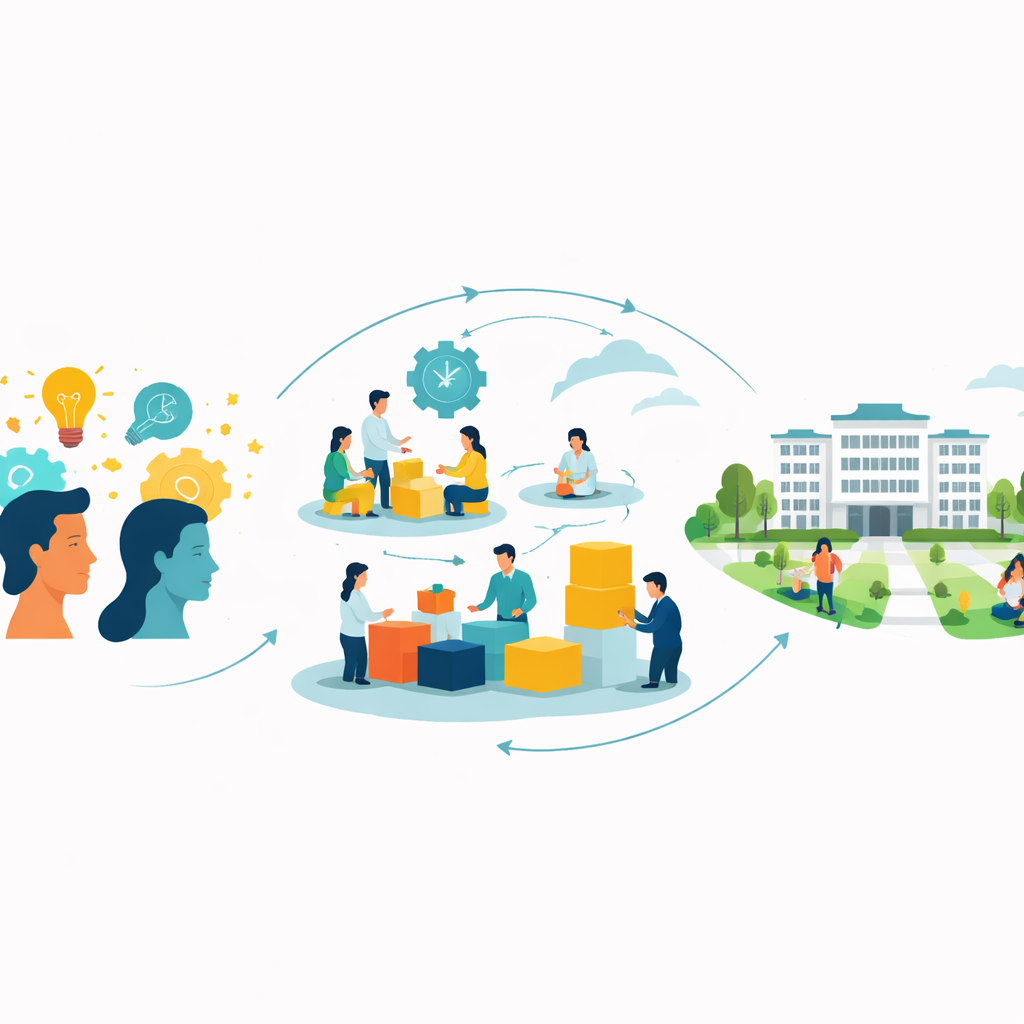
The authors build their work on two well‑known ideas from psychology and education. One says that creativity emerges when people have solid knowledge, flexible thinking skills, and inner motivation. The other explains learning as a cycle: we have concrete experiences, reflect on them, form new concepts, and then test those ideas in action. Putting these together, the researchers propose a chain of influence. Creative thinking is the spark that produces new possibilities. Experiential learning is the engine that tests, refines, and embeds those possibilities into everyday routines. Over time, this chain should support organizational maturity—seen in qualities like openness, mutual trust, helpful feedback, and empowering leadership.
How the study was carried out
To test this chain, the team surveyed all 505 people responsible for knowledge management across a major medical university and its hospitals. These participants included managers, coordinators, and experts, most with many years of work experience. Each person filled out three detailed questionnaires. One measured creative thinking, such as spotting patterns and approaching problems in new ways. Another captured how deeply they engage in experiential learning, including how novel, absorbing, and physically involving their learning experiences feel. The third assessed how mature they felt their organization was, through aspects like transparency, shared decision‑making, feedback, and a relatively flat structure where voices can be heard.
What the numbers revealed
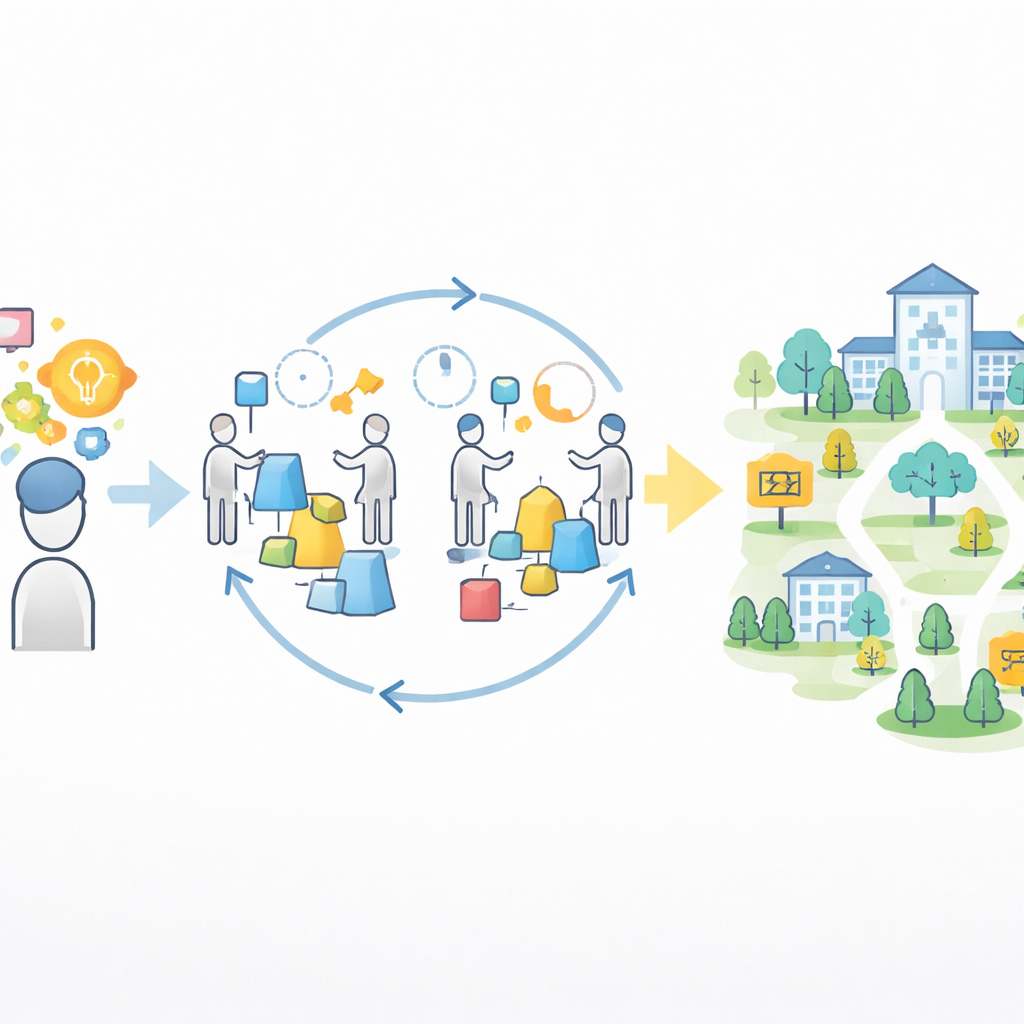
Overall, participants reported moderate levels of creative thinking, high engagement in experiential learning, and generally positive views of their organization’s maturity. Statistical analyses showed that all three areas were strongly and positively linked. People who thought more creatively also tended to learn more from their experiences, and both of these traits were tied to seeing the organization as more developed and healthy. Using a more advanced modeling approach, the researchers found that creative thinking had a direct positive effect on organizational maturity and an additional indirect effect that flowed through experiential learning. In other words, part of the way fresh ideas improve an organization is by being tried out, reflected on, and turned into better practices. Work experience added a small extra boost to perceptions of maturity, while factors like gender or education level made little difference.
What this means for real workplaces
These findings suggest that simply hiring imaginative people is not enough. For creative thinking to benefit the wider organization, employees need chances to experiment, receive feedback, and adjust their approach in realistic settings. In a medical university, this might mean project‑based work, simulations, pilot programs, or collaborative problem‑solving around real service challenges. When organizations create such experiential learning spaces, creative insights are less likely to remain abstract and more likely to become new procedures, better teamwork, and clearer communication channels—features that signal a mature institution capable of handling complexity.
Take‑home message for leaders and staff
In everyday terms, the study’s conclusion is straightforward: organizations grow up when people are encouraged both to think differently and to learn actively from what happens next. Creative thinking plants the seeds of change, but experiential learning is what helps those seeds take root and shape how the organization actually works. Leaders who want more resilient, trustworthy, and forward‑looking institutions should therefore invest not only in idea generation—through innovation workshops or suggestion programs—but also in structured experiences that let staff test, refine, and own those ideas. Over time, this combination can turn scattered flashes of creativity into lasting improvements in how the organization serves its community.
Citation: Nasabi, N.A., Yusefi, A.R. & Bordbar, N. The impact of creative thinking on organizational maturity and the mediating role of experiential learning among knowledge management professionals. Sci Rep 16, 8604 (2026). https://doi.org/10.1038/s41598-026-39905-6
Keywords: creative thinking, experiential learning, organizational maturity, knowledge management, healthcare organizations