Clear Sky Science · en
Support vector machine algorithm-based wearable device in sports rehabilitation training for people with disabilities
Smarter Rehab for Everyday Life
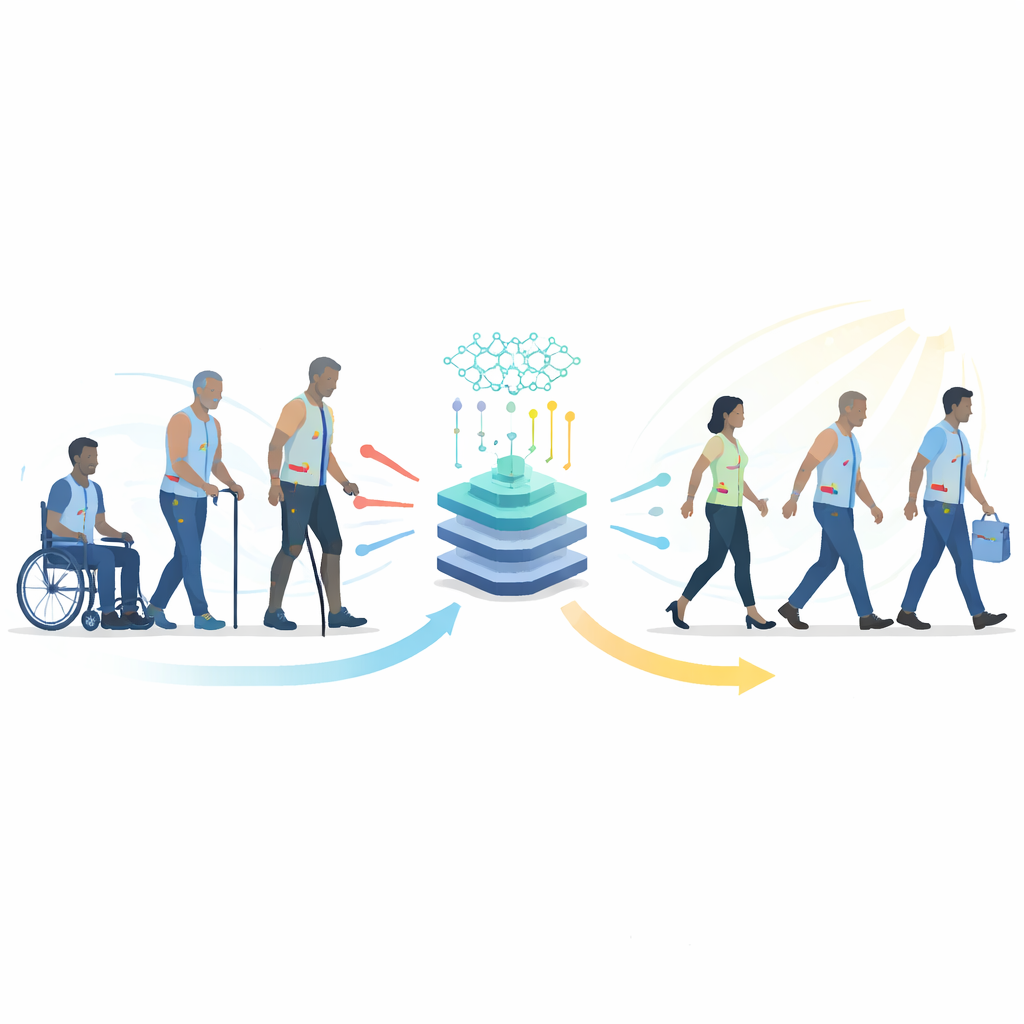
For many people living with physical disabilities, traditional rehabilitation can be slow, repetitive, and hard to stick with. This study explores whether adding smart wearable devices that "feel" how the body moves and guide each exercise in real time can speed recovery, make training safer, and help people regain more independence at home and in the community.
Why Smart Wearables Matter
Wearable devices—small sensors strapped to the trunk and limbs—can continuously record how a person moves, walks, and holds their posture. In this study, these sensors were combined with a type of computer program called a support vector machine, which is especially good at sorting complex patterns. Together, they form a closed loop: the sensors capture movement, the algorithm judges whether that movement is close to a healthy pattern, and the device sends instant feedback through gentle vibrations or sounds to help the person adjust on the spot.
How the Study Was Set Up
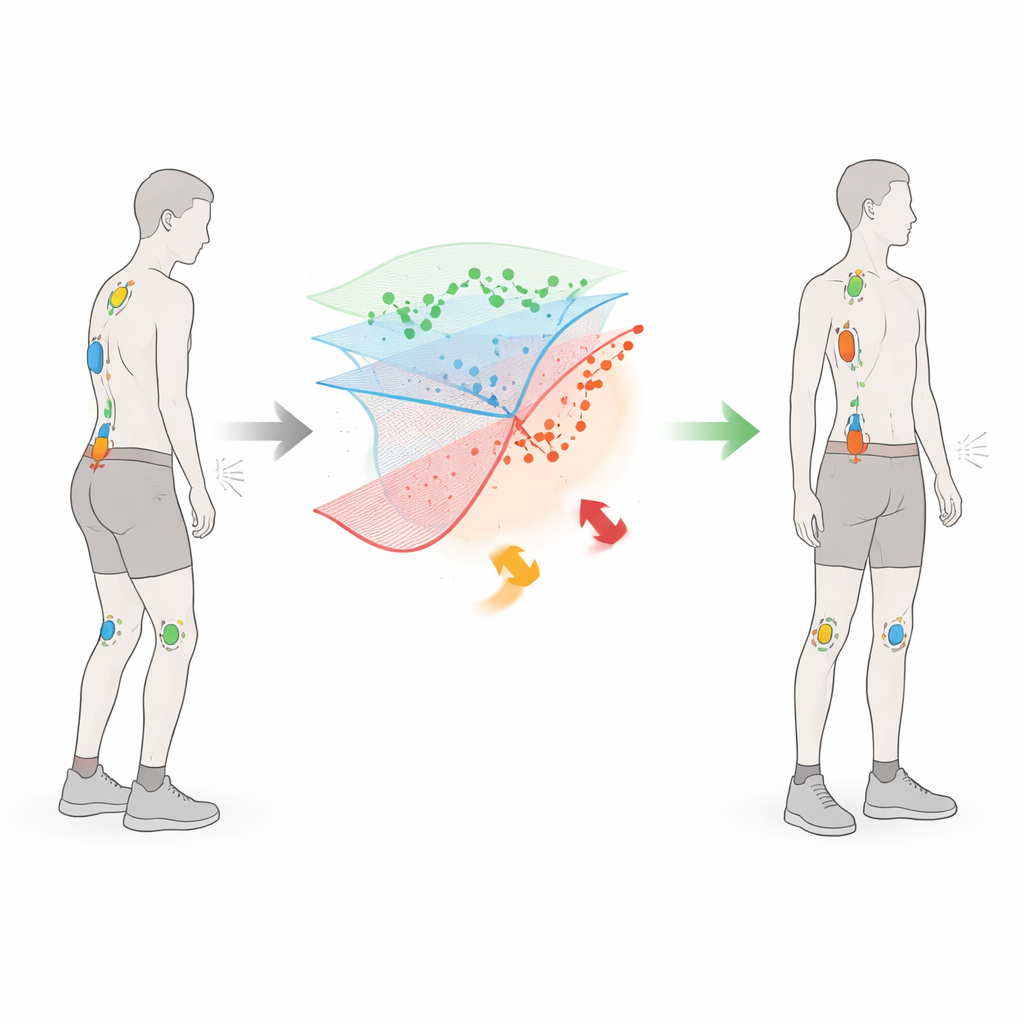
Researchers in Nanchang recruited 159 adults with movement-related disabilities, such as spinal cord injury, stroke-related weakness, or physical deformities. Everyone received four weeks of supervised, task-focused rehabilitation, including seated balance work, bridging exercises, upper-body strengthening, and transfer practice between a wheelchair and bed or chair. Half of the participants trained in the usual way, with therapists watching and correcting by eye and by hand. The other half did the same program but wore the smart sensor system while they trained. Sensors on the spine, pelvis, and legs sent movement data via Bluetooth to a mobile device running the pattern-recognition program, which signaled any loss of balance, asymmetry, or poor posture in real time.
Better Movement, Walking, and Posture
Both groups improved after four weeks, but the people using the wearable system made bigger gains almost across the board. Measures of joint flexibility in the hips and knees rose more in the smart-device group, and their step length, stride width, and walking speed increased more sharply, showing more confident and efficient walking. Detailed posture measurements also improved: the position of the upper spine shifted closer to the body’s midline, trunk and shoulder tilt lessened, the pelvis became more level, and the curve of the upper and lower back moved toward a healthier shape. These changes point to better balance and core stability, not just stronger muscles.
Life Quality, Independence, and Motivation
The benefits went beyond raw movement numbers. Using standard World Health Organization questionnaires, the researchers found that the smart-device group reported larger drops in disability across areas such as thinking, self-care, getting around, and social participation. They also reported bigger gains in physical comfort, mood, sense of independence, and how supportive and manageable their surroundings felt. Scores for basic daily tasks like eating, dressing, washing, and toileting climbed higher in the wearable group, meaning that improvements in the gym were more likely to carry over into real life. Just as important, these participants were more likely to follow their training program closely and said they were more satisfied with the experience, suggesting that real-time feedback and a sense of progress make rehab feel more rewarding and less discouraging.
Smarter Algorithms Behind the Scenes
To make the most of the sensor data, the team compared three versions of the pattern-recognition program. All three were based on support vector machines, but two used additional "swarm"-style search methods—borrowing ideas from the way flocks of birds or colonies of bees explore—to fine-tune their internal settings. The most advanced version, which used a bee-inspired search strategy, turned out to be the most accurate at recognizing different movement patterns. This means it can more reliably tell when an exercise is done correctly or not, allowing the device to deliver precise feedback and paving the way for even more responsive, personalized training plans.
What This Means for People With Disabilities
For people with movement limitations, the study suggests that pairing standard therapist-led exercises with well-designed wearable technology can lead to stronger improvements in function, daily independence, and overall quality of life than traditional methods alone. By turning each repetition into a guided, data-informed practice, these systems help patients learn safer, more efficient ways to move—and stay motivated while doing it. Although the study was limited to one city and a short training period, it points toward a future where intelligent, user-friendly rehab tools in clinics and homes can support more people with disabilities in living fuller, more active lives.
Citation: Xiong, Q., Gui, L. & Shu, C. Support vector machine algorithm-based wearable device in sports rehabilitation training for people with disabilities. Sci Rep 16, 9317 (2026). https://doi.org/10.1038/s41598-026-39904-7
Keywords: wearable rehabilitation, support vector machine, movement disorders, assistive technology, quality of life