Clear Sky Science · en
Comparison of two tablet splitting methods on mass loss and weight uniformity by nurses in North West Ethiopia
Why Breaking Pills Matters
Many people are told to “take half a pill” to get the right dose or save money. It sounds simple: just snap the tablet along the line. But this study from hospitals in North West Ethiopia shows that how a pill is broken—by hand or with a small cutting device—can change how much medicine a patient actually gets. For drugs where small dose changes really matter, that difference could affect safety and treatment success.
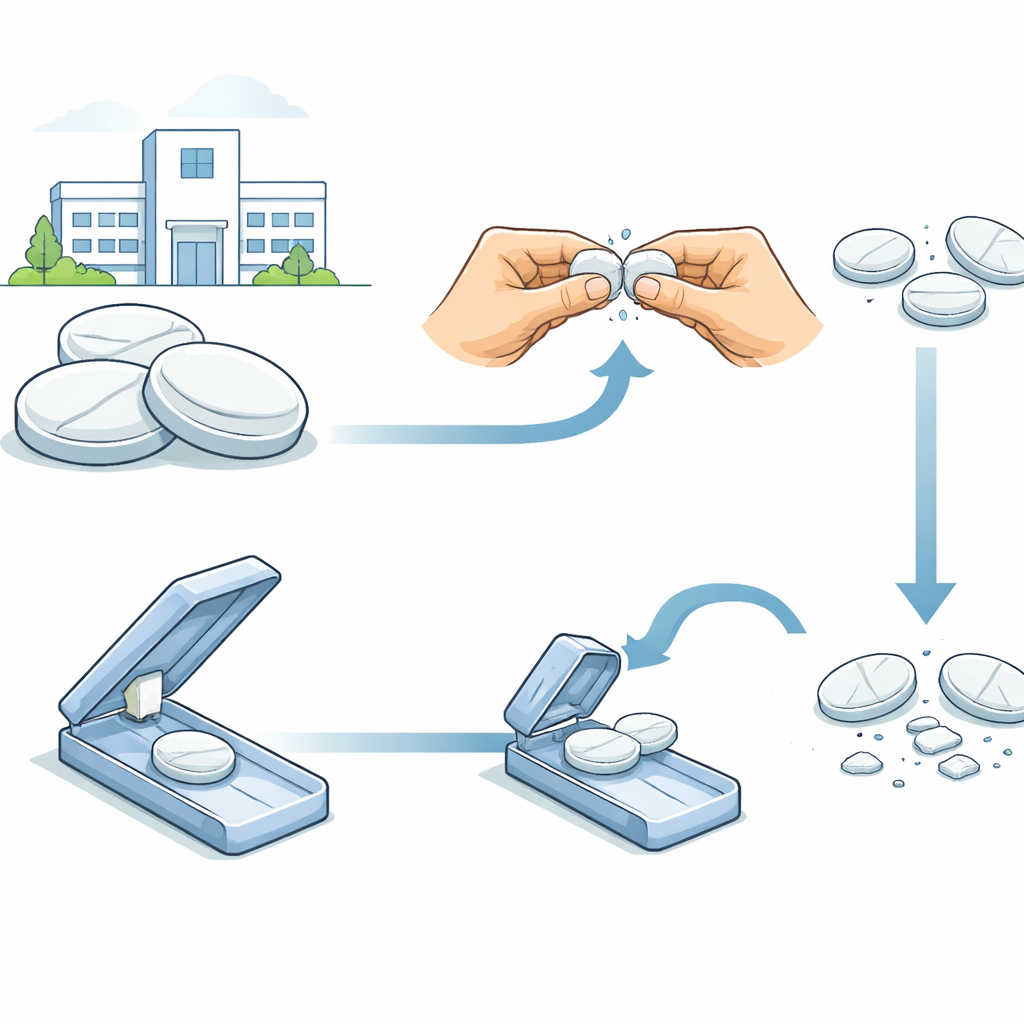
Two Ways to Split the Same Pill
The researchers focused on five common prescription tablets used for heart disease, mental health, and thyroid problems. All of them had a score line, suggesting they were meant to be broken in half. In a laboratory setting, four nurses were asked to split these tablets in two ways: using just their fingers along the score line, and using a commercial pill-splitting device with a blade. Before and after each split, the tablets were weighed on a very sensitive scale to see how much material was lost as crumbs and how similar the two halves really were.
Measuring Lost Pieces and Uneven Halves
To understand how good each method was, the team looked at two things. First, they measured weight loss: how much of the tablet turned into tiny fragments or powder and was no longer part of either half. International guidance suggests that losing more than a small fraction of the tablet’s weight is not acceptable. Second, they checked weight uniformity: whether the two halves were close in weight to each other and to the ideal “half tablet.” Large differences mean one half might contain much more active drug than the other, even though they look similar.
Hand Versus Device: A Surprising Winner
The results challenged the common belief that a mechanical splitter is always more accurate. For tablets cut with the device, four out of five products lost more material than recommended, and some—such as blood-pressure and thyroid tablets—lost around one-tenth of their weight or more. In contrast, tablets broken by hand usually lost less material, and for one drug there was no measurable loss at all. When the researchers compared how even the halves were, they again found that hand splitting often produced more consistent results than the cutter. Overall, tablets split by the device showed greater weight loss and more variation between halves than those split by hand.
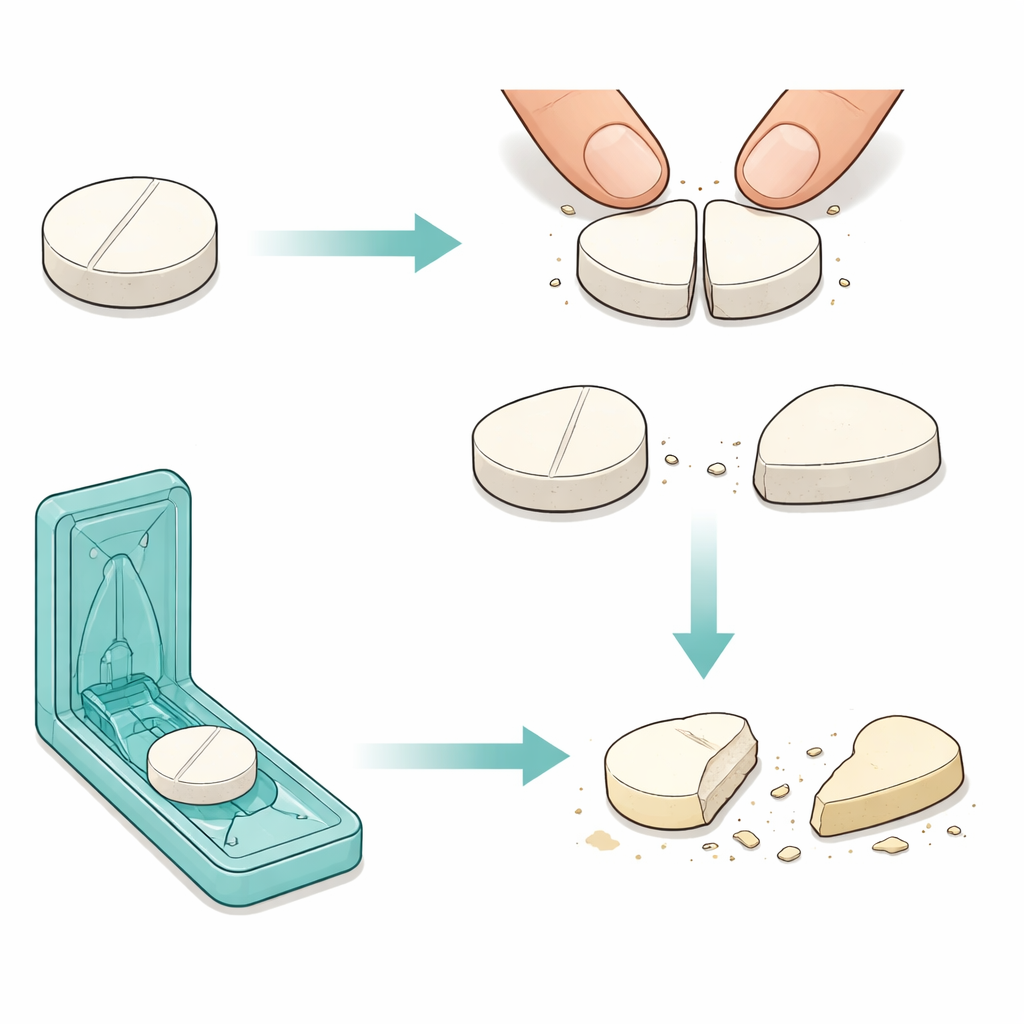
What This Means for Real Patients
These differences are not just a technical issue. For medicines where exact dosing is critical—such as those for heart rhythm, blood clotting, hormones, or certain mental health conditions—even a modest change in dose can mean the drug does not work as intended or causes unwanted side effects. The study suggests that relying on pill splitters does not always guarantee better control of the dose, at least under everyday clinical conditions. In this Ethiopian setting, trained nurses using their hands often did a better job than the device at preserving tablet weight and producing more similar halves.
Takeaway for Everyday Use
The researchers conclude that both splitting methods cause some loss of material and create uneven halves, but hand splitting performed by health professionals led to smaller losses and more consistent pieces than splitting with a device. For patients and clinicians, this means that “just split the tablet” is not a risk-free instruction, especially for drugs that demand very precise dosing. Whenever possible, using tablets that come in the exact needed strength—or seeking pharmaceutical forms designed for flexible dosing—may be safer than routinely breaking pills in half.
Citation: Ashagrie, T., Habteyes, A.T. & Mekonen, F.T. Comparison of two tablet splitting methods on mass loss and weight uniformity by nurses in North West Ethiopia. Sci Rep 16, 8237 (2026). https://doi.org/10.1038/s41598-026-39891-9
Keywords: tablet splitting, dose accuracy, medication safety, pill cutters, pharmacy practice