Clear Sky Science · en
Family structure and sociodemographic factors associated with molar incisor hypomineralization in children
Why Family Life Can Show Up on Kids’ Teeth
Molar incisor hypomineralization (MIH) is a mouthful of a term for a common problem: weak, chalky patches in the enamel of children’s first permanent molars and front teeth. These spots can hurt, break easily, and make everyday care like brushing or eating ice cream painful. This study asks a surprisingly down‑to‑earth question: beyond biology and germs, can family life, moving house, and parents’ circumstances leave a mark on a child’s teeth?
What Is This Tooth Problem?
MIH affects the hard outer layer of certain permanent teeth, leaving them with creamy white, yellow, or brown patches that are more fragile than normal enamel. It is found all over the world, with an average of about one in seven children affected, and many of them having moderate or severe damage. Scientists know that illnesses in pregnancy or early childhood, high fevers, antibiotics, and even genes can play a role. But health is more than biology. Stress, social support, housing, and family stability can change how a child grows and copes with disease. The researchers behind this study wanted to see whether these broader life circumstances are linked to which children develop MIH.
Who Was Studied and How
The team examined 305 children between 6 and 14 years old who attended a public primary care dental clinic in Roquetes, a town in Catalonia, Spain. Each child received a careful dental check to see whether MIH was present, following international diagnostic guidelines. At the same visit, parents filled out a short questionnaire about the family: who the child lived with, parents’ relationship status, where the parents and child were born and now live, the mother’s age and education level, and household income. To focus on the mother’s role in pregnancy and early childhood, the researchers grouped children according to whether their mother had grown up in Spain or abroad, with many foreign mothers coming from Morocco.
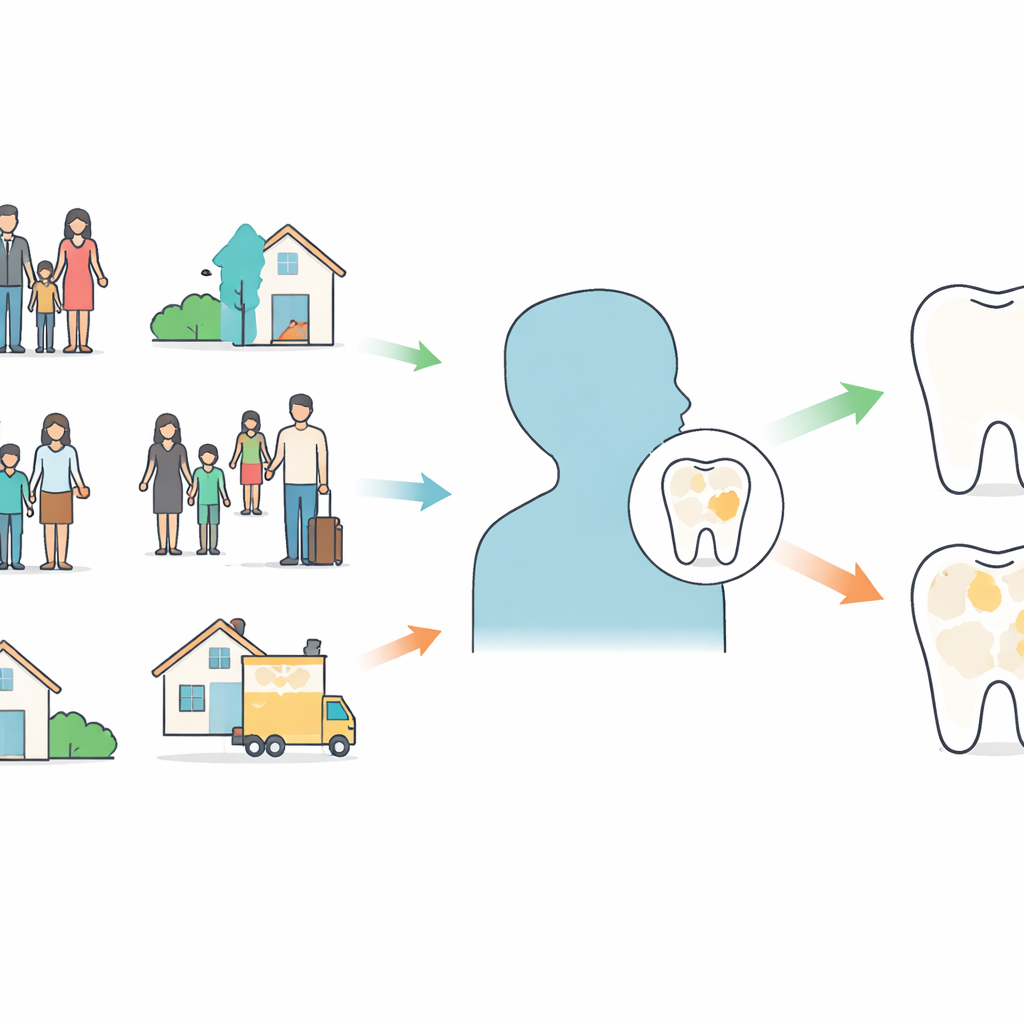
Family Patterns Seen in Spanish Mothers
Among children with Spanish mothers, MIH was more common when family life had been disrupted. Children who did not currently live with both parents, or whose parents were separated, divorced, or widowed, were more likely to have MIH. So were children born in a different town from where they now lived, pointing to residential instability and possible moves during important early years. Interestingly, children whose main caregiver had higher education also showed a higher chance of MIH in this group. One possible explanation is that higher education can go hand‑in‑hand with demanding jobs, time pressure, and stress, which may spill over into pregnancy and early child‑rearing.
Family Patterns Seen in Foreign Mothers
For children with foreign‑born mothers, a different picture emerged. In this group, MIH was linked mainly to signs of migration and distance from the original family network. Children were more likely to have MIH when the mother came from a different town than the father, or when the mother’s place of origin differed from the child’s birthplace, both hints of relocation and uprooting. Mothers aged 46 or older seemed to have children with less MIH, which may reflect that these mothers had already settled, built social ties, and adapted to their new surroundings by the time their children were born. Across the whole sample, lower household income was also connected to MIH, although this effect weakened when Spanish and foreign families were analyzed separately.
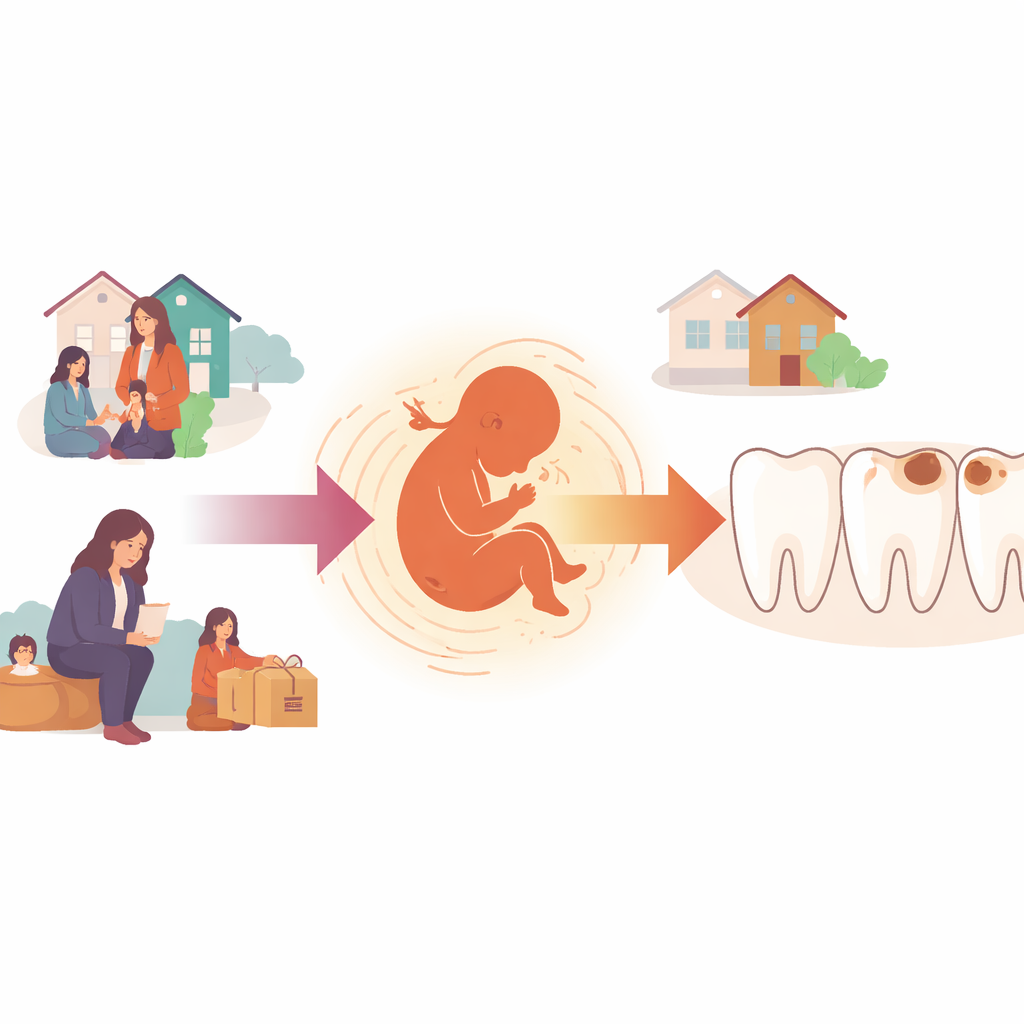
How Stress and Support Might Reach the Teeth
Although the study did not measure stress directly, the patterns point toward a common theme: changes to the mother’s family structure and living situation, from separation to migration, may increase emotional strain. Earlier research shows that maternal stress, depression, and poor social support can affect pregnancy outcomes and child health, and are tied to illnesses that themselves are suspected triggers for MIH, such as infections and breathing problems in infancy. Frequent moves and unstable housing are also known to harm parents’ mental health. Together, these findings suggest that what happens around the child—in relationships, homes, and communities—may influence the delicate process of enamel formation.
What This Means for Children and Families
To a layperson, the study’s message is that MIH is not just a random flaw in the teeth or a matter of brushing better. In this group of Spanish and immigrant families, children were more likely to have weakened molars and incisors when their mothers had faced disrupted family life, moves, or economic strain, and the exact patterns differed by whether the mother was Spanish or foreign‑born. The work does not prove cause and effect, and it cannot replace biological research, but it adds an important piece: supporting mothers with stable housing, social networks, and help during stressful transitions may protect not only their overall health, but their children’s teeth as well.
Citation: Poy, S.L., Durán, A.V., Sáez, J.F. et al. Family structure and sociodemographic factors associated with molar incisor hypomineralization in children. Sci Rep 16, 8301 (2026). https://doi.org/10.1038/s41598-026-39879-5
Keywords: molar incisor hypomineralization, child oral health, family stress, migration and health, social determinants of health