Clear Sky Science · en
Machine learning in predicting failures of buried water supply networks affected by mining impacts
Why broken water pipes matter
Most of us turn on the tap without thinking about the maze of pipes hidden beneath our streets. In mining regions, however, these buried water pipes face extra stress as the ground slowly sinks and shifts. When pipes crack or burst, neighborhoods can lose water, streets may flood, and utilities must spend more money on repairs—costs that ultimately reach consumers and the environment. This study explores how modern machine learning tools can help predict which stretches of pipe are most likely to fail, so repairs can be done before disaster strikes.
Shifting ground under our feet
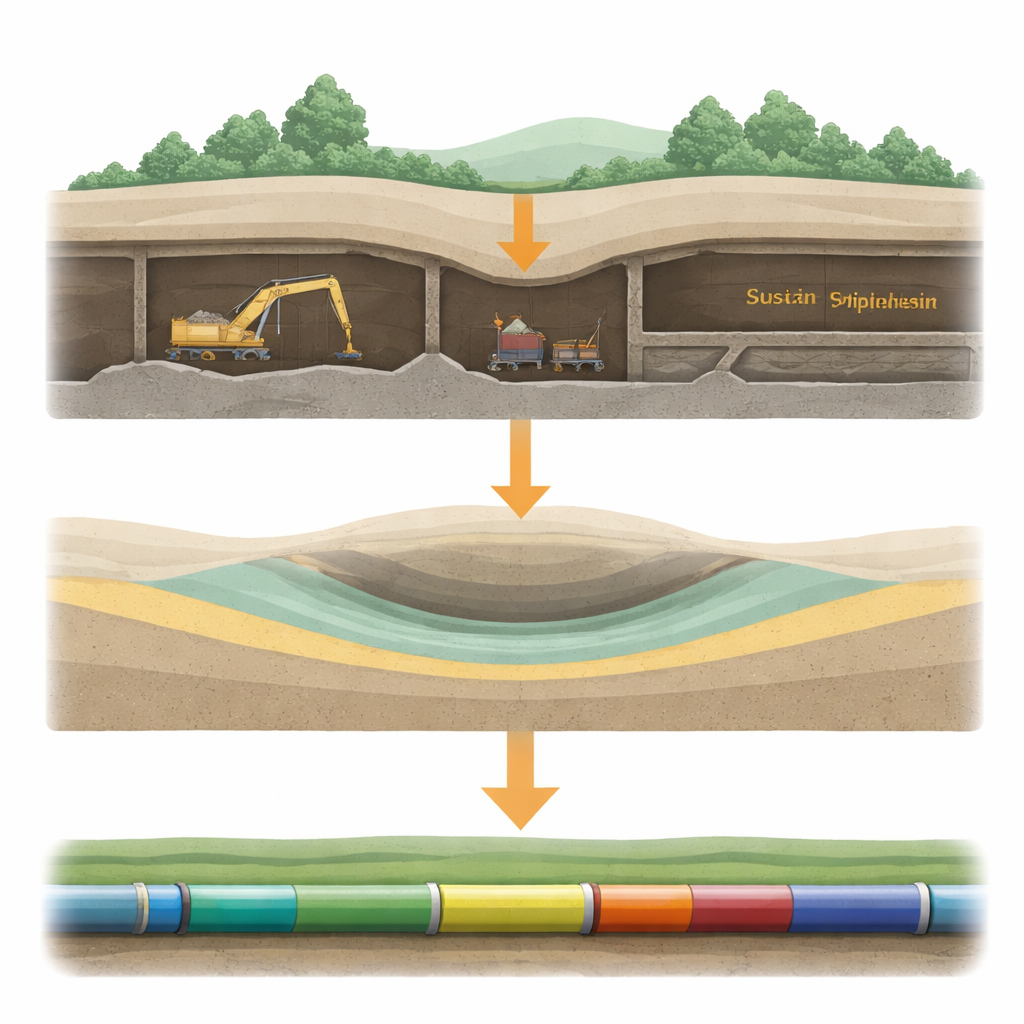
Intensive underground mining doesn’t just remove coal or ore—it also reshapes the land above. As voids are created deep below, the surface can gradually subside, tilt, and deform. For steel water mains buried near the surface, this movement acts like a slow, powerful tug-of-war. The soil drags along the outer walls of the pipes, stretching some sections and squeezing others. Over time, this friction can strip away protective coatings and accelerate rust, eating small pits and holes into the metal. The result is a higher chance of leaks and breaks in mining areas compared with more stable ground.
What the researchers measured
The authors examined more than 100 kilometers of underground water pipelines running through mining zones in Silesia, Poland. For each pipe section, they collected basic information such as length, age, diameter, and material. They also described how strongly mining had affected the surrounding ground, using categories for stretching, squeezing, and extreme deformation. Finally, they counted how many failures had occurred on each section and converted this into a failure rate—how often a given kilometer of pipe breaks in a year. This created a compact but information-rich dataset linking pipe characteristics, mining conditions, and real-world damage.
Teaching computers to spot trouble
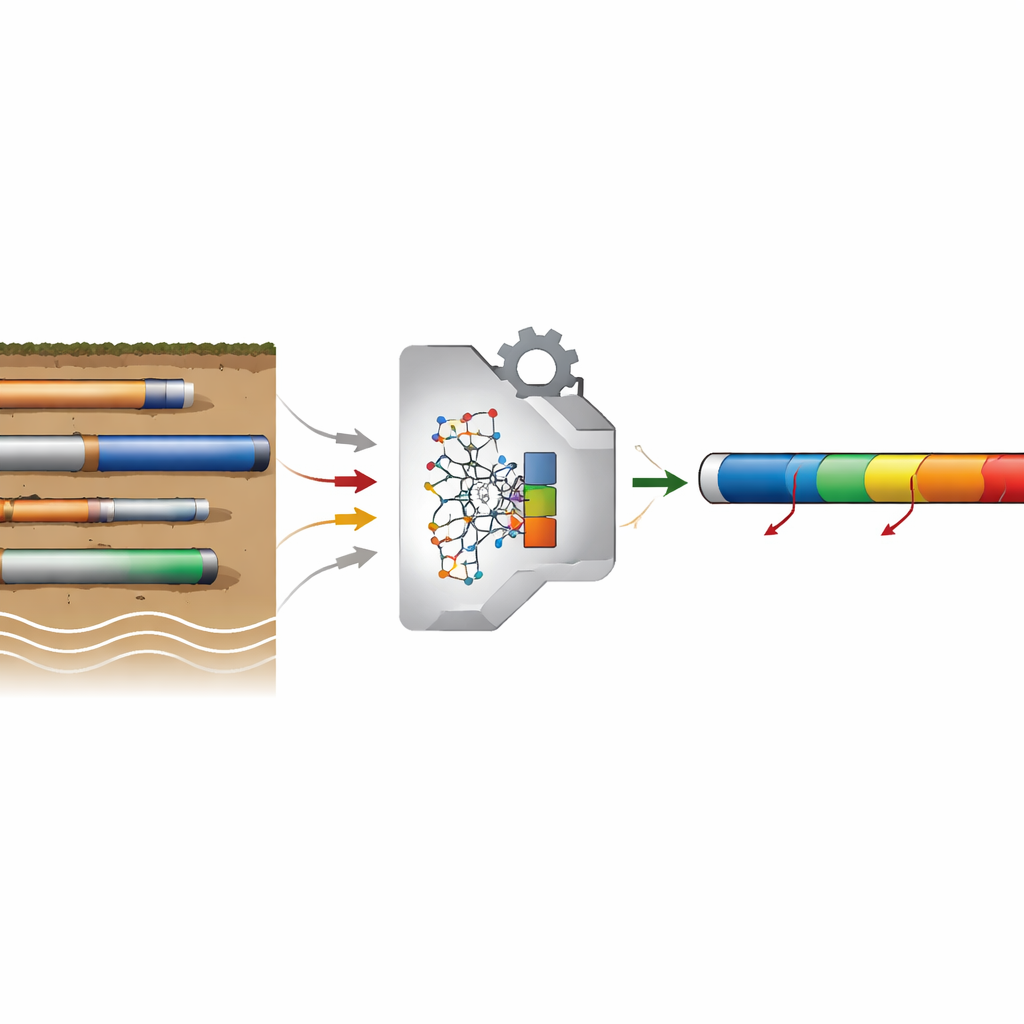
To turn this data into predictions, the team tested five machine learning methods that are widely used for finding patterns: neural networks, support vector machines, random forests, gradient-boosted trees, and a refined version of k-nearest neighbors. Each method was asked to learn how the various pipe and mining factors combine to produce higher or lower failure rates. Part of the data was used for training and the rest set aside to check whether the models could generalize to new, unseen pipe sections. Two techniques clearly stood out: a boosted decision-tree approach known as XGBoost and a support vector machine. Both delivered accurate predictions of failure rates, even though no single input variable had a simple linear link to damage.
Finding what matters most
Beyond raw accuracy, the authors wanted to understand which features truly drive failure risk. They turned to an explanation method that assigns each variable a contribution to the model’s predictions, similar to splitting a bill fairly among dinner guests. This analysis showed that the single most important factor was the length of a pipe section: longer runs of pipe are simply exposed to more ground movement and have more places where things can go wrong. The second key factor was age, reflecting the slow weakening of steel and coatings over decades. Measures of ground stretching along the pipe and the pipe’s diameter also played meaningful roles, whereas pure squeezing and the most extreme deformation category contributed relatively little in this particular dataset.
What this means for cities and residents
In plain terms, the study shows that smart algorithms can help utilities in mining regions move from reacting to pipe breaks toward preventing them. By focusing inspections, reinforcements, or replacements on the longest, oldest, and most stretched sections of pipe, water companies can reduce surprises, conserve water, and protect communities from sudden outages. While the work is based on one mining district and a limited monitoring period, the approach can be adapted to other underground networks and locations. As more data become available, machine learning could become a standard tool for keeping drinking water flowing safely through landscapes reshaped by human activity.
Citation: Chomacki, L., Rusek, J. & Słowik, L. Machine learning in predicting failures of buried water supply networks affected by mining impacts. Sci Rep 16, 8465 (2026). https://doi.org/10.1038/s41598-026-39874-w
Keywords: water pipeline failures, mining subsidence, machine learning prediction, infrastructure risk, buried water networks