Clear Sky Science · en
Effects of a combined physical activity and educational drama intervention on core symptoms and physical fitness in children with ASD
Movement, Make-Believe, and Everyday Life
Parents and teachers of children on the autism spectrum often juggle two big goals at once: helping kids move more confidently and helping them connect more easily with others. This study explores a creative way to work on both at the same time by blending structured exercise with playful storytelling and acting games, asking a simple question with big impact: can moving the body through stories also help unlock social growth?
Why Moving the Body Matters
Children with autism frequently face challenges well beyond social interaction. Many struggle with balance, coordination, and basic movement skills like running, jumping, and throwing. These motor difficulties can make it harder to join playground games or sports, which in turn limits chances to make friends and practice social skills. The result can be a self-reinforcing cycle: weaker movement skills lead to fewer social opportunities, and low social motivation leads to less movement. Exercise programs are already known to improve strength and coordination, and they often reduce anxiety and repetitive behaviors. But on their own, they may not deeply engage the child’s imagination or directly practice the give-and-take of real-world conversation.
Why Story Play Matters
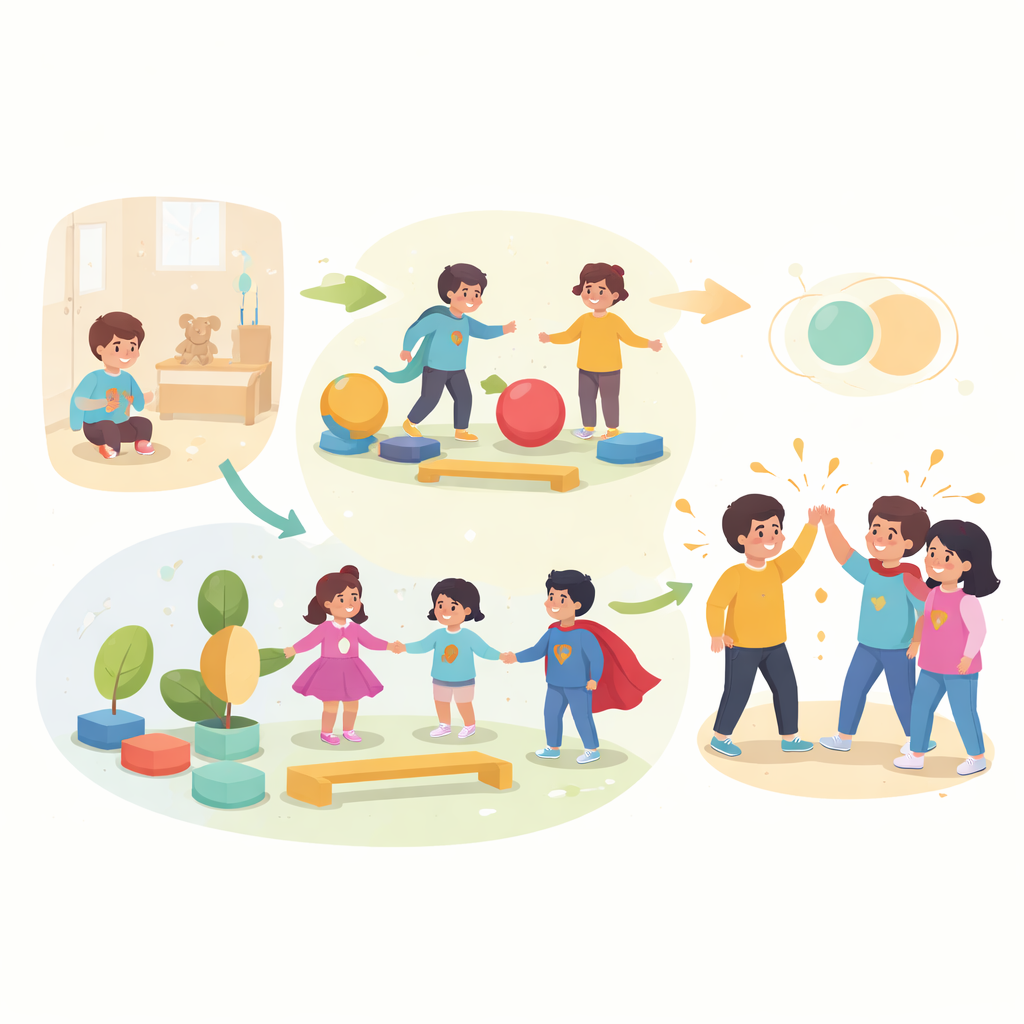
Educational drama—sometimes called drama therapy—approaches learning from a different angle. Instead of drills or worksheets, children play out simple stories, take on roles, and use their bodies and faces to show how characters feel and react. Classic tales like “The Three Little Pigs” or “The Tortoise and the Hare” are adapted into movement-rich games: building houses becomes structured lifting and throwing, animal races become carefully guided running and jumping, and make-believe sports days become a safe testing ground for turn-taking and teamwork. For children with autism, this turns vague social rules into concrete actions. Looking someone in the eye, waiting for a turn, or changing behavior when the scene changes all become part of an engaging game rather than a stressful demand.
Putting Exercise and Drama Together
To test this combined approach, the researchers worked with 20 children around 11 years old, all attending the same special school in China. The children were randomly split into two small groups. One group took part in a 12-week program that mixed moderate-intensity physical activity with drama-based warm-ups and story sessions three times a week. The other group did the same volume and intensity of exercise—running, jumping, throwing, balancing—but without the story or role-play elements. Before and after the 12 weeks, parents rated their children’s repetitive behaviors and social difficulties using standard questionnaires, and trained staff measured basic fitness using tasks such as standing long jump, throwing a tennis ball, walking a balance beam, shuttle runs, and repeated two-foot jumps over small blocks.
What Changed for the Children
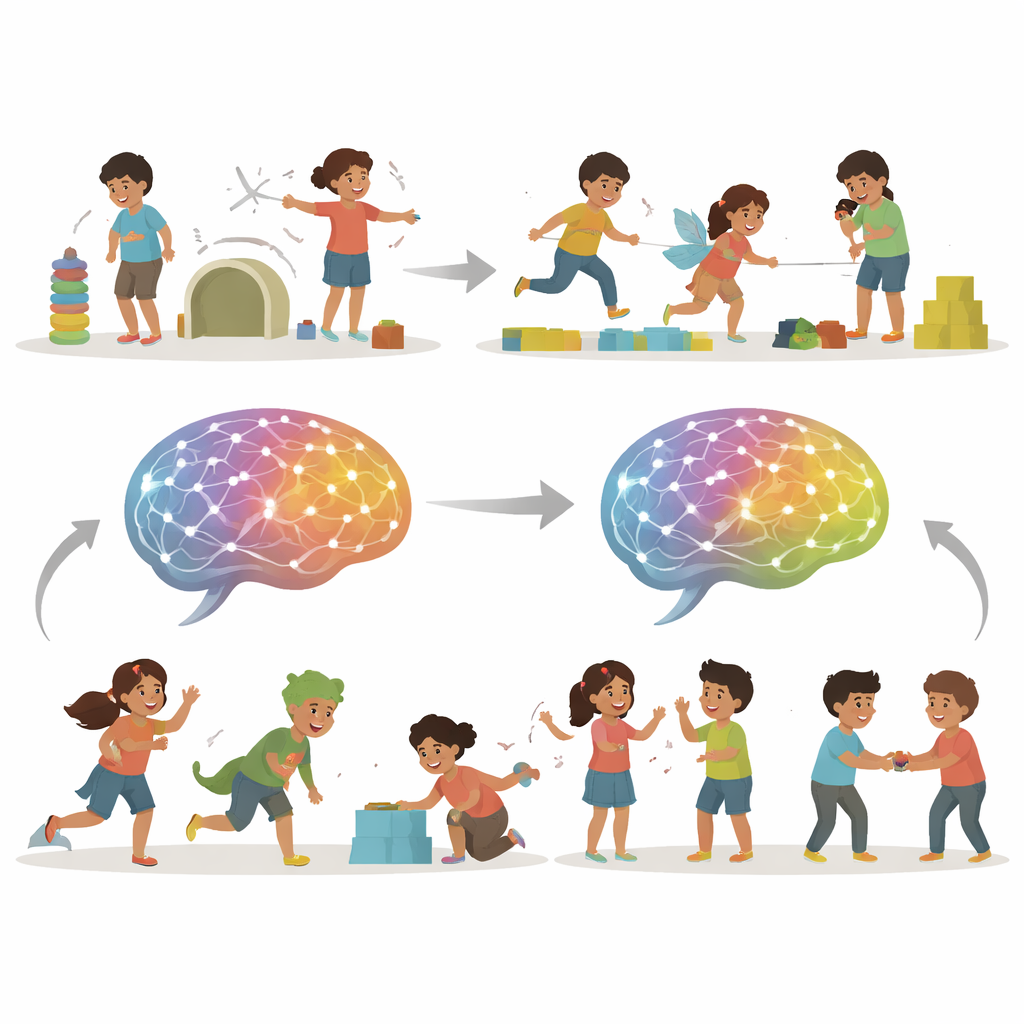
Both groups made clear gains. After three months, parents reported fewer repetitive actions and less severe social problems in all children, and tests showed better jumping, throwing, balance, and running across the board. Simply taking part in regular, well-designed physical activity seemed to help children focus, regulate their behavior, and move more effectively. However, the children who also took part in drama games and story-based movement showed extra improvements in several key areas. Compared with the exercise-only group, they had larger reductions in stereotyped and restricted behaviors, stronger gains in social communication and social motivation, and bigger drops in the kinds of habits that make someone seem “locked into” autistic patterns. They also improved more on a demanding coordination task that required a series of fast, rhythmic jumps, hinting that combining movement with story and imagination may sharpen body control in more complex ways.
What This Could Mean for Families
For families and educators, the study’s message is hopeful but cautious. It suggests that folding make-believe and role-play into movement classes may give children with autism an extra nudge in both social and motor development. Acting out stories asks children to watch others closely, guess what characters are feeling, and respond with their own words, gestures, and expressions, all while moving their bodies in varied ways. That blend of physical effort and emotional engagement may help replace some repetitive habits with more flexible, purposeful actions. At the same time, the study was small and short, so it cannot yet prove that this approach should be standard practice. Larger, longer trials are still needed. Even so, the work points toward a promising idea: that play, stories, and exercise together might help many children on the spectrum feel more at home in both their bodies and their social worlds.
Citation: Ma, B., Du, X. Effects of a combined physical activity and educational drama intervention on core symptoms and physical fitness in children with ASD. Sci Rep 16, 9018 (2026). https://doi.org/10.1038/s41598-026-39873-x
Keywords: autism, physical activity, drama-based therapy, social skills, motor development