Clear Sky Science · en
Climate action and responsible consumption and production in high-income countries
Why Our Everyday Choices in Rich Countries Matter
For people living in wealthier nations, it can be easy to think of climate change as a distant problem, driven mostly by factories or faraway countries. This study shows that the way high-income societies buy, use, and discard goods is deeply tied to climate action. By examining detailed data from 2001 to 2023, the authors reveal that smarter consumption and production choices in rich countries can unlock especially large climate benefits—if policies are tailored to where each country stands on its sustainability journey. 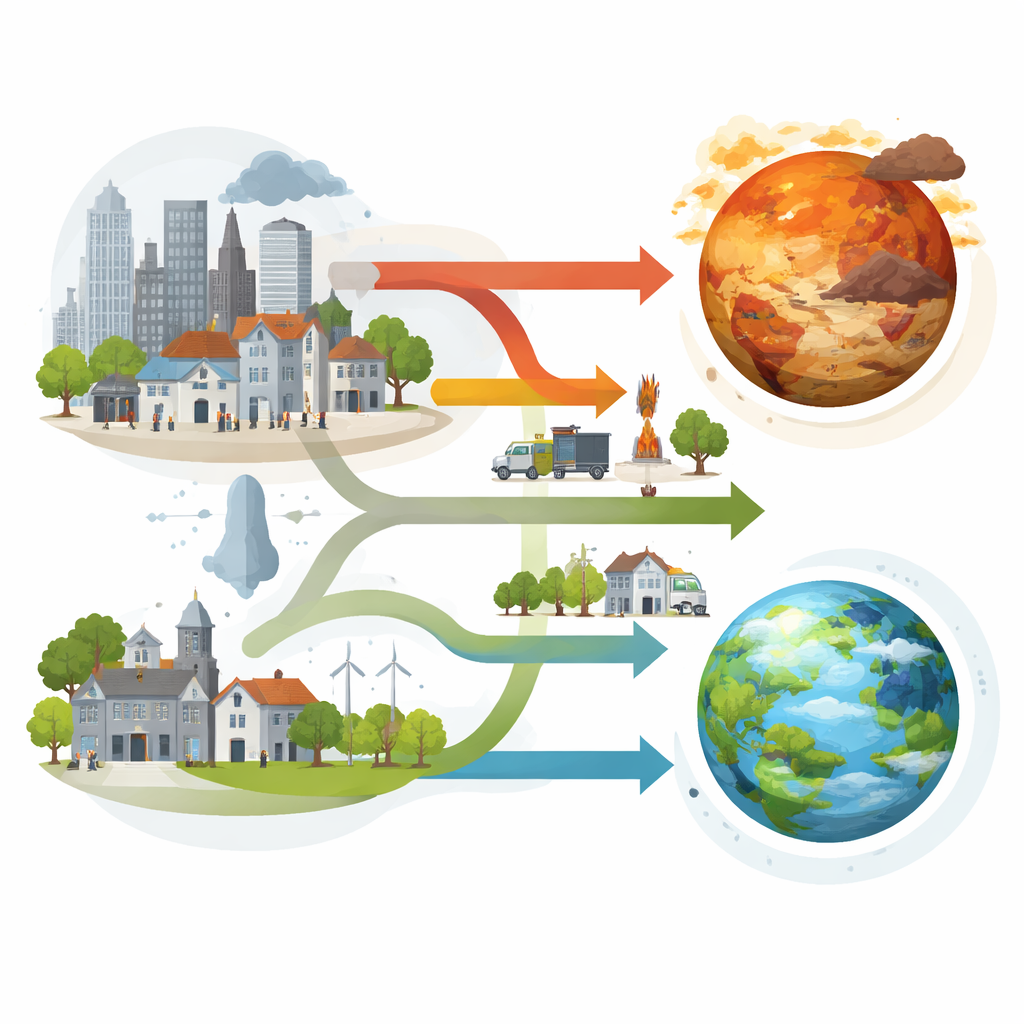
How the Study Looks at Climate and Consumption
The research focuses on two United Nations goals: responsible consumption and production (SDG 12) and climate action (SDG 13). High-income countries are at the center of the analysis because their residents consume far more energy and materials than the global average and are responsible for a disproportionate share of greenhouse gas emissions. Rather than asking only whether these goals move together on average, the authors look at how the connection changes across different levels of emissions and sustainability performance, capturing the reality that not all rich countries, or periods of time, behave the same way.
A New Way to See Uneven Impacts
To uncover these patterns, the study uses a flexible statistical approach called Kernel Regularized Quantile Regression. In simple terms, instead of drawing a single straight line through the data, the method allows the relationship between climate action and responsible consumption to bend and shift depending on whether a country is at a lower or higher level of emissions and sustainability. The analysis also accounts for big disruptions such as the COVID-19 pandemic, which temporarily altered energy use and production in many economies. This richer view shows how climate and consumption policies interact differently in cleaner versus more pollution-intensive settings.
When Progress Feeds on Itself
The results show a clear pattern: the link between responsible consumption and climate action is positive in both directions but much stronger at higher levels of sustainability and emissions. At lower levels of responsible consumption, climate policies still help, but only modestly. Likewise, when countries are just beginning to adopt greener habits and technologies, their impact on emissions is limited. As nations move into the middle of the distribution—moderate levels of sustainable consumption and climate action—the relationship strengthens. In the highest ranges, where systems for recycling, energy efficiency, and cleaner production are more advanced, improvements in responsible consumption trigger disproportionately large climate gains, and stronger climate action further accelerates sustainable consumption. 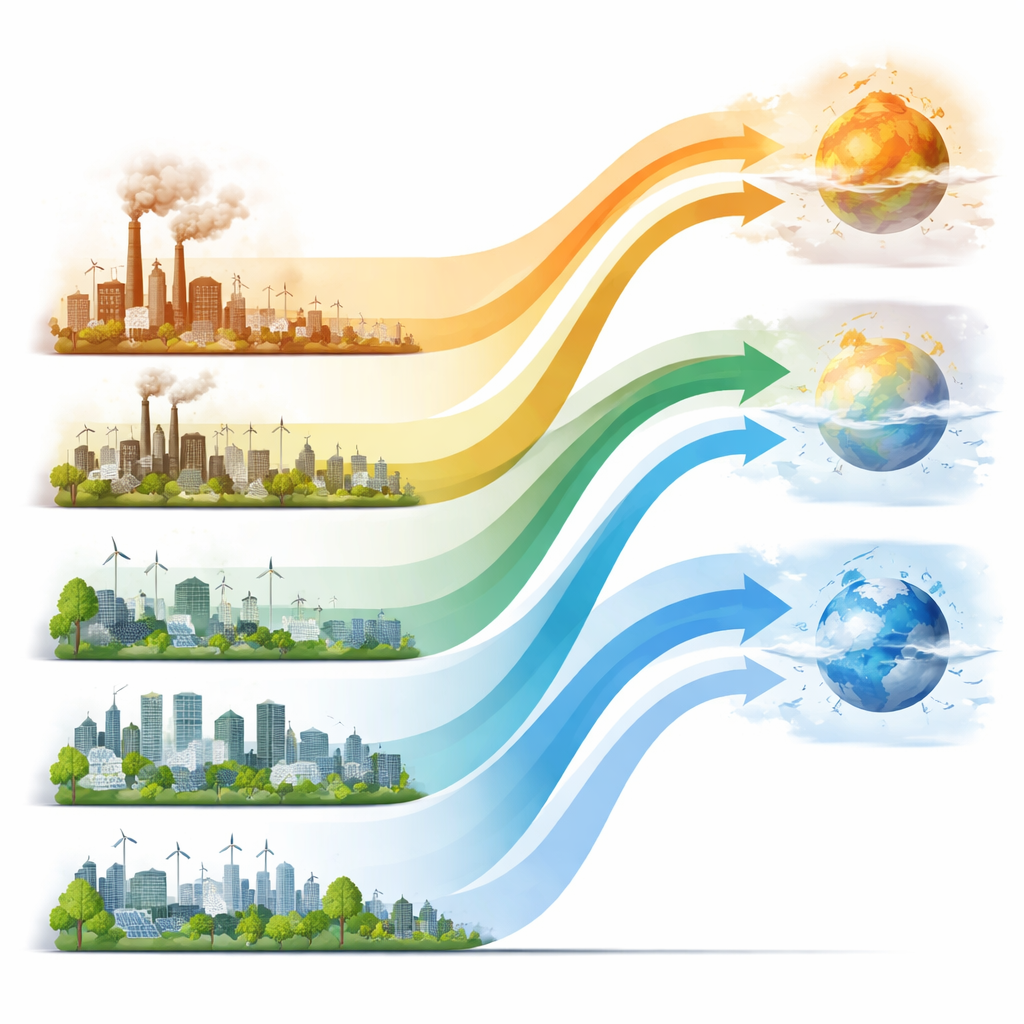
Why One-Size-Fits-All Policies Fall Short
Because the effects vary across this spectrum, the authors argue that uniform policies are not enough. In early stages, where sustainability is still weak, the most effective steps involve raising awareness, making it easier and cheaper for households and firms to try greener options, and helping lagging sectors catch up. In the middle stages, the focus should shift toward scaling up green technologies, building stronger partnerships between public and private actors, and weaving climate and consumption goals into mainstream economic planning. For countries already operating at high sustainability levels, tougher rules on emissions, generous support for renewable energy, and circular economy practices that minimize waste are needed to lock in progress and prevent backsliding.
What This Means for a Fair and Effective Future
In plain terms, the study concludes that in high-income countries, cleaning up the way we produce and consume is not just a side note to climate policy—it is one of its most powerful levers, especially where emissions are highest. The more advanced a country’s sustainable practices become, the more each additional step toward responsible consumption pays off in terms of climate benefits. This means that wealthy societies, whose lifestyles and investments drive much of today’s warming, also have the greatest capacity to bend the curve. Carefully designed, stage-specific policies that align everyday economic life with climate goals can turn high consumption from a liability into an engine for rapid, and more equitable, climate action.
Citation: Athari, S.A., Kirikkaleli, D., Olanrewaju, V.O. et al. Climate action and responsible consumption and production in high-income countries. Sci Rep 16, 8284 (2026). https://doi.org/10.1038/s41598-026-39868-8
Keywords: sustainable consumption, climate action, high-income countries, sustainable development goals, climate policy