Clear Sky Science · en
Psychosocial impacts of a mouse plague and ongoing psychological stress
A silent storm in the countryside
Imagine living in a rural town where mice are everywhere—scratching in the walls, running across your bed at night, and leaving a powerful smell that seeps into every room. For many people in regional New South Wales during the 2020–2021 mouse plague, this was daily life. Beyond wrecked crops and chewed wiring, this study asks a question that matters to anyone who cares about health, farming, or disaster planning: what does such an invasion do to people’s minds and communities, not just their bank accounts?
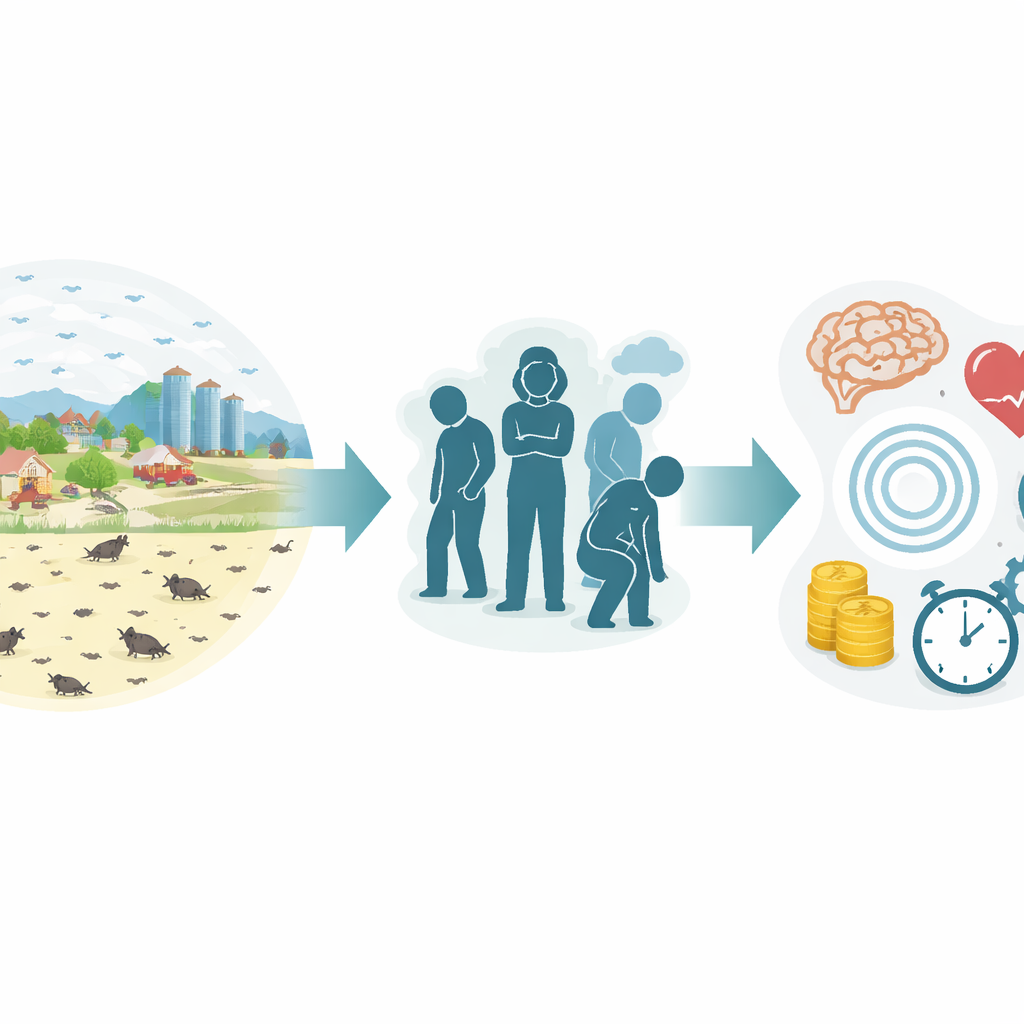
When mice take over homes and towns
Mouse plagues are not rare in eastern Australia. Every few years, when weather and crops align, mouse numbers explode into the hundreds per hectare, spreading from paddocks into sheds, shops and family homes. Past research has mostly counted the financial damage—lost grain, ruined equipment, food contamination and disease risk. But stories from the 2021 plague hinted at something more: sleepless nights, fear, shame about infested houses, and fraying relationships. This study set out to move beyond anecdotes and measure those social and emotional impacts in a systematic way.
Listening to thousands of lived experiences
Researchers surveyed 1,691 adults from the regions of New South Wales hit hardest by the 2021 plague, roughly two years after mouse numbers crashed. People were asked to think back to the height of the plague and report how often they felt emotions such as sadness, helplessness or worthlessness. They also rated how much the mouse smell bothered them, how embarrassed they felt about having mice in their home or business, how much time, money and effort it took to control mice, and how well supported they felt by friends, neighbours and government. Finally, the survey measured ongoing stress symptoms linked to past events—such as intrusive memories, jumpiness and trouble sleeping—to see whether the plague still haunted people’s lives.
Heavy costs, strong emotions
Most participants described the plague’s impacts on themselves and their communities as at least moderately severe. Controlling mice demanded large amounts of time, effort and money, and these “response costs” turned out to be one of the strongest drivers of how severe people felt the social impacts were. Many respondents reported clear signs of emotional strain during the plague: about one third had moderate or worse depressive symptoms, and nearly half were extremely bothered by the odour of mice. Embarrassment was also common—roughly two thirds felt ashamed about having mice indoors, even though the infestation was far beyond individual control. Interestingly, earlier personality traits such as general tendency to worry did not explain much of this distress, suggesting that the event itself, rather than pre‑existing fragility, drove many of the reactions.
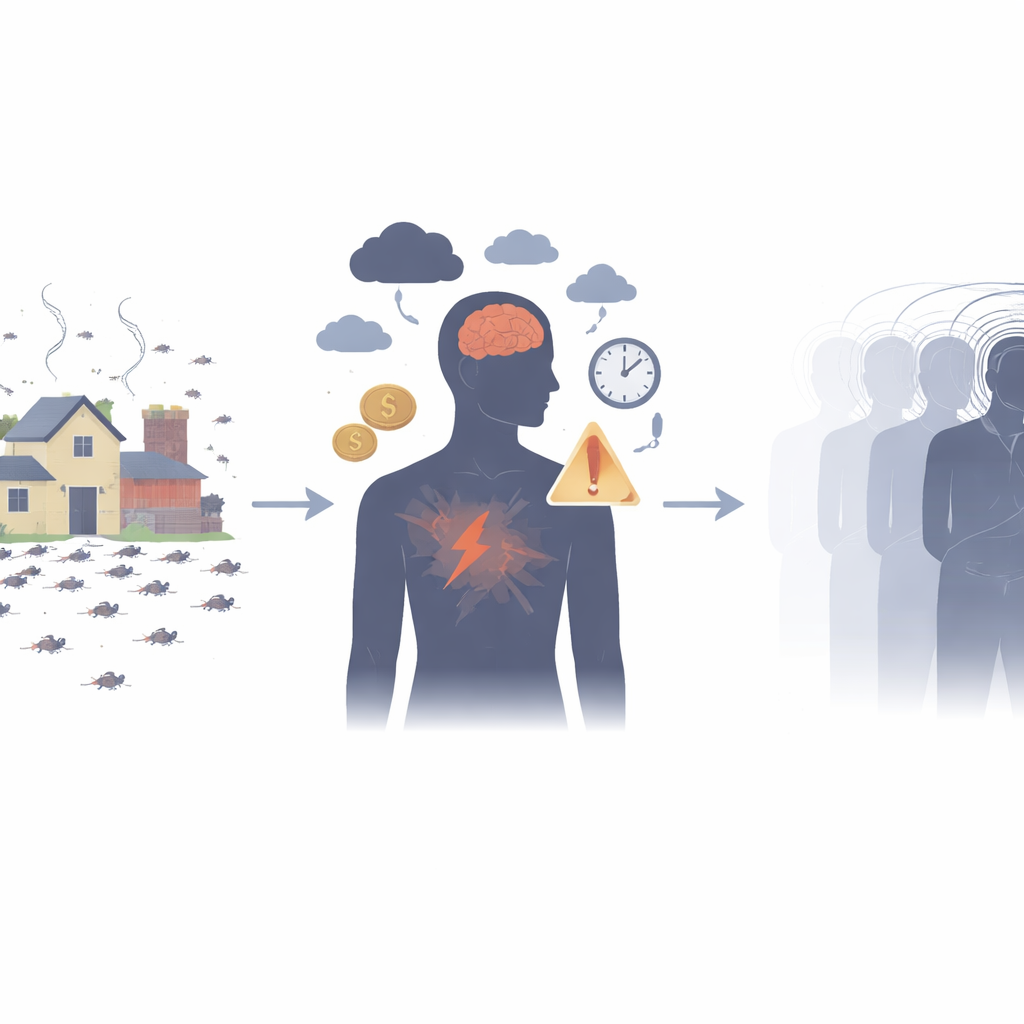
Stress that lingers long after the mice are gone
Two years after the plague, average stress scores in the community looked fairly low—but this masked a worrying minority. Almost one in four respondents reported levels of ongoing stress high enough that, in other contexts, would prompt concern about post‑traumatic stress–like symptoms. The best predictors of this lingering burden were how depressed people felt during the plague and how dangerous they believed a future plague would be to them personally. In other words, not only did the event itself leave a mark, but the fear that it could happen again kept that mark alive. Surprisingly, people who reported more social support during the plague also tended to rate the social impacts as more severe, hinting that sharing stories and worries with others might sometimes amplify, rather than soften, the sense of collective hardship.
Rethinking what a pest disaster really means
For a layperson, the key message is that a mouse plague is not just a nuisance or a farm problem. It is a slow‑moving disaster that can leave deep psychological traces, with a sizeable minority of people still struggling years later. The study shows that the heaviest burdens are not only dead mice and ruined grain, but also exhaustion, low mood, and fear of the next wave. The authors argue that governments and health services should treat future mouse plagues as whole‑of‑community crises, planning not just for disease control and crop protection, but also for mental health support, clear communication, and ways to ease the personal costs of coping. By recognising these events as genuine threats to wellbeing, communities may be better prepared to protect both livelihoods and lives when the mice return.
Citation: Mankad, A., Collins, K., Okello, W. et al. Psychosocial impacts of a mouse plague and ongoing psychological stress. Sci Rep 16, 8390 (2026). https://doi.org/10.1038/s41598-026-39861-1
Keywords: mouse plague, mental health, rural communities, disaster stress, biosecurity