Clear Sky Science · en
Myelin-specific IL2 + T-cells are associated with last occurring relapse severity in relapsing–remitting multiple sclerosis
Why this matters for people living with MS
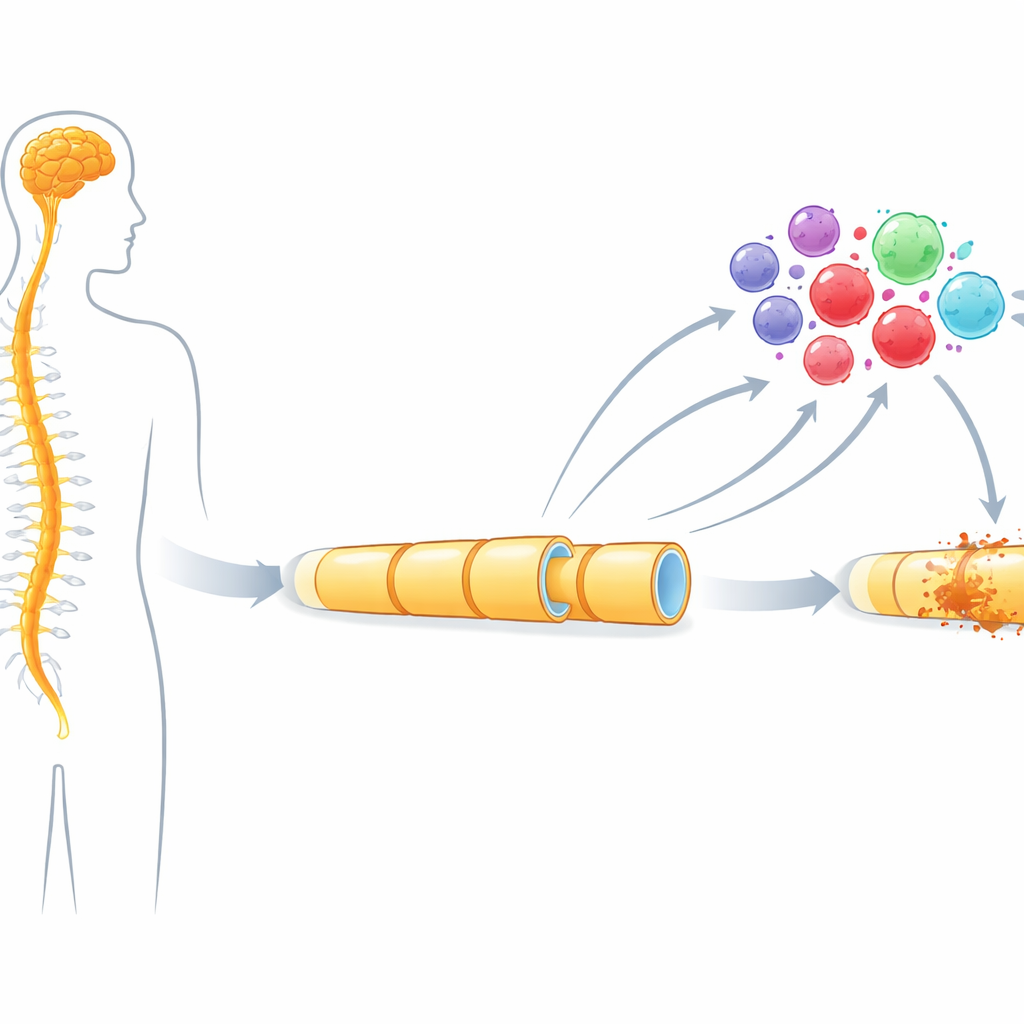
Multiple sclerosis (MS) is a disease in which the immune system attacks the brain and spinal cord, leading to bursts of new symptoms called relapses. Doctors can measure how severe these relapses are, but predicting or tracking them through a simple blood test has remained challenging. This study explores whether a particular kind of immune cell in the blood carries an "imprint" of how bad the most recent relapse was, offering a possible step toward better monitoring and treatment choices for people with relapsing–remitting MS.
Immune cells that remember past attacks
Our immune system includes cells that launch fast attacks and others that serve as long-term memory, ready to respond again if a threat returns. In MS, some of these memory cells mistakenly recognize myelin, the fatty coating that insulates nerve fibers and helps electrical signals travel quickly. The researchers focused on T cells that respond to three major myelin components—proteolipid protein (PLP), myelin basic protein (MBP), and myelin oligodendrocyte glycoprotein (MOG). They paid special attention to cells that make a messenger molecule called IL-2, which is linked to long-lived "central memory" T cells, and IFN-γ, which is tied to short-lived "effector" cells that drive active inflammation.
Comparing people with MS and healthy volunteers
The team studied blood samples from 30 people with relapsing–remitting MS and 32 similar healthy volunteers. They isolated immune cells from the blood and exposed them to small fragments of PLP, MBP, and MOG, then counted how many cells released IL-2 or IFN-γ. To avoid over-interpreting natural background responses seen in healthy people, they set strict cut-off values based on the highest responses in the control group. Only patients whose responses rose clearly above these cut-offs were considered truly "myelin-reactive." The researchers then compared these immune readouts with the patients’ clinical records, including how severe their last relapse was and how much their disability scores changed during that episode.
A blood imprint of the last relapse
People with MS showed stronger IL-2 responses to myelin than healthy volunteers, especially to PLP. When patients had PLP-reactive IL-2–producing cells above the defined cut-off, they were more likely to have had a more severe most recent relapse. This included larger jumps in disability score during that relapse and, interestingly, a longer time since that relapse occurred, suggesting that these cells may persist as a lasting imprint of recent disease activity. Statistical models showed that having high PLP-induced IL-2 responses could increase the odds of a severe last relapse several-fold. In contrast, IFN-γ responses were less consistently linked to relapse features, hinting that short-lived effector activity may fade more quickly from the blood once the flare is over.
Zooming in on long-lived memory cells
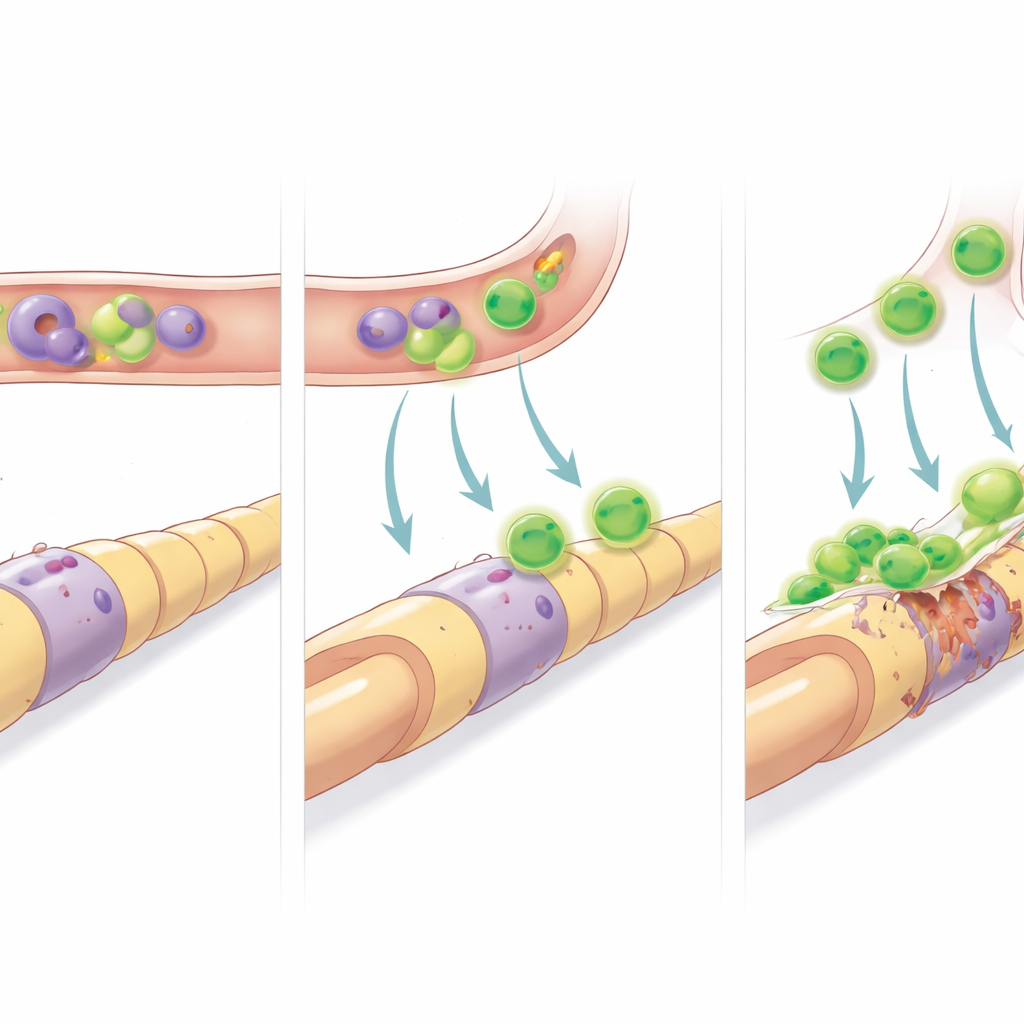
To better understand which cell types were involved, the researchers used flow cytometry—a method that tags cells with fluorescent markers—to separate central memory T cells from effector memory cells. In a subset of participants, people with MS had more central memory CD4 and CD8 T cells that responded to myelin stimulation than healthy volunteers, while effector memory cells did not differ much between groups. This pattern fits with the IL-2 findings: myelin-specific IL-2–producing cells seem to live within the central memory pool, which can persist and expand in the blood between relapses, carrying the history of recent disease activity rather than the entire lifetime burden of MS.
What this could mean for future care
The study suggests that a particular group of long-lived, myelin-specific immune cells—PLP-reactive IL-2–producing central memory T cells—tracks how intense the most recent MS relapse was. Rather than telling the whole story of someone’s disease over many years, these cells may act more like a fingerprint of the latest flare. If confirmed in larger, long-term studies, measuring these cells could help doctors gauge how active the disease has been recently, refine risk estimates, and perhaps guide treatment adjustments. While this is still early, it points toward the possibility of blood-based markers that reflect what is happening in the brain and spinal cord without the need for more invasive tests.
Citation: Zilkha-Falb, R., Drori, T., Shwartz, K. et al. Myelin-specific IL2 + T-cells are associated with last occurring relapse severity in relapsing–remitting multiple sclerosis. Sci Rep 16, 9011 (2026). https://doi.org/10.1038/s41598-026-39859-9
Keywords: multiple sclerosis, immune memory, T cells, relapse severity, myelin